
Vandaag of morgen in huis

Kwaliteit gegarandeerd

Welkomstaanbiedingen ontgrendelen: GRATIS bezorging | Tot 80% korting | Gratis 30 dagen JoyPlus-proefperiode
Download de app
Good outdoor lighting should not only look attractive; it should also suit the location, the weather conditions and how you intend to use it. A light by the front door has different requirements from a solar outdoor light for the garden or a powerful light with a motion sensor by the garage.
There are a few common mistakes to watch out for when buying outdoor lighting. For example, an attractive design says little about how well a light is protected from rain. High light output is not always explained clearly, either, and buyers often forget that some lights are supplied without a bulb. Use the following points to help you choose the right outdoor light, outdoor wall light or garden lighting.
A black outdoor light with a modern or classic design might suit your frontage, but always check the technical specifications. A light with an IP44 rating is suitable for splashing water and certain sheltered outdoor locations. This does not mean it can withstand direct jets of water or prolonged exposure to heavy rain.
For an open garden, driveway or wall exposed to plenty of rain, IP65 outdoor lighting may be a better choice. IP65 means the product is dust-tight and protected against water jets. This rating does not mean the light can be submerged, either.
Many models with a GU10 outdoor light or E27 outdoor light are supplied without a bulb. You will need to buy a suitable one separately. So check:
A fitting gives you flexibility, but only if the bulb you choose is compatible with the fitting.
An outdoor light with a motion sensor is handy by an entrance, garage or driveway. However, the sensor may be triggered by passing animals, moving branches or traffic. Check the mounting height, detection direction and available settings before installation.
Good daylight is important for a solar outdoor light. Don’t place the solar panel under a canopy or somewhere that is permanently in the shade. Runtime and charging performance can also vary depending on cloud cover, the season and dirt on the panel.
The IP code consists of two digits. The first relates to protection against solid objects, and the second to protection against water.
Don’t just check the IP code; read the manufacturer’s installation instructions, too. Correct installation helps prevent water from getting in through cable entries or connection points.
A GU10 outdoor light is compact and is often used for directional downlighting. An E27 fitting accommodates a range of standard bulbs and is practical if you want to replace the bulb later.
Check the maximum wattage. For example, a fitting with a GU10 socket may support a maximum of one 10-watt bulb. An E27 fitting may support up to 60 watts, according to the product specifications. Don’t exceed the stated limit.
A wired outdoor wall light is connected to the mains. Models operating at 220-240 volts or 230 volts must be installed by a qualified electrician in accordance with local regulations.
A solar outdoor light works without a permanent mains connection. This makes it easier to position, but the location still needs to receive enough direct sunlight. A model with a separately adjustable head or several lighting modes can be useful if you want both practical lighting and extra visibility around your home or business premises.
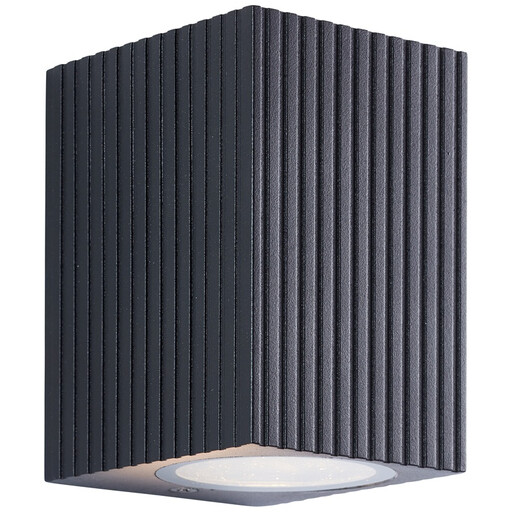
Why it suits this profile: This compact outdoor wall light is ideal if you’re looking for a fixed light by an entrance, balcony or sheltered frontage and want to choose your own GU10 bulb.
The product information clearly states that it has a GU10 fitting, a maximum wattage of 10 watts and an IP44 rating. This makes it clear from the outset that the light is designed for sheltered outdoor locations and is supplied without a bulb.
Made from aluminium, glass and plastic; measures approximately 10 × 6,9 × 7,8 cm; compatible with an externally dimmable GU10 bulb.

Why it suits this profile: This model is designed for larger areas such as a driveway, garden, garage or patio, where wireless installation and wide-reaching illumination are important.
Its IP65 rating is higher than IP44, making it suitable for a more exposed location. Make sure it receives enough sunlight, and clean the solar panel regularly.
According to the product information: three light heads, three modes, a 180-degree motion detection angle and installation without fixed wiring.
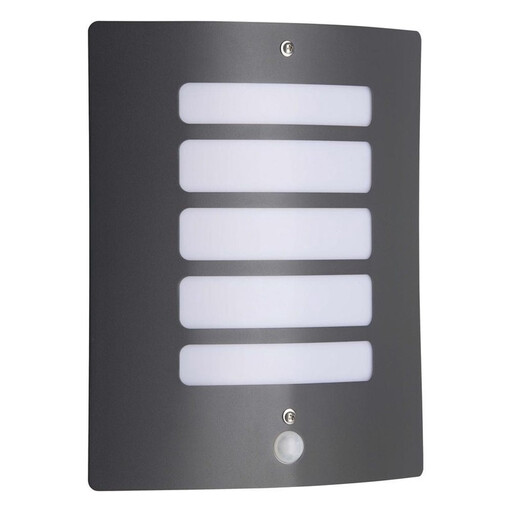
Why it suits this profile: This fixed E27 outdoor light is ideal for entrances, frontages and passageways where you want the light to switch on automatically, without having to use a switch each time.
The specifications state that it has both an E27 fitting and an integrated motion sensor. Its IP44 rating makes it clear that a sheltered position is a better choice than a completely exposed location.
E27 fitting up to 60 watts, measures approximately 29 × 23 × 9 cm and switches on automatically when it detects movement.
We’ve put together a complete, up-to-date list of products that meet these strict selection criteria and current European safety regulations.
An IP44 outdoor light may be suitable for a sheltered entrance or covered patio. For an open frontage, driveway or garden wall where the light is more exposed to rain and dust, IP65 outdoor lighting is a better choice. Always check the installation instructions, too.
An LED outdoor light generally uses less energy than a comparable traditional bulb for the same purpose. Actual consumption depends on the wattage, how many hours it is on and whether you use a sensor or timer. So check the stated wattage, rather than relying on the term LED alone.
A solar outdoor light can usually be mounted using the supplied fixings, without connecting it to the mains. For wired fittings operating at 220-240 or 230 volts, installation by a qualified electrician is recommended, and local regulations may apply. Switch off the electricity before carrying out any maintenance or replacement.
