
Vandaag of morgen in huis

Kwaliteit gegarandeerd

Welkomstaanbiedingen ontgrendelen: GRATIS bezorging | Tot 80% korting | Gratis 30 dagen JoyPlus-proefperiode
Download de app
Good outdoor lighting does more than illuminate a wall or patio. The right outdoor light can brighten your entrance, make a garden path easier to see and create a lovely atmosphere on your balcony or patio. However, there are a few common pitfalls that can make a light less suitable than you expected.
For example, a high light output doesn’t automatically make a light pleasant to use around the home. A bright light can cause glare or shine into your neighbours’ windows. IP44 is also sometimes mistaken for fully waterproof, when this rating mainly indicates protection against splashing water. And with a solar outdoor light, the actual run time depends on the amount of sunlight, where it’s positioned and the time of year.
In this guide, you’ll find out what to look for in an outdoor light, which specifications make a practical difference and which type suits your needs.
Lumens indicate how much light a lamp emits, according to its product specifications. A higher light output can be useful for a driveway or dark passageway. For atmospheric patio lighting, a softer light is often more pleasant. So also consider the light distribution, colour temperature and whether the light can be dimmed.
An IP44 outdoor light is protected against solid objects larger than 1 millimetre and splashing water from different directions. This makes it suitable for many sheltered walls, balconies and patios. However, don’t install an IP44 light somewhere it will be exposed to powerful jets of water for long periods or could be submerged.
For a more exposed location, IP65 outdoor lighting may be a better choice. According to the rating, IP65 provides protection against dust and water jets. Always check the manufacturer’s installation instructions too.
A solar outdoor light works without a fixed power connection, but needs direct sunlight to charge its battery. A rechargeable outdoor light with a USB connection is easier to move around, but needs charging from time to time. A fixed 230-volt LED outdoor light usually needs a suitable connection, and some models must be installed by a qualified electrician.
Colour temperature is measured in kelvins:
If you’re looking for a welcoming atmosphere, consider warm white outdoor lighting. Philips models in this selection, such as the Nuvy, Zyra and Capricorn, list a colour temperature of 2700K.
An integrated LED light is ready to use straight away and doesn’t need a separate bulb. With an E27 or GU10 fitting, you can choose a suitable bulb yourself. This gives you flexibility over brightness and colour, but always check the maximum permitted wattage.
A light supplied without a bulb may seem like a bargain, but remember to include the cost of a suitable LED bulb when working out the total price.
An outdoor light with a sensor can switch on automatically when it detects movement. This is handy by a front door, garage or driveway. A dusk sensor switches the light on when it gets dark. Check the detection range, adjustability and recommended installation height.
Dimming is especially useful for a portable light. You can adjust the brightness during dinner on the patio without having to use a very bright light.
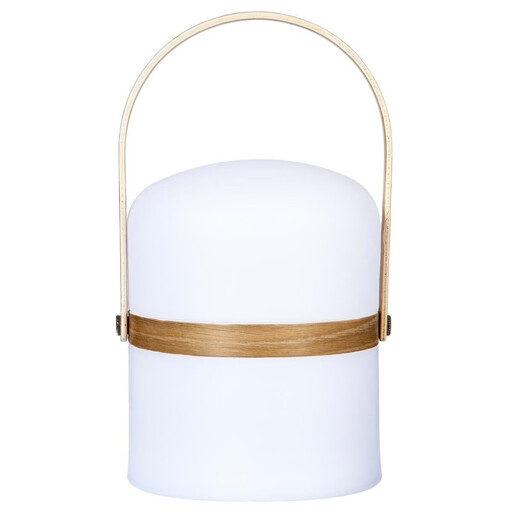
Why it suits this profile: This portable light runs on a rechargeable battery and is suitable for a balcony, garden or patio without a fixed power connection. According to the product description, it has warm white LED lighting and a light output of 270 lumens.
There’s no need to arrange a fixed power connection. The IP44 rating indicates that the light is splash-resistant, but it isn’t designed for direct water jets or prolonged exposure to rain.
USB rechargeable, portable design, warm white light and, according to the product information, three brightness settings.
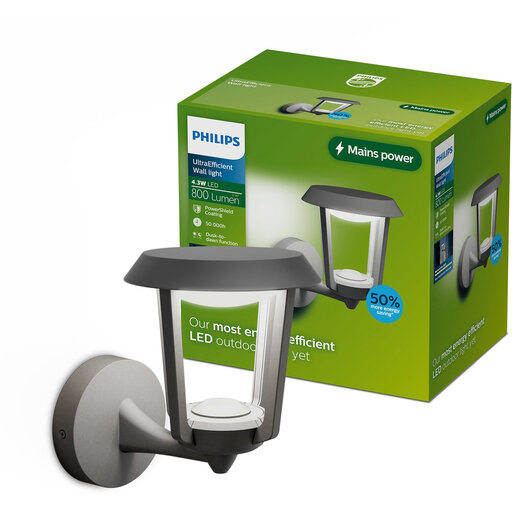
Why it suits this profile: This wall light is a good fit for a wall, entrance or balcony with a fixed 230V connection, where an integrated LED solution is preferred. The listed light colour is warm white, 2700K.
The specifications list both an IP44 rating and an integrated LED light source. You won’t need to match a separate fitting and bulb, but you should still position it where it’s protected from powerful water jets.
According to the product specifications: 800 lumens, 4.3 watts, 2700K and an integrated LED light source.

Why it suits this profile: This solar outdoor light is designed for larger areas such as a driveway, garage, garden or yard. The product information lists three adjustable light heads, a motion sensor and an IP65 rating.
The IP65 rating makes it suitable for a more exposed position than an IP44 light, but the solar panel needs plenty of daylight. So don’t leave it permanently under a canopy or in deep shade.
Solar-powered, with three lighting modes and motion detection; the product listing states a light output of 3000 lumens. The stated colour temperature is 7000K, so check that this light colour suits your needs.
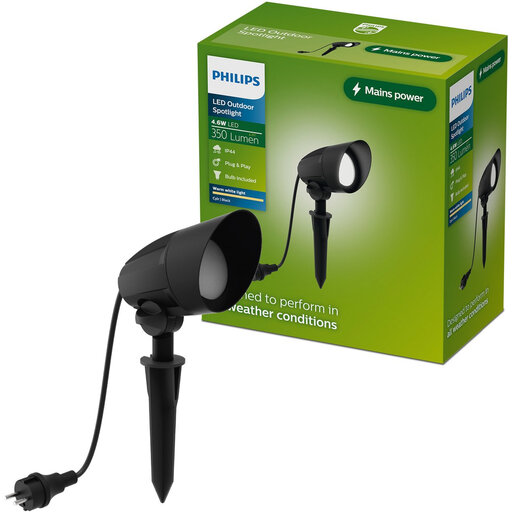
Why it suits this profile: This outdoor ground spotlight is designed for a driveway, lawn, tree or flower bed. The spotlight can be turned and plugs into a socket, so there’s no need to find a separate bulb.
The included GU10 LED bulb means you don’t have to worry about the fitting and light source being incompatible. However, IP44 is still intended to protect against splashing water, not submersion.
According to the product specifications: 350 lumens, 2700K, an adjustable spotlight and a 150-centimetre cable.
We’ve put together a complete, up-to-date list of products that meet these strict selection criteria and comply with current European safety regulations.
IP44 is suitable for many sheltered outdoor locations, such as a covered entrance, balcony or patio. This rating doesn’t mean the light is waterproof. Avoid direct water jets and check the installation instructions. For a more exposed location, IP65 outdoor lighting may be a better choice.
An LED outdoor light generally uses little power for the amount of light it produces, but energy use depends on its wattage and how many hours it’s on. A sensor or timer can stop the light from staying on unnecessarily. With a solar outdoor light, the energy comes from a battery charged by the solar panel during the day.
Lifespan varies depending on the light source, battery, casing and conditions of use. Integrated LED models sometimes list an expected lifespan in operating hours; this is a product specification, not a guarantee for every situation. Clean solar panels regularly, check cables and carefully remove dirt with a dry or slightly damp cloth, following the instructions.
