
Vandaag of morgen in huis

Kwaliteit gegarandeerd

Welkomstaanbiedingen ontgrendelen: GRATIS bezorging | Tot 80% korting | Gratis 30 dagen JoyPlus-proefperiode
Download de app
A dark driveway, bare balcony or patio lacking atmosphere calls for the right lighting solution. Outdoor lighting comes in many forms, from solar garden lights and LED outdoor lights to outdoor string lights and fixed wall lights. However, not every light is suitable for every location.
Many disappointing purchases come down to three recurring pitfalls:
A few checks beforehand can help you avoid garden mood lighting that provides too little light after a few weeks or turns out to be unsuitable for its chosen location.
The IP rating indicates how well a product is protected against dust and moisture. For outdoor use, it’s important to choose a rating that suits the location:
As well as checking the IP rating, read the installation instructions. A light may be technically suitable for outdoor use, but not intended for an exposed location.
Lumens indicate how much light a lamp produces. A few dozen to a few hundred lumens are often enough for decorative lighting. More light may be preferable for a driveway or security lighting.
Colour temperature is measured in Kelvin:
An outdoor light with a sensor can be useful by a front door, garage or garden path. Check the detection range, detection angle and adjustable lighting duration. A sensor won’t prevent a light from being poorly positioned: moving branches or passing traffic may trigger it unintentionally.
Solar garden lights don’t need a permanent cable, making them easy to position. However, the solar panel needs enough direct daylight. In the UK winter or during prolonged cloudy spells, the lighting time may be shorter. Product claims about charging and lighting times depend on the weather, so treat them as a guide.
Mains-powered LED lights usually provide a more consistent level of light. Battery-powered models are flexible, but need to be recharged or have their batteries replaced periodically. Also check whether the light source is integrated. Integrated LEDs are generally not designed to be replaced by the user.

Why it suits this profile: This spike light is easy to place alongside a garden path or border, with no wiring required. Its stainless steel housing and compact design make it a practical choice for your first set of garden lights.
The specifications state a charging time of 4–6 hours, a lighting time of 8–12 hours and an IP44 rating. This makes it clear upfront that the light needs enough daylight and is mainly suitable for exposure to splashing water.
Solar-powered, with a spike for easy installation, stainless steel construction and a height of 55 cm.
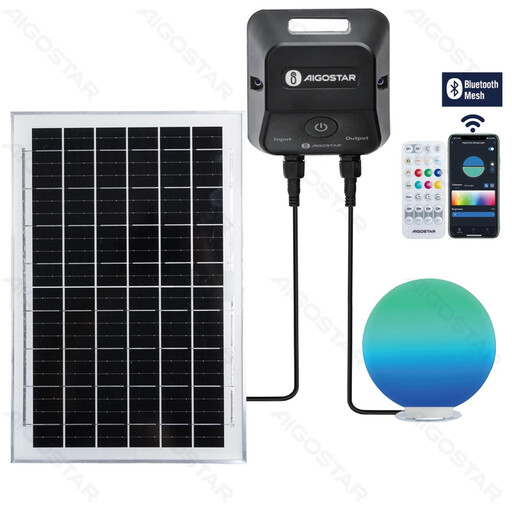
Why it suits this profile: A good choice if you want to combine several lights and have control over colour, brightness and scheduling. This light is designed for larger gardens and decorative areas.
The stated IP65 rating and Bluetooth Mesh controls make it easier to understand how this light can be used than a vague claim about smart outdoor lighting alone.
RGBCCT colour control, scheduling and brightness adjustment, solar power and a stated lifespan of up to 30,000 hours.

Why it suits this profile: This solar outdoor light is designed for a driveway, garage, patio or larger garden area where motion detection and wide light coverage are useful.
The product description lists 302 LEDs, 3000 lumens, three lighting modes, a 180° detection angle and an IP65 rating. This makes it easier to choose the light for practical use rather than relying on atmosphere alone.
Three adjustable light heads, a 1800 mAh solar battery and motion detection with a stated range of 60 feet.
We’ve put together a complete, up-to-date list of products that meet these strict selection criteria and the applicable European safety regulations.
Place the solar panel somewhere it will get as much direct daylight as possible. Avoid shade from fences, trees and walls. Secure the light firmly and check that the on/off switch is activated before use. Clean the panel regularly with a soft cloth.
Lifespan varies by product. Some models, for example, state 15,000, 30,000 or 50,000 hours of use. This is a product specification, not a guarantee that the light will work for exactly that long. The battery, electronics, weather conditions and frequency of use all affect its practical lifespan.
Solar garden lights don’t use electricity from the mains while they’re on, but their performance depends on sunlight and battery capacity. Mains-powered LED outdoor lights are generally energy-efficient, but their consumption depends on their wattage and how many hours they’re used. A timer, sensor or automatic dusk function can help reduce unnecessary use.
