
Vandaag of morgen in huis

Kwaliteit gegarandeerd

Welkomstaanbiedingen ontgrendelen: GRATIS bezorging | Tot 80% korting | Gratis 30 dagen JoyPlus-proefperiode
Download de app
Good outdoor lighting needs to suit the location, the type of light you want, and how you intend to use the fitting. A lamp for a balcony has different requirements to lighting along a driveway or on a wall. Yet many shoppers focus mainly on looks, the number of LEDs or a flashy claim on the packaging.
That can lead to disappointment. The following pitfalls are common:
For a patio or balcony, warm white light of around 2700 to 3000 kelvin is usually the most pleasant. This colour temperature is found across various Philips outdoor lights, such as the Nuvy, Fyns and Diara models.
For pathways and borders, compact garden lights with a soft beam are often sufficient. The Huacan Solar Garden Lights, according to the product description, use warm white LED light, charge in around 4 to 6 hours in sunlight and come as a set of six stake lights.
For a driveway, entrance or dark corner, a higher light output can be useful. As well as lumens, pay attention to the direction of the light beam. A wide beam lights up a larger area, while directional light is better for highlighting a door, step or path.
The IP code consists of two digits:
IP44 outdoor lighting is protected against splashing water and is generally suitable for sheltered outdoor locations, such as a balcony, veranda or wall. Do not place an IP44 light where it will be exposed to prolonged, powerful water jets.
IP65 waterproof outdoor lighting offers, according to the classification, a higher level of protection against dust and water jets. This makes this class more suitable for lights that are more exposed to rain. Still check the installation instructions: the IP rating applies to the product when used as intended and correctly installed.
A solar wall light or other solar outdoor light doesn’t need a fixed connection. That’s handy for a garden shed, fence or wall where there’s no power point. The solar panel does need to receive enough direct daylight. Clean the panel regularly and keep it free from leaves.
A mains-powered light works independently of sunlight, but often requires wiring. The Philips Capricorn Wall Light, according to the product information, uses 230 volts and must be connected by a qualified electrician. This makes it suitable for a permanent installation, but less straightforward for rental properties or a temporary setup.
An outdoor light with a motion sensor can save energy because the light doesn’t stay on continuously. Check whether the product also has a dusk sensor, automatic mode or manual switch. For a light with an integrated battery, the charging method is also important. The Brilliant Iseo light, according to the product specification, is charged via USB-C and has a magnetic mount.
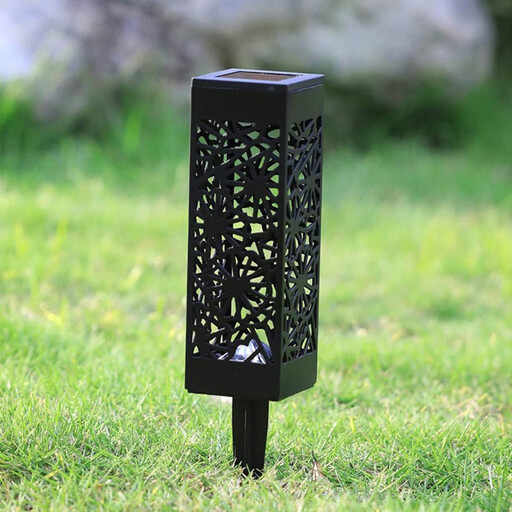
Why this fits the profile: This set is practical for anyone wanting to light a garden path, border or planter without wiring.
The product specification states a specific charging time of 4–6 hours and an IP65 rating. The lights are designed to be pushed into the ground; check the placement beforehand and avoid trip hazards.
Set of 6, warm white LED light, automatic on/off and IP65 according to the product information.
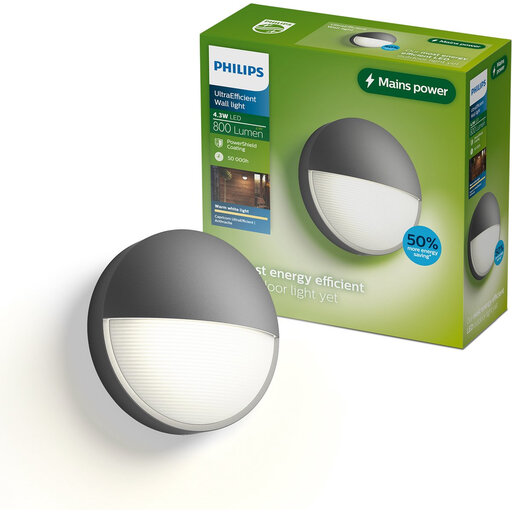
Why this fits the profile: This fixed outdoor wall light suits homeowners who want permanent wall or entrance lighting.
The IP44 rating makes it clear this is splash-proof protection, not for submersion. Installation at 230 volts requires a qualified electrician.
Integrated LED, 800 lumens, 2700 K warm white light and aluminium with PowerShield coating according to the product description.

Why this fits the profile: This solar wall light is suitable for an entrance, shed or driveway where automatic lighting is wanted without fixed wiring.
The product information mentions both a motion sensor and two light modes. The light has IP44; therefore position the solar panel away from shade and protect the light from direct water jets.
1000 lumens, 3000 K, solar power, motion sensor and two light modes according to the product specifications.
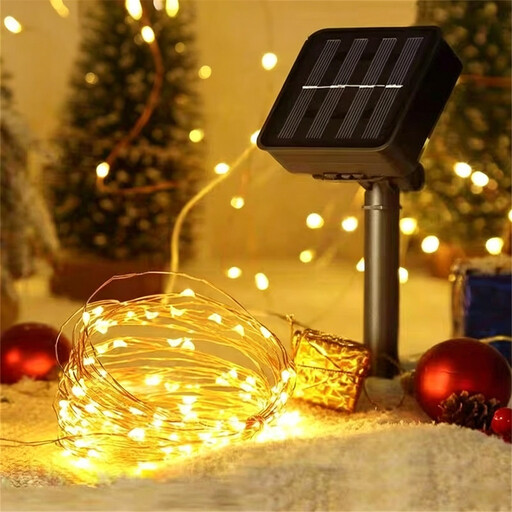
Why this fits the profile: These solar-powered fairy lights are designed for decorative lighting around a patio, balcony, tree or pergola.
The product description mentions 8 light modes, a memory function and a charging time of 6–8 hours in direct sunlight. The performance of solar lighting remains dependent on the weather.
Two strings of 49 ft each, 75 warm white LEDs per string and 8 modes according to the product specification.
We’ve put together a full, up-to-date list of products that fully meet these strict selection criteria and comply with current European safety regulations.
That depends on the placement and the product. A solar panel needs direct daylight to charge the battery. Cloud cover, short days and shade can reduce the burn time. Choose a location with as much clear sky view as possible and clean the panel regularly.
The lifespan varies by product and usage conditions. Some Philips models state 25,000 or 50,000 hours of burn time; this is a product specification and not a guarantee of the same performance in every situation. With integrated LEDs, the entire light usually needs to be replaced when the light source reaches the end of its life.
A sensor light can be on for less time than a light that stays on all night. The actual consumption depends on the wattage, the number of activations and the set burn time. Therefore compare the wattage, light output and sensor settings. For a fixed connection, an energy-efficient light with integrated LED can be a practical choice.
