
Vandaag of morgen in huis

Kwaliteit gegarandeerd

Welkomstaanbiedingen ontgrendelen: GRATIS bezorging | Tot 80% korting | Gratis 30 dagen JoyPlus-proefperiode
Download de app
Good outdoor lighting makes a garden, balcony, driveway or entrance more usable after dark. Yet many people choose a light based solely on its appearance or a high lumen rating. This can result in a light that is too dim, runs out of power quickly or turns out to be unsuitable for its intended location.
This guide compares solar outdoor lighting, an outdoor light with a motion sensor, an LED outdoor light, an outdoor wall light and an outdoor table lamp, focusing on practical features.
An IP44 outdoor light is protected against solid objects larger than 1 millimetre and splashing water. This makes it suitable for many sheltered locations, such as a covered patio, balcony or entrance. However, IP44 does not mean the light is waterproof. Do not place it where it is likely to be exposed to powerful water jets or prolonged standing water.
An IP65 outdoor light offers greater protection against dust and water jets. This makes it a more logical choice for an exposed exterior wall, driveway or garden wall that is directly exposed to changeable weather. Always check the installation instructions too; the IP rating alone does not determine whether every part of the installation is suitable for outdoor use.
Lumens indicate how much light a lamp emits according to its product specifications. More lumens do not automatically make a light more suitable. A powerful outdoor security light can be useful on a driveway, but uncomfortably bright next to a seating area.
Also consider the beam angle, the number of adjustable heads and the colour temperature. Warm white light around 2700–3000 K is generally well suited to ambient and patio lighting. Cooler light around 5000–7000 K is more functional for illuminating a larger area.
A solar-powered outdoor light needs direct daylight to charge its built-in battery. Under a balcony, against a north-facing wall or beneath a dense tree, the output may be lower. In winter, the days are also shorter and there is less intense sunlight.
Before buying, check where the solar panel will be positioned. A motion sensor can help limit energy consumption, but it does not change the amount of energy available for charging.
An outdoor light with a motion sensor is practical by a front door, garage, shed or driveway. Do not just look for the presence of a sensor; also consider:
For example, the UME Solar Outdoor Lights specifies a detection distance of 60 feet, equivalent to approximately 18 metres, and a detection angle of 180 degrees. The light has three adjustable heads and a stated spread of 270 degrees. Position the sensor so that passing pedestrians or traffic are not detected unnecessarily.
With solar outdoor lighting, battery capacity is an important point to check. According to the product specifications, the UME light uses an integrated 1800 mAh lithium-ion battery. Other wireless lights charge via USB. This is useful when little sunlight is available, but it does mean that you need to periodically remove the light or connect it for charging.
A combination of solar and USB charging, as found on the Viani outdoor table lamp, offers greater flexibility. However, check that the USB port is adequately protected during outdoor use and follow the manufacturer’s maintenance instructions.
Wireless lights are suitable for rented properties or locations where you do not want to run a cable. A fixed outdoor wall light connected to 230 volts will generally need to be installed by a qualified professional. This applies, for example, to models with an E27 or GU10 fitting.
Also consider the surface. A magnetic light must be attached to a suitable metal surface or a securely fitted mounting plate. A freestanding table lamp should be placed on a flat, stable surface to help prevent it from tipping over.
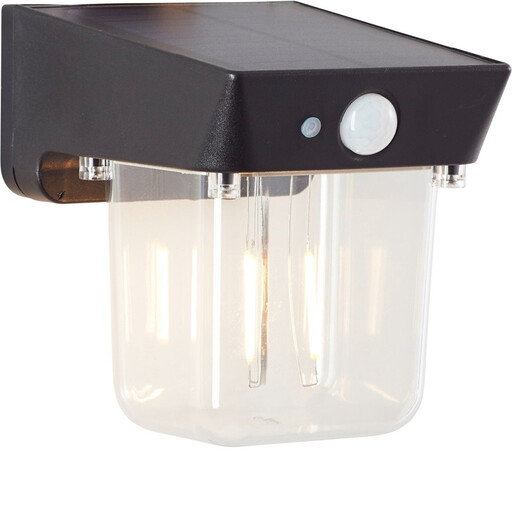
Why it suits this profile: This compact solar wall light is suitable for an entrance, balcony or small garden where no cabling is available. The integrated sensor and two lighting modes keep operation simple.
The IP44 rating is clearly stated, so you will not mistake this light for a model designed to withstand direct water jets. Solar power and a motion sensor are also listed as specific features.
400 lumens, 2700 K warm white light, an integrated battery and installation without a mains connection.
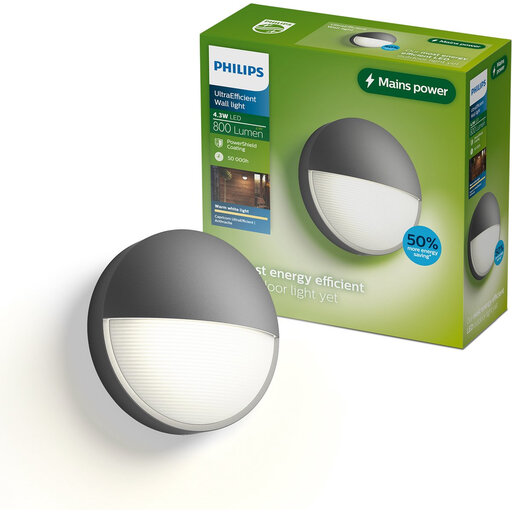
Why it suits this profile: This fixed LED outdoor light is ideal for homeowners looking for permanent exterior lighting with a clean, understated appearance. The light is designed to be connected to the mains.
The fixed mains connection and professional installation requirements are clearly stated. This makes it clear from the outset that it is not a wireless solar wall light.
Integrated LED, 800 lumens, 2700 K warm white light and IP44 protection according to the product specifications.

Why it suits this profile: This model is designed for large outdoor areas such as a driveway, back garden or garage area where a wide, functional beam is preferred.
The specifications state both the IP65 rating and the sensor’s detection range. This makes it easier to assess whether the light is suitable for an exposed, frequently used location.
4000 lumens, IP65, an adjustable light head and a PIR detection range that extends up to 16 metres sideways according to the product specifications.
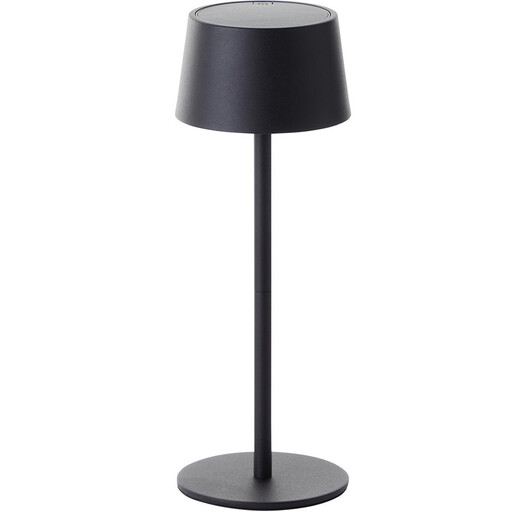
Why it suits this profile: This outdoor table lamp is designed for use on a table, windowsill or stable surface on the patio. You can choose between solar charging and USB charging.
The combination of solar and USB charging means you are not reliant on sunlight alone. The IP44 rating also makes it clear that the light is splash-resistant, not completely waterproof.
170 lumens, warm white light at 3000 K, three dimming modes and two possible heights.
We have put together a complete, up-to-date list of products that fully meet these strict selection criteria and the applicable European safety regulations.
Position a solar outdoor light so that the panel has as much unobstructed view of the sky as possible during the day. Regularly wipe the panel and sensor with a soft, slightly damp cloth, unless the manual specifies a different method. For USB lights, it is advisable to protect the charging port from prolonged rain.
For wall lights, check that the screws and wall plugs are suitable for the wall. An outdoor wall light with an E27 or GU10 fitting is often supplied without a bulb. When choosing a bulb, take into account the fitting’s maximum wattage, light colour and dimmability.
This depends on the positioning, battery and amount of daylight. In winter, the light may stay on for less time or appear less bright. Choose a location without shade and keep the panel clean. A model with USB charging provides a practical backup during darker periods.
For ambient lighting on a table or balcony, around 150 to 300 lumens may be sufficient. For an entrance or exterior wall, 300 to 1000 lumens is generally a sensible range, depending on the desired brightness. A higher lumen output can be useful for a driveway or outdoor security light, such as the stated 3000 lumens of the UME light or 4000 lumens of the Philips Zyren.
An LED outdoor light generally uses less power than traditional light sources with a comparable light output. Actual consumption depends on the wattage and number of hours the light is on. A motion sensor or timer can limit the operating time. Solar outdoor lighting does not use electricity from the mains while it is on, but it remains dependent on charging capacity and the available sunlight.
