
Vandaag of morgen in huis

Kwaliteit gegarandeerd

Welkomstaanbiedingen ontgrendelen: GRATIS bezorging | Tot 80% korting | Gratis 30 dagen JoyPlus-proefperiode
Download de app
Outdoor lighting makes an entrance easier to see, creates a welcoming atmosphere on a patio and can brighten dark areas around your home. But choosing the right light isn’t as simple as a good-looking photo might suggest. For example, an outdoor lamp that appears suitable for rainy weather may only be intended for a sheltered spot. And solar outdoor lighting with lots of LEDs won’t necessarily provide the same brightness all night.
The main pitfalls to watch out for when choosing outdoor lighting are:
The IP rating shows how well a product is protected against solid particles and water. An IP44 outdoor light is protected against splashes from various directions. This makes it suitable for places such as a covered balcony, a sheltered exterior wall or an entrance that isn’t directly exposed to heavy rain.
According to the product specification, a light with IP65 offers greater protection against dust and water jets. This may be relevant for an open garden, driveway or exterior wall that catches a lot of rain. However, IP65 doesn’t mean the light can be used underwater.
Always check:
LED outdoor lighting generally uses little energy and is available with either an integrated light source or a bulb holder. With an integrated LED, it’s often not possible to replace the light source. A GU10 or E27 fitting, on the other hand, lets you choose a suitable LED bulb yourself.
Solar outdoor lighting runs on a solar panel and rechargeable battery. How long it lasts depends on the amount of sunlight, where it’s positioned and the lighting programme selected. So don’t place the panel under a solid canopy or in the shade of a tree. If you’re choosing a solar outdoor light with a motion sensor, it’s also worth checking that the sensor’s angle and detection range suit your driveway, garden or back door.
Light colour is measured in Kelvin:
Pay attention to lumens too. A low lumen output suits decorative garden lighting, while a driveway or dark passage may need a more focused light. A motion sensor, timer or memory function can make a light easier to use, but check which settings are actually available.
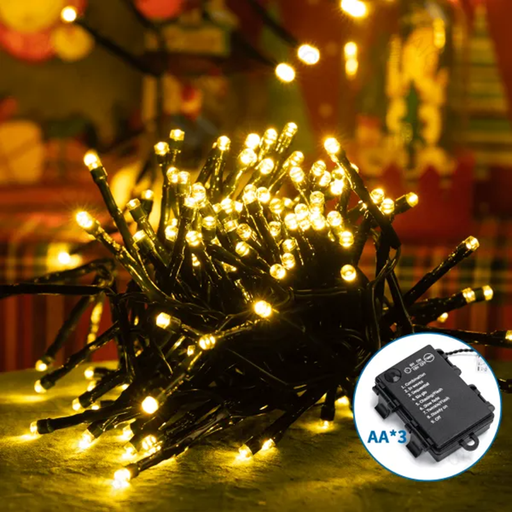
Why it suits this need: This 5-metre string of lights runs on 3 AA batteries and is ideal for a balcony, patio or small garden without a nearby plug socket.
The IP44 rating makes its intended use clear: it’s suitable for splashes and sheltered outdoor spots, but not direct water jets.
200 LEDs, 8 light modes, timer and memory function; battery power means no permanent wiring is needed.
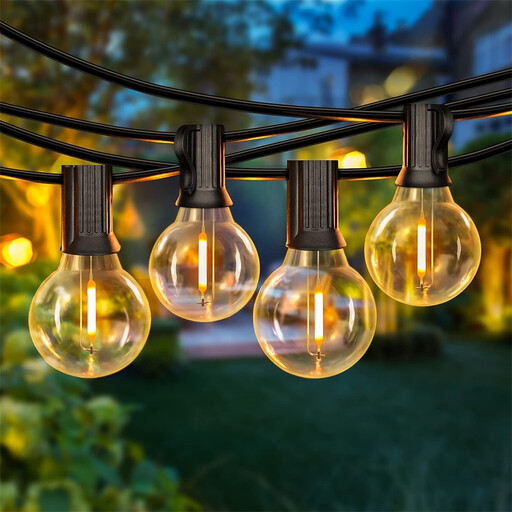
Why it suits this need: Ideal if you want to decorate a long patio, veranda or garden party with one continuous string of lights and have a plug socket nearby.
Plug-in power means you don’t have to rely on batteries. Make sure connections are kept clear of standing water, and follow the maximum connection length.
30 metres long, with dimming, a timer and replaceable G40 bulbs; according to the product information, up to 500 lights can be connected.

Why it suits this need: The three adjustable light heads and motion sensor are designed for driveways, garages, back gardens and other larger outdoor areas.
The IP65 rating and stated detection angle make its intended use clearer than a general claim that it’s “waterproof”. Make sure you position the panel in direct sunlight.
302 LEDs, a stated light output of 3000 lumens, three light modes and a 180-degree detection angle, according to the product description.
We’ve put together a complete, up-to-date list of products that meet these strict selection criteria and current European safety regulations.
Battery-powered lights, outdoor string lights or a compact wall light are practical choices for a balcony. If the area is exposed, choose a product with an appropriate IP rating at minimum, and check whether there’s an outdoor plug socket available. IP44 is best suited to sheltered locations; don’t place the light where it will be hit by direct water jets.
How long it lasts each night depends on sunlight, battery capacity, the light setting and the outdoor temperature. A sensor mode can save energy because the light doesn’t stay on continuously. Clean the solar panel regularly with a soft, slightly damp cloth and position it somewhere that gets as much direct daylight as possible.
Solar lighting doesn’t use mains electricity during normal use, but its battery can wear out over time. For mains-powered LED outdoor lighting, energy use depends on wattage and how long the light is on. A 4-watt light left on for 5 hours a day uses around 20 watt-hours per day. For an accurate calculation, check the wattage and your current electricity tariff.
