
Vandaag of morgen in huis

Kwaliteit gegarandeerd

Welkomstaanbiedingen ontgrendelen: GRATIS bezorging | Tot 80% korting | Gratis 30 dagen JoyPlus-proefperiode
Download de app
Good outdoor lighting does more than enhance a garden or the outside of your home. The right light helps you find your way up the drive, makes your entrance easier to see and creates a welcoming atmosphere on the patio. Yet many people choose outdoor lights based on appearance alone. This can lead to a light that is too dim, cannot withstand the British weather or proves difficult to install.
IP44 means a light is protected against solid objects larger than 1 mm and splashes of water from various directions. This makes an IP44 outdoor light suitable for many sheltered spots, such as a covered entrance, balcony or outside wall.
It does not mean the light is waterproof. So don’t install an IP44 light somewhere it will be exposed to heavy rain, jets of water or immersion. For an open drive or a spot exposed to frequent direct rainfall, a higher protection rating may be more practical.
Wattage mainly tells you how much energy a light uses, not how much light it produces. When choosing LED outdoor lighting, check the lumens too. A low-wattage light can still provide enough light if it produces light efficiently. For ambient lighting, warm white light around 2700K to 3000K is usually more comfortable. Neutral or cool white light may be more suitable for brighter wayfinding or security lighting.
Many fittings for an E27 outdoor light or GU10 outdoor light are sold without a bulb. This gives you more choice, but also increases the total cost. Before ordering, check:
For an outdoor wall light, garden bollard light or outdoor ground spotlight, the IP code is a good first point of comparison. IP44 is suitable for splashes of water and many sheltered outdoor locations. A product with IP65 offers a higher level of protection against dust and water jets, according to its product specifications, making it better suited to more demanding weather exposure.
Check the installation instructions too. A light will only provide the stated level of protection if its housing, seals and electrical connections are fitted correctly.
There are three practical options:
Solar garden lighting with a small panel is best suited to ambient lighting or marking a path. Don’t automatically expect it to be as bright as a fixed outdoor light powered by the mains.
Warm white light around 2700K creates a softer effect on a patio or garden path. A GU10 spotlight is handy when you want to highlight a feature on an outside wall, a tree or a planter. An E27 fitting gives you more choice of shape, brightness and colour temperature.
Check the direction of the light as well. A downlight mainly illuminates the area directly below it. A diffuser spreads light more widely, which can work well by an entrance or on a patio.

Why it suits this need: This spike light is solar-powered and designed for paths, borders and smaller garden areas without cabling.
The product information states a charging time of 4–6 hours and a run time of 8–12 hours. Be sure to place the light in a sunny spot, as shade can affect its performance.
Stainless steel housing, IP44 rating, 6500K light colour and no need for a permanent power connection.
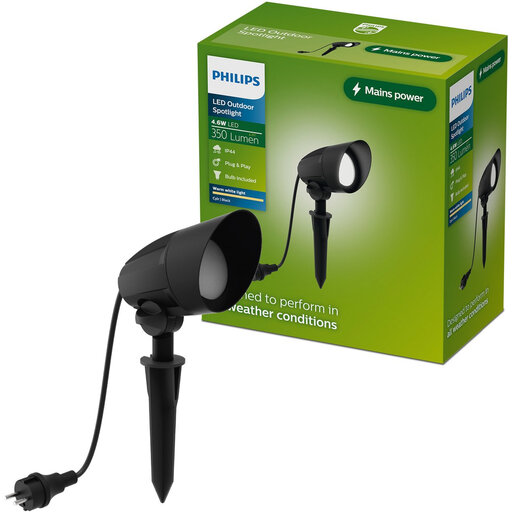
Why it suits this need: This outdoor ground spotlight is ideal if you want to highlight a tree, border, drive or feature on an outside wall, and comes with a GU10 LED bulb.
The light is not described as fully waterproof: IP44 means splash-resistant. Position it securely and avoid areas where water can collect.
350 lumens, warm white 2700K light, an adjustable spotlight and a 150 cm cable, according to the product specifications.

Why it suits this need: Ideal for a garage, back garden, drive or larger outdoor area where you want automatic lighting without permanent wiring.
Its stated IP65 rating and three lighting modes make it easier to see where it’s suitable. Check that the solar panel gets enough direct sunlight.
Three adjustable light heads, motion detection up to 60 feet according to the product information, a 180° detection angle and an 1800mAh battery.
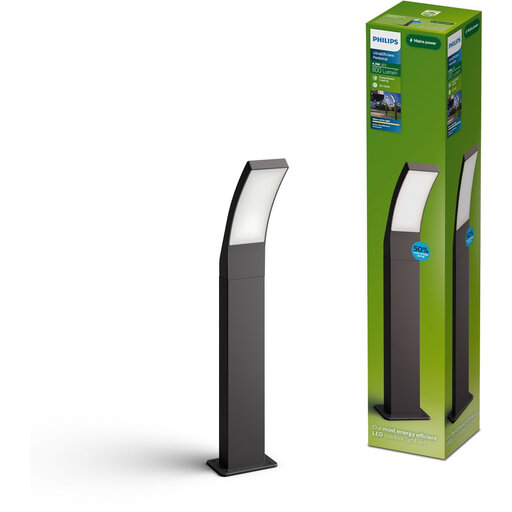
Why it suits this need: This garden bollard light is a good fit for paths, borders, balconies and patios where you want a permanent line of warm light.
The specifications state the light colour, IP44 protection and outdoor suitability. Bear in mind that it requires permanent installation and protection from direct water jets.
Integrated LED, warm white 2700K light, a height of 60 cm and a stated lifespan of 50,000 lighting hours, according to the product information.
We’ve put together a complete, up-to-date list of products that meet these strict selection criteria and the applicable European safety regulations.
IP44 is often suitable for a sheltered outside wall, balcony or entrance. For a light more directly exposed to rain, dust or water jets, a higher IP rating may be a better choice. Always check the installation instructions and never place the light underwater.
Yes, especially for garden paths, borders and ambient lighting. How well it works depends on the amount of direct sunlight, the angle of the panel and the season. Clean the solar panel regularly and avoid leaving the light under trees or a canopy for long periods.
Running costs depend on the wattage, the number of hours the light is on and the price of electricity. An LED bulb generally uses less energy than a comparable halogen bulb, but be sure to compare the stated wattage and light output in lumens. Solar lighting costs little to run while it’s on, but its brightness and run time depend on the battery and the amount of sunlight it receives.
