
Vandaag of morgen in huis

Kwaliteit gegarandeerd

Welkomstaanbiedingen ontgrendelen: GRATIS bezorging | Tot 80% korting | Gratis 30 dagen JoyPlus-proefperiode
Download de app
Good outdoor lighting needs to suit the location, the amount of light you need and how you plan to use it. A light for a sheltered balcony needs different features from one by the driveway or a ground spotlight exposed to heavy rain.
Product descriptions can sometimes give a misleading impression. So don’t just look at lumens, design or words such as “waterproof” – check the technical details too. That way, you can avoid your garden lighting becoming less effective after a few months or finding out that a light isn’t suitable for the location you chose.
An IP44 outdoor light is protected against splashing water, but not immersion or powerful water jets. This makes IP44 suitable for many sheltered exterior walls, patios and balconies, but less suitable for places where rain falls directly on the light for long periods.
IP65 outdoor lighting offers greater protection against dust and water jets. Even so, you should follow the installation instructions. An IP rating doesn’t automatically make a product suitable for every situation.
More LEDs don’t automatically mean the light will be pleasant or useful. A modest light output may be enough for ambient lighting along a flower bed. For a driveway or back door, you may want broader light coverage and more lumens.
Pay attention to the colour temperature too:
Solar garden lighting only works well when the panel receives enough direct sunlight during the day. Shade from a fence, tree or covered area reduces charging time. In winter, shorter days and cloudy weather can also affect how long the light stays on.
So check the details for charging time, battery type and run time. A solar light is handy when you don’t want to lay cables, but mains power may be more suitable for consistent lighting over longer periods.
Choose the location first, then choose the light. An outdoor wall light beneath an overhang may be fine with IP44, while a light on an exposed wall or in a damp area may need a higher level of protection. Also check that cables, plugs and connection points are designed for outdoor use.
A solar light doesn’t need a permanent electrical connection, but it does need a suitable spot for the solar panel. A 230-volt light generally provides a consistent power supply, but it must be installed safely and in line with local regulations. Fixed connections, such as those for some GU10 outdoor lights, need to be installed by a qualified electrician.
Integrated LED outdoor lighting usually doesn’t need a separate bulb. With a GU10 outdoor light, you can choose a suitable LED bulb yourself, but check the maximum wattage. An outdoor light with a motion sensor is practical by a garage, back door or driveway. Check the detection range, detection angle and available lighting modes.
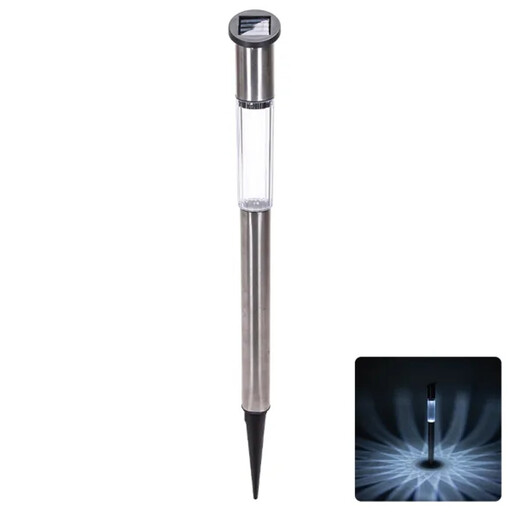
Why it suits this type of user: This stake light is designed to provide simple guidance along a garden path, flower bed or lawn, without fixed wiring.
The specifications list a charging time of 4–6 hours, a run time of 8–12 hours and an IP44 rating. So don’t place the light where it will be exposed to direct water jets.
Stainless steel housing, polycrystalline silicon solar panel, 6500K light and a height of 55 cm.

Why it suits this type of user: This garden post light is ideal for permanent paths, flower beds and patios where an even, warm light is wanted.
The product details state IP44 and warn against immersion and direct high-pressure water jets. Choose a stable installation spot that won’t flood.
800 lumens, 2700K warm white light, aluminium housing and a stated lifespan of 50,000 operating hours.

Why it suits this type of user: This solar outdoor light with a motion sensor is designed for driveways, garages, patios and larger outdoor spaces where detection and broad coverage matter.
The stated IP65 rating and three lighting modes make it easier to see where this light is suitable. According to the product details, the sensor has a range of 60 feet and a 180° angle.
302 LEDs, stated light output of 3000 lumens, three adjustable heads and an 1800 mAh lithium-ion battery.
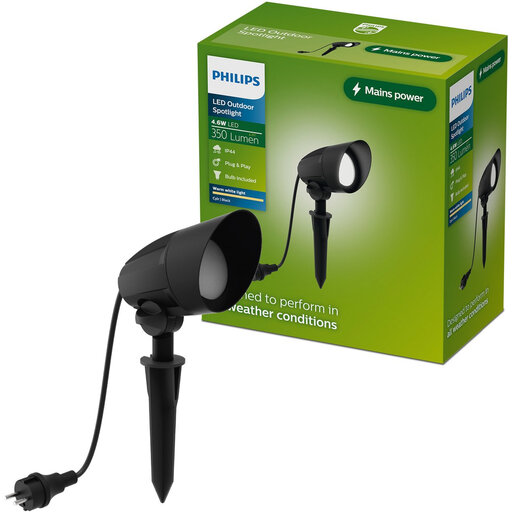
Why it suits this type of user: A rotatable outdoor ground spotlight is ideal for directing light onto a tree, shrub, entrance or feature on an exterior wall.
The light comes with a 2700K GU10 LED bulb and has an IP44 rating. Place it on a stable surface and avoid submerging it.
350 lumens, 2700K warm white light, 4.6 W power and a 150 cm cable with a plug for a suitable outdoor connection point.
We’ve put together a complete, up-to-date list of products that meet these strict selection criteria and the applicable European safety regulations.
It depends on where you’re installing it. IP44 protects against splashing water and is often suitable for sheltered exterior walls, balconies and covered patios. IP65 offers greater protection against dust and water jets, so it may be a better choice for an exposed location. Always check the full installation instructions.
Solar garden lighting doesn’t use mains electricity while charging. However, how well it works in practice depends on sunlight, panel position, battery capacity and the season. If you need a light to stay on for a long time every evening with consistent brightness, mains power may be a more predictable option.
Lifespan varies by product and conditions of use. Check the stated operating hours, the warranty and whether the light source can be replaced. Replacing an integrated LED is often less straightforward than changing a GU10 bulb. Regularly cleaning the solar panel, sensor and fitting can help maintain the stated performance.
