
Vandaag of morgen in huis

Kwaliteit gegarandeerd

Welkomstaanbiedingen ontgrendelen: GRATIS bezorging | Tot 80% korting | Gratis 30 dagen JoyPlus-proefperiode
Download de app
An outdoor light needs to do more than look good. On a wall, balcony, patio, driveway or garden path, it has to cope with rain, dust, changing temperatures and limited hours of sunshine. Yet many buyers focus mainly on colour and design. This can lead to predictable problems: a light turns out to be too dim, a solar outdoor light doesn’t charge sufficiently or an outdoor wall light isn’t suitable for the spot where it’s being installed.
Use this practical checklist to check the specifications first, then choose a style to suit your home.
IP44 outdoor lighting is protected against solid objects larger than 1 millimetre and splashing water from different directions. This makes IP44 suitable for many sheltered walls, balconies, covered areas and entrances. It doesn’t mean the light is waterproof or can withstand direct jets of water.
For a spot exposed to heavy rain, a product with IP65 is often a more sensible choice. This rating offers greater protection against dust and jets of water. Always check the installation instructions too: the IP rating alone doesn’t tell you whether a light is suitable for prolonged immersion or extreme weather conditions.
A GU10 or E27 outdoor light doesn’t always include a light source. The Brilliant Jelani and Keola specify the fitting, but don’t include a bulb. The Philips Fylx models are also supplied without a GU10 spotlight.
That’s not a problem if you want to choose the colour temperature, brightness or smart features yourself. Just remember to check the extra cost and the maximum wattage. A fitting with a GU10 socket is also different from an integrated LED outdoor light.
How well a solar outdoor light works depends on the amount of sunlight it gets, the position of the panel, the battery capacity and the selected light mode. In winter, or on a north-facing wall in the shade, its run time may differ from what you’d get in a sunny spot.
So, check:
IP44 may be sufficient for a covered entrance or sheltered patio. For an open driveway, back garden or wall exposed to direct rain, it’s worth considering a higher rating such as IP65.
An IP65 solar light, for example, is designed for more demanding outdoor use than a basic IP44 garden light. Also check that cables, fixing points and switches are properly sealed.
An integrated LED light is compact and ready to use, but the light source often can’t be replaced by the user. With a GU10 or E27 fitting, you can choose a suitable bulb yourself. Look for:
Warm light often works well on a patio or veranda. For a garden path or driveway, a more neutral colour temperature may be more practical. A black outdoor light with a downward beam can also reduce glare towards windows.
According to the product information, a wired outdoor wall light running on 220-240V must be connected by a qualified electrician. Switch off the power before installation or maintenance.
A rechargeable wall light with a USB connection is more flexible, but needs regular charging. A solar outdoor light doesn’t need fixed wiring, but it does need direct sunlight for a predictable charging cycle. So, think about how you’ll use it day to day, not just how easy it is to install.
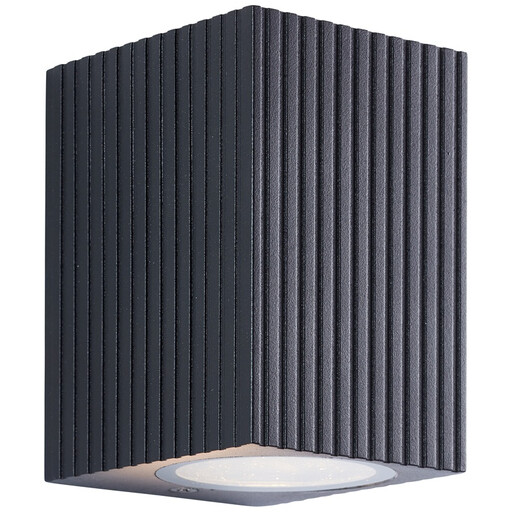
Why it suits you: This compact black outdoor wall light has a GU10 socket and an IP44 rating. You can choose your own GU10 bulb and change the lighting later if you wish.
The product information clearly states that the bulb isn’t included. This lets you choose a suitable GU10 LED bulb and colour temperature in advance.
Aluminium construction, compact dimensions of approximately 10 × 6,9 × 7,8 cm, GU10 socket and a downward light output.
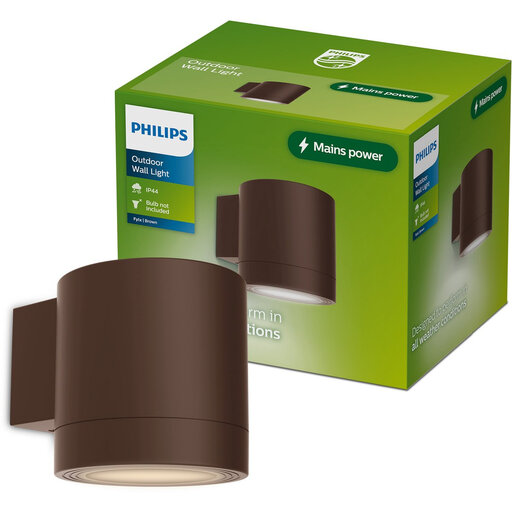
Why it suits you: This Philips aluminium outdoor light is a good fit for a modern wall, balcony or garden. Its replaceable GU10 bulb lets you choose the colour temperature and features to suit your needs.
The socket type and IP44 rating are clearly specified. As you choose the GU10 spotlight separately, you won’t automatically pay for an integrated light source that can’t be replaced later.
Aluminium housing, round design, GU10 socket, IP44 rating and dimensions of approximately 8,9 × 11,6 × 9 cm.

Why it suits you: This solar outdoor light is designed for driveways, garages, gardens and larger outdoor areas where you don’t want fixed wiring.
The specifications list IP65, three light modes and a motion sensor. Make sure you place the panel somewhere with enough direct sunlight.
302 LEDs, stated light output of 3000 lumens, three adjustable heads, detection range of up to 60 feet according to the product information, and a 180° detection angle.
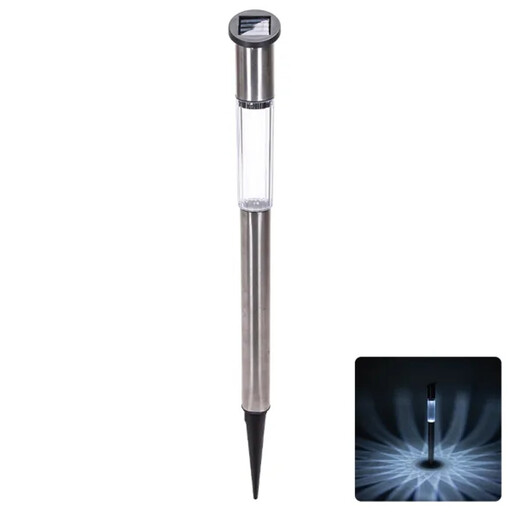
Why it suits you: This stake light is ideal for garden paths, borders and lawn edges where you want soft orientation lighting without cables.
The product information lists IP44, a charging time of 4 to 6 hours and a stated run time of 8 to 12 hours. This helps you set realistic expectations for using it as path lighting.
Stainless steel housing, 55 cm stake, polycrystalline solar panel and 6500K colour temperature according to the product specifications.
We’ve put together a complete, up-to-date list of products that meet these strict selection criteria and the applicable European safety regulations.
Yes, IP44 outdoor lighting can be suitable for a sheltered outdoor spot, such as a covered entrance, balcony or patio. For a completely exposed wall or a spot subject to direct jets of water, it’s worth considering a higher protection rating. Always check the installation guide and placement requirements.
A solar outdoor light doesn’t use electricity from the mains during normal use. However, its practical performance depends on sunlight, battery capacity, temperature and light mode. Clean the solar panel regularly and don’t place it under a roof edge or in the shade of trees.
According to the product information, a wired outdoor wall light running on 220-240V must be installed by a qualified electrician. A rechargeable or solar outdoor light can usually be installed without fixed wiring, but it must be securely fitted and suitable for the weight and surface.
