
Vandaag of morgen in huis

Kwaliteit gegarandeerd

Welkomstaanbiedingen ontgrendelen: GRATIS bezorging | Tot 80% korting | Gratis 30 dagen JoyPlus-proefperiode
Download de app
A dark driveway, a patio lacking atmosphere or a balcony with no nearby socket: the right outdoor lighting can make your outdoor spaces more pleasant and practical. But a product photo alone isn’t enough to help you make the right choice. Some lights look suitable for all weather, when in reality they’re intended only for a sheltered spot. Solar lights may also stay lit for less time if the panel gets little daylight.
As Joybuy’s Product Recommendation Officer, I focus on checking specifications you can verify. That way, you can quickly see which garden lighting, wall light or string lights suit your needs.
IP44 outdoor lighting is protected against splashing water from different directions, but not necessarily against heavy rain, water jets or prolonged exposure to moisture. An IP44 wall light, for example, is better suited to a sheltered spot than an exposed wall.
IP65 outdoor lighting offers greater protection against dust and water jets. This makes it a more suitable rating for string lights on a fence, roof edge or tree. Always check the full product description and installation instructions, though.
A solar garden light stores energy in a battery during the day. If the panel is under a roof edge, among tall plants or on a north-facing balcony, the light may not stay on as long. So the stated operating time depends on the amount of daylight, the season and the condition of the battery.
When choosing solar outdoor lighting, check:
More LEDs don’t necessarily mean more light. For creating ambience on a patio, warm white light is often more pleasant than a bright, cool colour. For an entrance or back door, brightness, light spread and a sensor matter more than the number of LEDs alone.
So check the lumens, colour temperature and intended use of the light, too. For example, a 350-lumen LED outdoor light is more practical by an entrance than decorative string lights with lots of small LEDs.
IP44 is best for a sheltered outside wall, under a veranda or on a balcony where the light won’t be directly exposed to water jets. IP65 makes more sense for decorative lighting exposed to more rain and dust, such as outdoor string lights on a fence or pergola.
A higher IP rating doesn’t automatically tell you anything about brightness, battery life or material strength. So consider all the specifications together.
A mains-powered light usually offers a constant power supply, but requires wiring and a safe connection. Have a fixed outdoor wall light that runs on 230 volts installed by a qualified electrician.
Solar lighting is easier to install and doesn’t need a socket. However, its performance depends on sunlight. A model with a sensor can save energy by switching on only when it detects movement.
Before buying, check the width of the wall, the cable length and the distance to the solar panel. A large hanging light may be impractical on a small balcony. A short string of lights may not be enough for a long fence.
Check which fixings are included, too. If a wall light doesn’t come with a bulb, you’ll also need to buy a suitable GU10 or E27 bulb.
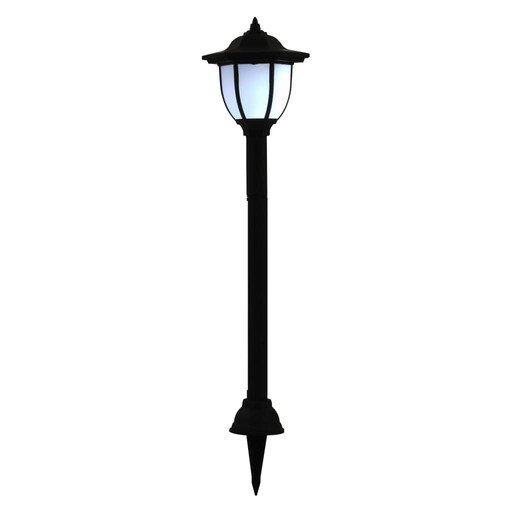
Why it suits this type of user: A set of three solar garden lights is a practical choice for a path, flower bed or small patio. They work without a socket and come with mounting hardware.
The product details clearly state that it has a rechargeable AA battery, switches on automatically at dusk and has an IP44 rating. This makes it clear in advance that a sheltered position is advisable.
Three lights per set, solar-powered and with 3 LEDs of 0.06 watts per light. Suitable for decorative lighting along paths and flower beds.
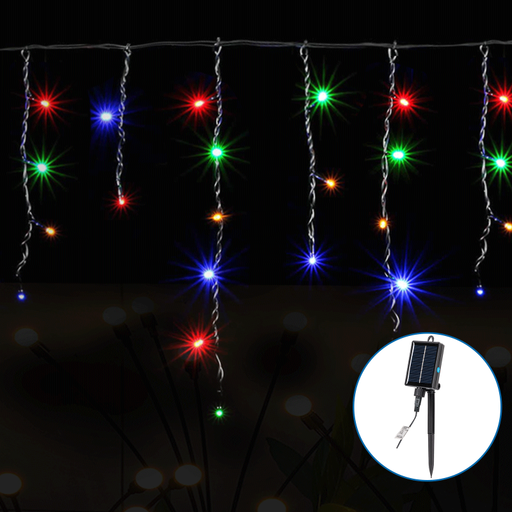
Why it suits this type of user: Ideal for a patio, fence or roof edge where you want a striking lighting feature. The 100 LEDs and choice of light colours offer several ways to customise the look.
The key usage details are clearly stated: IP65, a charging time of 4 to 6 hours in sunlight and a stated battery life of up to 12 hours.
100 LEDs, 8 lighting modes, IP65 and a 3-metre cable between the panel and the string lights.
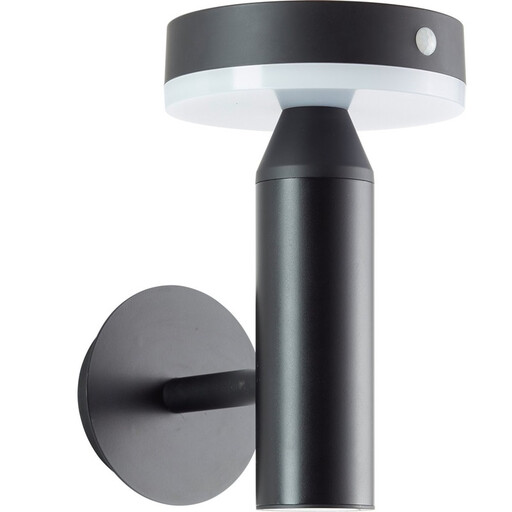
Why it suits this type of user: A practical choice for an entrance, garage or garden path where you only need light when someone walks by.
The product details specify a built-in battery, solar power, a motion sensor with a 120° detection angle and IP44. A sheltered wall is still the recommended position.
350 lumens, integrated LED, 4000 K light colour and automatic illumination when movement is detected.

Why it suits this type of user: For anyone looking for a compact lighting feature with warm white light on a patio or balcony, or around a decorative feature.
The length of 2.2 metres, weight of 145 grams and 8 lighting functions are clearly stated. Before buying, check that the product page lists an IP rating suitable for your location.
232 LEDs, warm white light, 8 lighting functions and a black finish for flexible decorative placement.
We’ve put together a complete, up-to-date list of products that meet these strict selection criteria and the applicable European safety regulations.
Place the solar panel somewhere it can get as much direct daylight as possible. Avoid shade from walls, trees and roof edges. Point the light towards the area you want to illuminate and check that the cable is long enough. Let the panel charge fully before judging how long the light stays on.
Its lifespan depends on the type of light, the battery, how it’s used and its exposure to the weather. With a solar light, the rechargeable battery is a key consideration. Check whether it can be replaced and follow the maintenance instructions. An integrated LED may not need the same maintenance as a light with a separate GU10 or E27 bulb.
A solar garden light doesn’t use electricity from a socket, but its battery is charged by daylight. A mains-powered LED outdoor light usually uses less electricity than a comparable traditional light, but actual consumption depends on its wattage and how many hours it’s on. A motion sensor or timer can help prevent it being left on unnecessarily.
