
Vandaag of morgen in huis

Kwaliteit gegarandeerd

Welkomstaanbiedingen ontgrendelen: GRATIS bezorging | Tot 80% korting | Gratis 30 dagen JoyPlus-proefperiode
Download de app
Good outdoor lighting makes an entrance more accessible, creates a welcoming atmosphere on a patio and can make dark areas around a driveway more visible. However, not every garden light is suitable for every location. A light that looks sturdy and bright in a product photo may provide less light in practice, be difficult to install or offer insufficient protection against rain.
When comparing products, therefore, look beyond design and special offers. The key questions are: where will the light be mounted or placed, how much light do you need and how will it be powered?
A large number of LEDs or a claim about a high lumen output does not automatically mean that the light will be comfortable or usefully distributed. For outdoor ambient lighting, warm white light is usually more suitable than cool white light. For a driveway or dark back garden, a wider beam and a motion sensor may be more practical.
As well as lumens, check the light colour, beam angle and positioning. A compact 300-lumen outdoor LED light may be sufficient for a balcony or front door, but less suitable for a large garden.
An IP rating consists of two digits. The first refers to protection against solid particles, while the second refers to water. IP44 outdoor lighting is protected against splashing water, but is not designed for immersion or direct water jets. It is therefore best to place an IP44 outdoor light under a canopy or on a sheltered wall.
According to the product specifications, a product with IP65 offers greater protection against dust and water jets. Even then, correct installation is important: the solar panel, connections and mounting points must be positioned in accordance with the instructions.
Solar outdoor lighting does not require a fixed cable, but the panel must receive sufficient direct daylight. A light beneath a covered balcony, next to a tall fence or under trees may not charge as effectively. Cloudy weather, short winter days and dirt on the panel all affect the operating time.
According to VIVREAL’s product description, the IL-CSL-BB01 model can charge for approximately 6 to 8 hours in direct sunlight and then provide light for around 8 to 14 hours. This is a stated range; actual performance depends on the weather and positioning.
Choose the level of protection based on the location:
A low light output may be sufficient for a garden path or flower border. An outdoor light with a motion sensor is useful by an entrance, garage or driveway where you only need light when movement is detected.
Pay attention to the following:
An outdoor LED light with an integrated battery can be installed without cables, but it must be charged using sunlight or USB. A fixed outdoor wall light works more reliably from a mains connection, but requires installation.
Clean solar panels regularly and prevent leaves or dirt from covering them. With lights featuring an integrated LED, the light source generally cannot be replaced by the user. Before buying, therefore, check the warranty terms and expected lifespan.
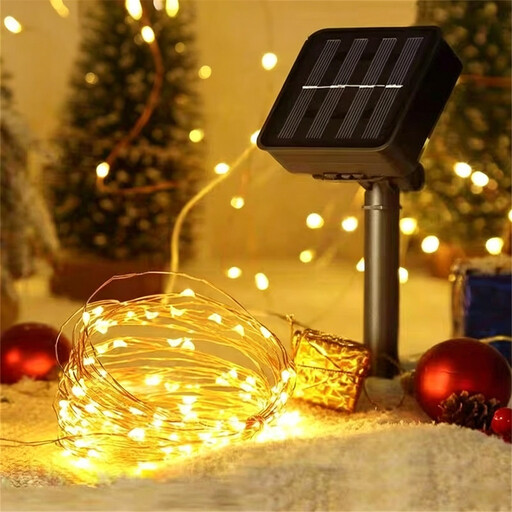
Why it suits this profile: Two 49 ft strings, each with 75 warm white LEDs, are suitable for a balcony, small garden, planter or patio edge. No fixed connection is required.
The product information lists eight lighting modes and a memory function. The solar panel must be positioned in an unobstructed spot in direct sunlight; it is not designed to be submerged in water.
Solar-powered, warm white light, two strings and eight adjustable modes.
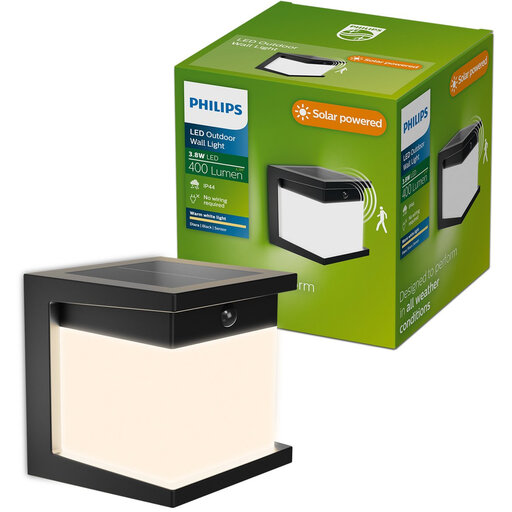
Why it suits this profile: This solar wall light is designed for a wall, balcony or garden and combines an integrated LED with a motion sensor and two lighting modes.
The stated specifications include 400 lumens, 2700K, IP44 and an integrated light source. This makes the light colour and level of protection clear in advance.
400 lumens, warm white 2700K light, sensor and installation without fixed wiring.

Why it suits this profile: The three adjustable heads and motion sensor are designed for a driveway, garage, courtyard or larger garden area where broad illumination is needed.
The product specifications list IP65, a detection range of 60 ft, a 180° angle and three lighting modes. Before installation, however, check the amount of sunlight available.
302 LEDs, a stated light output of 3000 lumens, three heads and three settings.
We have put together a complete, up-to-date list of products that fully meet these strict selection criteria and the applicable European safety regulations.
Place solar garden lighting in a spot that receives as much direct light as possible. Do not just point the panel towards the light itself; also check that a fence or tree will not cast a shadow later on. Mount a sensor light at a height where the sensor has a clear view of the route, without pointing it directly at a busy road or moving branches.
For a fixed 230V outdoor wall light, switch off the electricity and have the connection installed in accordance with local regulations. Also check whether the light is supplied without a bulb. Models with an E27 or GU10 fitting give you more choice, but require a suitable LED bulb.
It can be, but operating time may be reduced by shorter daylight hours and cloudy weather. Position the panel as unobstructed as possible, keep it clean and, where necessary, choose a model with USB charging or a fixed connection.
IP44 means that the light is protected against solid particles larger than 1 millimetre and splashing water from different directions. It does not indicate protection against immersion or direct water jets.
An outdoor LED light generally uses little energy compared with traditional light sources. Actual consumption depends on the wattage and the number of hours it is switched on. A motion sensor can limit operating time; solar lighting does not use electricity from the mains, but it does depend on sufficient sunlight.
