
Vandaag of morgen in huis

Kwaliteit gegarandeerd

Welkomstaanbiedingen ontgrendelen: GRATIS bezorging | Tot 80% korting | Gratis 30 dagen JoyPlus-proefperiode
Download de app
A garden, balcony or patio with atmospheric lighting starts not with the shape of a lamp, but with where you plan to use it. Many disappointing purchases happen because a product is chosen mainly for its appearance. A lamp may look attractive, but still prove impractical in the rain, with limited sunlight or when used every day.
The most common pitfalls when choosing outdoor lighting are:
The IP code indicates how well a lamp is protected against solid particles and water. For example:
For a table lamp that you bring indoors after use, IP44 may be sufficient. For a fixed solar wall, ground or hanging lamp, a higher level of protection often makes more sense.
An outdoor solar lamp needs direct daylight to charge its built-in battery. So don’t place the solar panel under a canopy, tree or balcony edge if it gets little sun there. Also check:
The stated run time is a product specification based on certain conditions, not a guarantee for every summer evening in the UK. Cloudy weather and short winter days affect performance.
Lumens indicate the amount of light a lamp produces. A lamp with 170 to 300 lumens may work well as a table lamp or for practical lighting on a terrace. With outdoor string lights, the arrangement of the small LEDs often matters more than a high light output.
Also consider the colour of the light:
A dimmable outdoor lamp gives you more flexibility. Check whether it dims smoothly or only has a few settings.
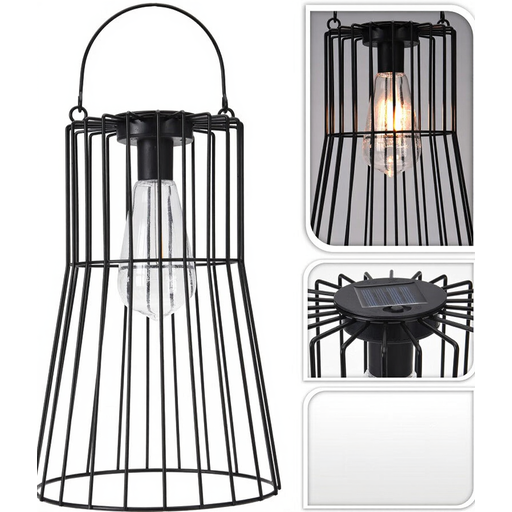
Why it suits this profile: This lantern works without a mains socket and can be placed on a surface or hung up. It’s a good choice if you want to add solar garden lighting to a balcony, windowsill or terrace with minimal fuss.
The product information states that it has an automatic sensor and can stay lit for up to 6 hours after a full charge. It still needs to be placed somewhere with enough daylight.
Built-in solar cell, 3V LED, metal casing and a handle for carrying or hanging.
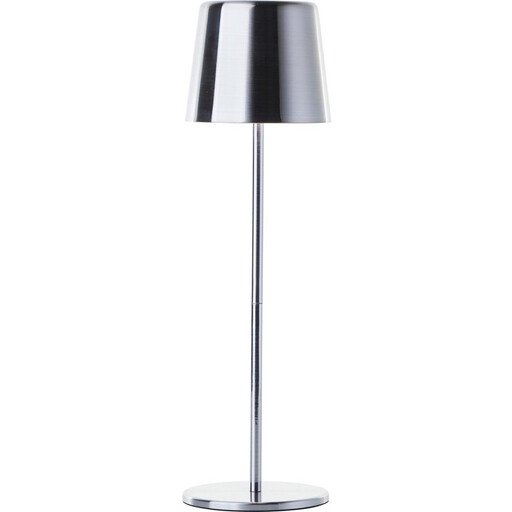
Why it suits this profile: If you’re looking for a rechargeable LED outdoor lamp with adjustable lighting, this gives you more control over brightness and colour temperature than a basic solar lantern.
The specifications list an integrated dimmer, USB connection and IP44 protection. It’s therefore best used in a sheltered spot.
4 W integrated LED, 300 lumens, dimming function and adjustable colour temperature from 3000 to 6500 K.
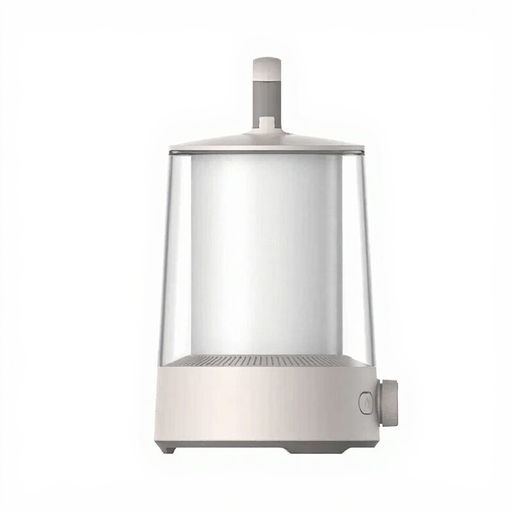
Why it suits this profile: This camping lamp is designed for campers and outdoor enthusiasts who want one portable light to use in a tent, on a table and while moving around nearby.
The lamp runs on batteries and charges via USB-C. Its IP54 rating indicates protection against dust and splashes, not use under water.
Main lamp with adjustable brightness, detachable secondary lamp and a 4800 mAh main battery, according to the product information.
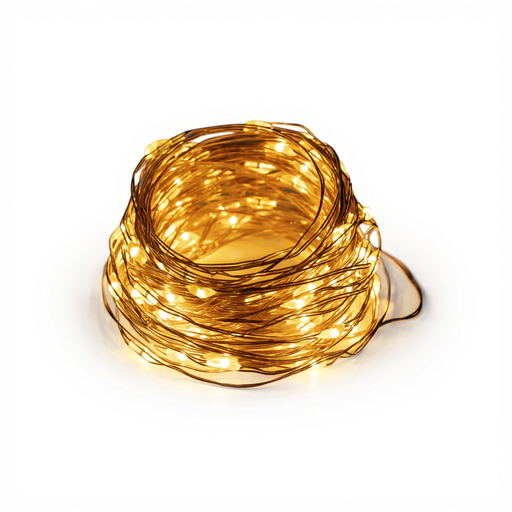
Why it suits this profile: Solar string lights are a practical way to add atmosphere to a balcony railing, pergola, tree or small garden without needing an extension lead.
The product information lists IP65 protection, an adjustable solar panel and a maximum run time of up to 12 hours. Direct sunlight is still needed for charging.
10 metres long, 160 LEDs, eight lighting modes and a built-in 1200 mAh battery, according to the product specifications.
We’ve put together a complete, up-to-date list of products that meet these strict selection criteria and the current European safety regulations.
Place the solar panel somewhere it will get as much direct daylight as possible. Avoid shade from walls, trees and canopies. Also check that the panel stays clean, and switch on the lamp according to the instructions before leaving it to charge.
Lifespan varies depending on the lamp, battery and conditions of use. An integrated LED is often paired with a rechargeable battery. So don’t look only at the stated LED lifespan; check the warranty, charging method and whether parts can be replaced too.
Solar garden lights don’t use mains electricity while they’re switched on. Their practical performance does depend on sunlight and battery capacity, though. A lamp with USB charging may incur charging costs, but these are generally linked to the product’s small battery capacity. Most importantly, check whether solar lighting is suitable for your location. A shady garden may be better suited to a lamp with USB charging or a fixed power connection.
