
Vandaag of morgen in huis

Kwaliteit gegarandeerd

Welkomstaanbiedingen ontgrendelen: GRATIS bezorging | Tot 80% korting | Gratis 30 dagen JoyPlus-proefperiode
Download de app
Good outdoor lighting makes an entrance, garden or patio more usable once it gets dark. Yet many people choose an outdoor light based solely on its appearance. This can result in disappointing brightness, batteries that run out quickly or a light that is unsuitable for the place where you want to install it.
So pay particular attention to these three common pitfalls:
The IP classification consists of two digits. The first digit concerns protection against solid particles, while the second relates to water. For many façades, entrances and covered patios, IP44 is suitable when the light is not exposed to strong jets of water.
For a more exposed spot in the garden, a higher level of protection, such as IP65, is practical. Even with a higher IP rating, correct installation remains important. Ensure that cable entries, connections and fixing points are finished according to the instructions.
Colour temperature is expressed in Kelvin:
Lumens indicate the amount of light produced. A compact outdoor light with 170 lumens is mainly intended for ambience. A light with 1000 lumens or more is better suited to a driveway, large patio or security-focused façade lighting. Also check whether the light is distributed downwards, forwards or all around.
A fixed outdoor wall light running on 230 volts generally requires a connection point and installation by a qualified electrician. The advantage is a constant power supply. A portable or rechargeable outdoor light is more flexible, but needs to be charged regularly via USB.
With an outdoor light with motion sensor, the detection angle, range and adjustability are all relevant. A sensor is useful by a front door or along a path, but it may switch on unnecessarily if it is aimed at a busy road or moving branches.
For solar products, the panel needs an unobstructed view of the sun. Clean it occasionally with a soft, dry cloth. Also consider the light source: with integrated LED lighting, the LED module usually cannot be replaced by the user. A fitting with an E27 or GU10 socket gives you more freedom to choose a different LED bulb later.
The choices below are based on verifiable product specifications, such as IP rating, fitting, lumens, colour temperature, power supply and installation method.
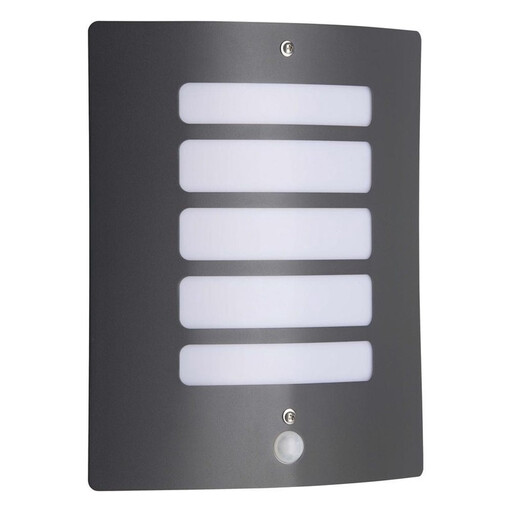
Why it suits this profile: This fixed outdoor light is suitable for an entrance or façade where automatic activation is desirable. The E27 fitting allows you to choose a suitable LED bulb yourself.
The product information clearly states that the light is supplied without a bulb and supports up to 60 W. IP44 is suitable for splashing water, but not for direct jets of water.
E27 fitting, integrated motion sensor, anthracite colour and compact dimensions of 29 × 23 × 9 cm.

Why it suits this profile: This Philips outdoor light is ideal for anyone looking for a powerful solar outdoor light for an exposed façade, driveway or larger outdoor area.
The specifications state 4000 lumens, IP65 and an integrated LED light source. This light is therefore clearly designed for a different purpose than a small IP44 ambient light.
Solar power, motion and dusk sensors, an adjustable lamp head and a stated detection range of up to 8 metres when approached directly.

Why it suits this profile: A practical choice for a garden shed, side wall or driveway without an existing power connection, provided the solar panel receives direct sunlight.
The product description states that it must be positioned in direct sunlight. This makes it clear in advance that the light is less suitable for a permanently shaded wall.
1000 lumens, 3000 K warm white light, integrated motion sensor, two lighting modes and IP44 protection.
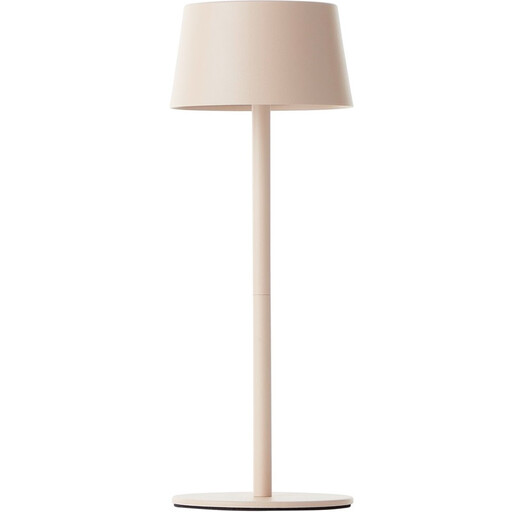
Why it suits this profile: This freestanding LED outdoor light is ideal for a balcony, garden table or patio where permanent installation is not required.
As well as solar charging, USB charging is available. This means you are not entirely dependent on the sun during cloudy weather.
170 lumens, 3000 K, three dimming modes, solar and USB charging, and a compact size of 25 cm in height.
We have put together a complete, up-to-date list of products that fully meet these strict selection criteria and the applicable European safety regulations.
For a sheltered façade, covered area or entrance, IP44 is often suitable. If the light is fully exposed and receives a lot of rain, it is best to choose a model with a higher IP rating, such as IP65. Always check the installation instructions and do not treat IP44 as fully waterproof.
For atmospheric patio lighting, around 100 to 300 lumens may be sufficient. An entrance, driveway or practically lit façade will often require more light. Do not look only at the lumen output; also consider the direction of the beam and the colour temperature. Several smaller lights can provide more even illumination than one powerful spotlight.
A solar outdoor light does not use mains electricity during normal operation. Its practical performance does, however, depend on the amount of sunlight, the battery capacity and how often the sensor is activated. Position the panel away from shade and keep it clean. During prolonged cloudy weather, a model with USB charging can be a practical addition.
