
Vandaag of morgen in huis

Kwaliteit gegarandeerd

Welkomstaanbiedingen ontgrendelen: GRATIS bezorging | Tot 80% korting | Gratis 30 dagen JoyPlus-proefperiode
Download de app
Good outdoor lighting needs to do more than just look attractive. A light by the garden path must be able to withstand rain, a wall light by the front door should respond reliably, and ambient lighting shouldn’t barely shine after a few dark days. Yet many product descriptions focus on eye-catching terms like “waterproof”, “extra bright” or “energy-efficient”.
So pay attention to the specifications behind the marketing. Especially with solar garden lighting, garden path lights and an outdoor light with motion sensor, a few details make a big difference.
An IP rating indicates how well a product is protected against dust and water. IP44 means, among other things, protection against splashing water. That’s suitable for many sheltered walls, patios and entrances, but not for placement where a light is constantly exposed to direct water jets.
IP65 outdoor lights offer higher protection against dust and water jets. This makes them more practical for open garden locations, driveways and unpaved paths. However, IP65 does not mean a light can be placed underwater. Also check whether cables, connections and mounting points are suitable for outdoor use.
A solar garden light depends on sunlight. The stated charging time and burn time are usually based on favourable conditions. In the UK, cloud cover, shade, dirt on the panel and short winter days can affect performance.
Look out for:
A light with automatic on/off switching is handy, but only works well if the light sensor and battery receive enough energy.
A warm white colour temperature around 2700K to 3000K suits ambient lighting for the garden and patio. For a driveway, shed or dark passageway, a higher light output may be more important. So look at lumens, not just wattage. Wattage mainly tells you about energy consumption; lumens indicate how much light the lamp emits according to the product specification.
For a sheltered wall light, for example, choose IP44 when the location isn’t constantly exposed to rain. For garden paths and open borders, IP65 may be a more suitable choice. Place ground lights and solar garden lights securely so they don’t fall over or become a trip hazard.
According to the product description, the Philips Swyn, for example, delivers 400 lumens per light point at a colour temperature of 2700K. The UME light with three light heads states 3000 lumens and 7000K. Such figures can be verified in the product specifications, but the perceived brightness also depends on the mounting height and the surroundings.
Solar garden lights are generally easy to place in the ground. A wall light with a solar panel often avoids the need to run a power cable to the wall. A fixed GU10 or E27 wall light, on the other hand, requires connection to the mains. Have electrical installation carried out by a qualified installer and follow local regulations.
Clean solar panels and light windows regularly with a soft, slightly damp cloth. Also check fixings, cables and the operation of motion sensors.

Why this fits the profile: A simple solar garden light for anyone wanting to mark a garden path, border or lawn edge without cabling.
The product details state a charging time of 4–6 hours, a burn time of 8–12 hours and IP44. This makes it clear that this light is mainly intended for a sheltered or less exposed spot.
Stainless steel housing, 6500K light colour, 55 cm height and installation without mains power.
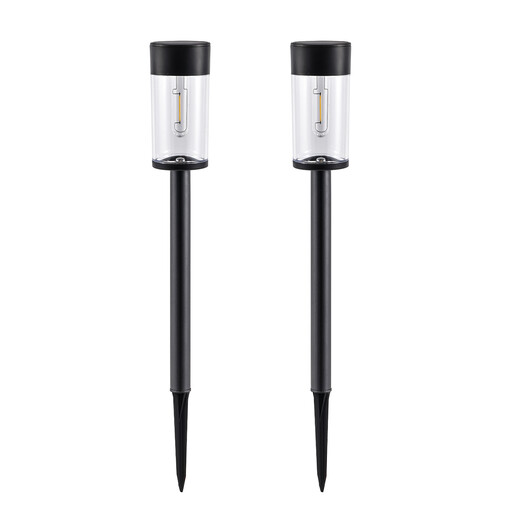
Why this fits the profile: Ideal for anyone looking for garden path lighting with a warm appearance and a higher protection rating for open outdoor spaces.
The stated IP65 rating and 3000K light colour make the protection and atmosphere clearer than a general claim like “for all weather”.
10 lumens per light, automatic operation, metal design and two lights per pack.

Why this fits the profile: For a driveway, garage, back garden or other spot where an outdoor light with motion sensor needs to illuminate a larger area.
The description mentions three light modes, a detection distance of 60 feet, a 180-degree angle and IP65. Check before purchase whether these distances suit your garden layout.
Three adjustable light heads, 302 LEDs, solar power and installation without a fixed mains connection.
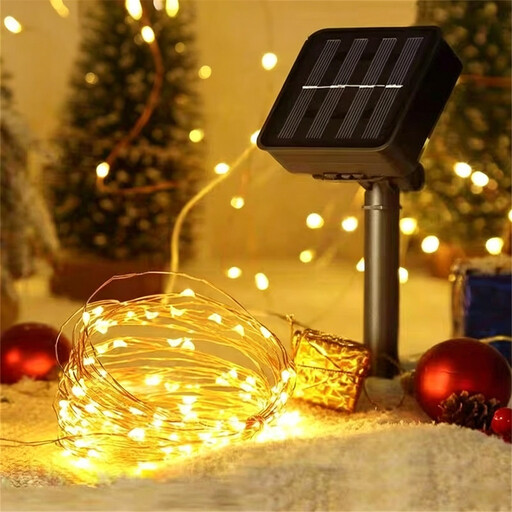
Why this fits the profile: For anyone looking for outdoor string lights around a patio, pergola, balcony or tree without a nearby socket.
The product information explicitly states 6–8 hours charging and 8–14 hours of light, depending on conditions. The solar panel must also be placed outside and in direct sunlight.
Two strings of 49 feet each, each with 75 warm white LEDs, eight light modes and a memory function.
We’ve put together a full, up-to-date list of products that fully meet these strict selection criteria and current European safety regulations.
For a garden path, ground lights or solar garden lights with a sturdy ground spike are practical. Pay attention to the light distribution, height and IP rating. Warm white light around 3000K often provides enough orientation without a harsh appearance. Place several lights at equal intervals for a calmer light pattern.
The burn time per night depends on sunlight, battery capacity, temperature and usage. Manufacturers often state an expected lifespan for the LEDs, but that’s not the same as the burn time after a single charge. Clean the panel and choose a spot without shade for a more consistent result.
Solar garden lighting uses no mains power during normal use. With fixed LED garden lighting, consumption depends on wattage, burn time and the number of lights. A motion sensor can limit the burn time. For a mains-powered string, the timer function, LED technology and the number of hours of use determine the running costs.
