
Vandaag of morgen in huis

Kwaliteit gegarandeerd

Welkomstaanbiedingen ontgrendelen: GRATIS bezorging | Tot 80% korting | Gratis 30 dagen JoyPlus-proefperiode
Download de app
Good outdoor lighting needs to suit its location, intended use and the weather conditions. A light for a covered balcony needs different features from an outdoor light with a motion sensor for the driveway. However, many buyers focus mainly on appearance, lumens or a low price. As a result, a product may disappoint in practice.
An IP44 outdoor light is protected against splashing water, but not direct jets of water or immersion. This makes IP44 suitable for a covered veranda, balcony or sheltered wall, for example. For an exposed garden, driveway or spot that gets a lot of rain, an IP65 outdoor light is a better choice. IP65 provides protection against dust and jets of water from different directions.
Pay attention to where the light will be installed, too. Even waterproof outdoor lighting may be unsuitable if the housing is installed incorrectly or the cable connection is not properly sealed.
Lumens indicate a light’s total output, but they don’t tell you everything about how it will feel. A 3,000-lumen light is designed for a larger area than a portable outdoor light with 170 lumens. For atmospheric patio lighting, a lower light output is often more pleasant. On a driveway or path at the back of the house, focused, brighter light may be more practical.
Colour temperature matters, too. Around 3000 K usually gives a warm white light, while a product with a higher value may look cooler. So always check the combination of lumens, light colour and beam angle.
Solar outdoor lighting uses a solar panel and a built-in battery. Charging performance depends on direct daylight, the season, shade and the angle at which the panel is positioned. The battery may not charge as well under a balcony, next to a tall fence or on a north-facing wall.
A solar-powered outdoor light is practical when you don’t want to run a cable, but check how the panel will be positioned first. Some models can also be charged via USB, which is useful during dark or overcast periods.
Use IP44 mainly in sheltered locations and choose IP65 if the light will be more exposed to rain, dust or splashing dirt. Also check whether the light is designed for wall mounting, freestanding use or fixed wiring.
An outdoor wall light with an E27 or GU10 fitting gives you flexibility when choosing an LED bulb. Check the maximum wattage and bear in mind that some fittings are supplied without a light source.
An outdoor light with a motion sensor can be useful by an entrance, garage or driveway. Check three things:
A sensor that is too sensitive may be triggered by pets or moving branches. A range that is too short means the light may not come on until you’re already at the door.
Solar outdoor lighting doesn’t need a fixed power connection, but it does need enough sunlight. USB-rechargeable lights are more flexible on a balcony or patio. A fixed 230-volt wall light will generally need to be installed by a qualified electrician.
For lights with integrated LEDs, check whether the light source can be replaced. This isn’t possible with many compact fittings. Clean solar panels, sensors and fittings with a soft cloth, and follow the manufacturer’s maintenance instructions.
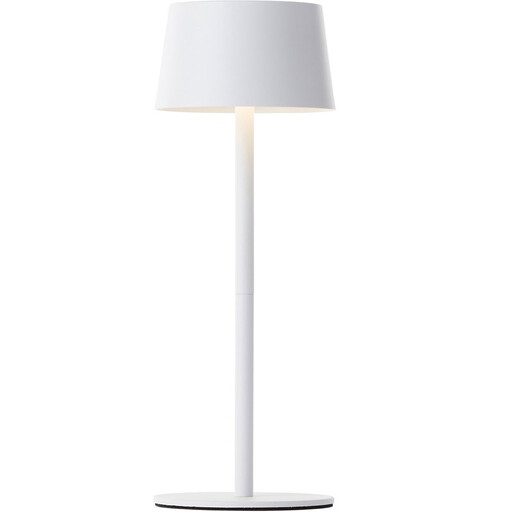
Why it suits this type of user: This freestanding light is suitable for a balcony, table or small patio where there’s no wiring. Solar and USB charging give you two ways to use the light.
The IP44 rating is clearly stated: suitable for splashing water, but not direct jets of water. This makes it easier to judge where to position the light before you buy.
170 lumens, warm white 3000 K light, three dimming settings, and solar or USB charging.

Why it suits this type of user: The three adjustable heads are designed for a driveway, garden, garage or larger outdoor area where you want broad light coverage.
The product details specify IP65, a 180-degree detection angle and wall mounting. This makes it easier to assess its water resistance and where it can be used.
302 LEDs, a stated light output of 3,000 lumens, three modes and motion detection up to 60 feet, according to the product description.

Why it suits this type of user: This wireless wall light with magnetic mounting is ideal for an entrance, balcony or patio where you don’t want fixed wiring installed.
The product specifications state IP44 and warn against direct jets of water. The magnetic mount should be secured firmly to a suitable, flat surface.
USB-C charging, an integrated motion sensor, 300 lumens and 3000 K, according to the product specifications.
We’ve put together a complete, up-to-date list of products that meet these strict selection criteria and comply with current European safety regulations.
For a sheltered spot, IP44 is often suitable, as long as the light won’t be exposed to direct jets of water. For an exposed wall, garden or driveway, IP65 may be a better choice. Always check the product manual and installation requirements.
Solar outdoor lighting doesn’t use mains electricity during normal use. However, how well it works in practice depends on having enough daylight, the battery capacity and the number of hours it’s used. A USB-rechargeable light can be a useful extra when there’s little sunshine.
Lifespan varies by model, usage conditions and battery. With integrated LED lights, the light source usually can’t be replaced by the user. With an outdoor wall light that has an E27 or GU10 fitting, you can replace the light source separately, provided it meets the fitting’s maximum specifications.
