
Vandaag of morgen in huis

Kwaliteit gegarandeerd

Welkomstaanbiedingen ontgrendelen: GRATIS bezorging | Tot 80% korting | Gratis 30 dagen JoyPlus-proefperiode
Download de app
Good outdoor lighting needs to do more than just look attractive during the day. In a British garden, a lamp has to contend with rain, wind, damp and dark winter months. Yet many shoppers focus mainly on design or the number of LEDs. This often leads to disappointment: a solar light doesn’t charge properly, a wall light turns out not to be suitable for direct rain, or a sensor reacts to every passing cat.
With these practical checkpoints, you can compare garden lighting, solar outdoor lighting and an LED outdoor lamp on the features that really matter in everyday use.
An IP rating indicates how well a product is protected against dust and water. IP44 means, among other things, protection against splashing water. This makes a lamp suitable for many sheltered outdoor spots, but not automatically for a location exposed to direct water jets.
IP65 outdoor lighting offers a higher level of protection against dust and water jets. Still, always check the installation instructions: a solar panel, cable connection or plug socket may have different limitations than the lamp itself.
A solar outdoor light only works reliably when the panel receives enough light during the day. Shade from a fence, tree or canopy reduces the charging time. Overcast winter days also affect the run time. A product listing might mention a charging time of four to six hours and a burn time of five to eight hours; these are conditions from the product specification, not a guarantee for every garden.
So place solar garden path lights as freely as possible and clean the panel occasionally.
Warm white light is pleasant as ambient garden lighting or as patio lighting. For a driveway, entrance or dark corner, you often need a directional beam, higher light output or an outdoor lamp with a sensor. Pay attention to the light output in lumens, not just the number of LEDs. A lamp with 270 lumens has a different application than a model whose product information states 550 lumens.
A cordless outdoor lamp is handy when you don’t want to drill or run cables. Do check the battery capacity, charging time and stated run time.
Warm white, for example around 2700–3000 K, usually suits a seating area, façade or patio. RGB or RGBCCT lighting offers more colour choices and can be controlled via an app or Bluetooth. This is interesting for smart outdoor lighting, but check compatibility and range beforehand.
A dimmer is practical when you want to use the same lamp both during a dinner and for gentle evening lighting. The Atmosphera Kiara, according to the product information, has three light levels, a warm white light source and a stated light output of 270 lumens.
Measure the available space beforehand. A floor lamp of 108 cm works differently next to a lounge set than an outdoor ground spotlight of around 20 cm. Also look at:
An IP rating does not replace good maintenance. Remove dirt from a solar panel and check cables, housings and fixings regularly.
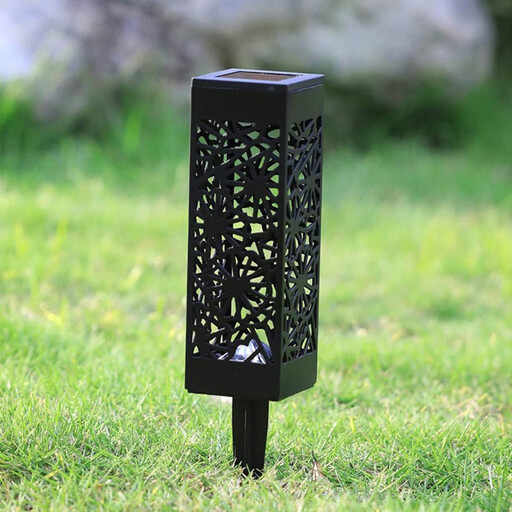
Why this fits the profile: The set of six lights is ideal for anyone wanting to mark out a garden path, flower bed or balcony without wiring. The ground spikes make installation simple.
The product information states IP65, automatic on/off switching and a stated charging time of four to six hours. Do place the lights in a sunny spot.
Six lights per set, warm white light and a size of approximately 38 cm according to the product description.
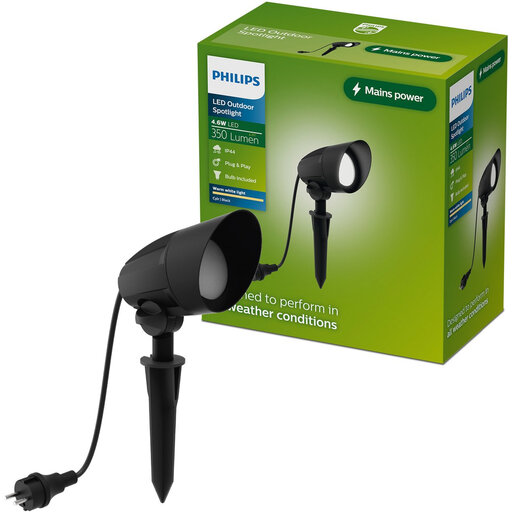
Why this fits the profile: This portable spotlight suits homeowners who want to highlight a tree, shrub, driveway or façade without a fixed wall mount.
The application is clearly defined: IP44 offers splash-water protection, so do not place the lamp where it will be exposed to direct water jets or submersion.
Includes GU10 LED lamp, 2700 K warm white light, 350 lumens and a 150 cm cable according to the product data.

Why this fits the profile: This model is aimed at driveways, garages, sheds or large yards where lighting on movement is desired.
According to the product information, the model has IP65 protection, three light modes and a motion sensor. Point the panels towards sufficient sunlight for the charging function.
Three adjustable light heads, a stated detection angle of 180 degrees and installation without fixed wiring.
We have compiled a full, up-to-date list of products that fully meet these strict selection criteria and comply with current European safety regulations.
For a sheltered spot, IP44 may be sufficient, for example under a canopy. For a lamp that is more exposed to rain and dust, IP65 outdoor lighting may be more suitable. Always check the full installation and safety instructions. The IP rating does not automatically say anything about the plug, cable or connection.
The run time per night depends on sunlight, season, battery capacity and light setting. Product descriptions often give a range, but in the British winter the output may be lower. Clean the panel, place it free from shade and choose a lower light setting when a longer burn time is important.
Solar lights do not use a mains connection, but they do have a built-in rechargeable battery that may need replacing over time. An LED outdoor lamp on mains power typically uses less energy than older lighting; the actual consumption depends on the wattage and the number of hours it is on. A sensor or timer can reduce unnecessary burn time.
