
Vandaag of morgen in huis

Kwaliteit gegarandeerd

Welkomstaanbiedingen ontgrendelen: GRATIS bezorging | Tot 80% korting | Gratis 30 dagen JoyPlus-proefperiode
Download de app
Good outdoor lighting needs to do more than look attractive in a product photo. A light for the garden, exterior wall or driveway has to cope with rain, wind, temperature fluctuations and sometimes limited sunlight. Yet important details such as the IP rating, power supply and installation are often only checked after the order has been placed.
With this guide from the Joybuy Product Recommendation Officer, you can compare outdoor lights based on verifiable specifications. This helps you avoid a poor purchase and choose more confidently between a solar outdoor light, LED outdoor light, outdoor wall light or atmospheric garden lighting.
A designation such as IP44 outdoor lighting means protection against solid objects larger than 1 millimetre and splashing water from different directions. IP44 is therefore not the same as fully waterproof. A light with this rating is mainly suitable for sheltered or partially sheltered locations, depending on the product instructions.
IP44 may be suitable for an exterior wall beneath an overhang. For an exposed location where the light is directly exposed to driving rain, snow or a garden sprinkler, a higher IP rating may be the better choice. Always check the installation instructions for the specific model.
A high number of LEDs does not automatically mean that the light will be pleasant or useful. Lumens indicate the total luminous flux, but do not fully describe how the light is distributed. A bright light can feel uncomfortable on a balcony, while a soft light may not provide enough illumination by the front door.
Use the intended application as your starting point:
A fixed outdoor light operating at 220–240 volts will often need to be connected to the mains. Professional installation by a qualified electrician is important for an outdoor wall light. A solar outdoor light or rechargeable outdoor light offers greater flexibility, but requires sufficient sunlight or regular charging.
Also consider the surface it will be placed on. A magnetic light will only stay securely in place on a suitable metal surface. A freestanding light must stand firmly and should not be placed on the edge of a table or balcony.
Do not just look for “for outdoor use”; check the specific IP code. IP44 provides protection against splashing water; according to the product specification, IP65 protects against dust and water jets. Correct installation remains important even with IP65. Do not place connections and plugs in standing water.
An integrated LED outdoor light usually requires little maintenance, but the LED is not replaceable on some models. A light with an E27 or GU10 fitting, on the other hand, allows you to choose your own light source and replace it later.
Colour temperature is expressed in kelvin:
A dimmer, touch control or several light modes can be useful when the same light is used both for dining and relaxing.
Measure the available space beforehand. For example, a 108 cm floor lamp requires more room than a compact wall light of approximately 10 cm. Also check whether mounting materials are included and whether the light is wired, powered via USB or runs on batteries.
For maintenance, a soft, dry or slightly damp cloth is sufficient for many models. When cleaning solar lighting, wipe the panel regularly so that dirt does not unnecessarily reduce the light output.
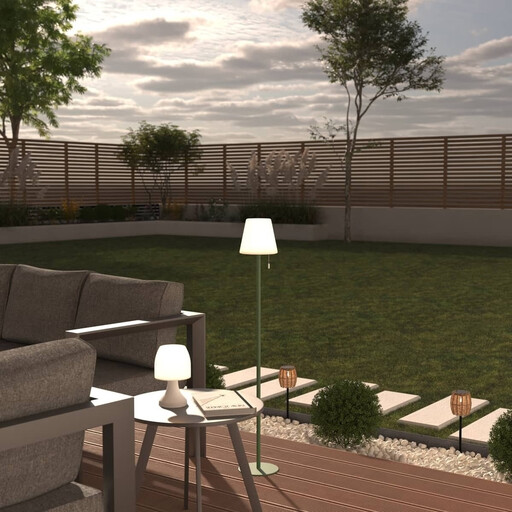
Why it suits this profile: This freestanding light runs on batteries and can be placed on a balcony or patio without a fixed connection. Its three light modes are suitable for everyday use and decorative occasions.
The product specification states IP44, battery power and a runtime of up to ten hours. You therefore do not need to arrange fixed wiring, but you should protect the light from direct water jets.
108 cm high, three light modes, integrated light source and freestanding placement.
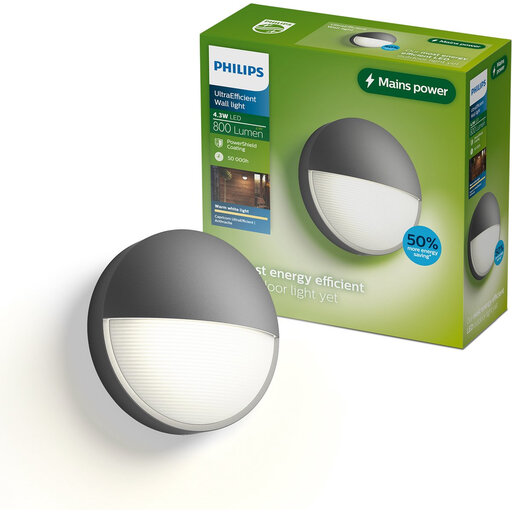
Why it suits this profile: This fixed LED outdoor wall light is designed for anyone looking for a sleek solution for an exterior wall or balcony, with warm white light and an aluminium housing.
The IP44 rating is clearly stated. The light is not fully waterproof and requires a fixed connection installed by a qualified electrician.
800 lumens, 2700K warm white light, aluminium housing and integrated LED.

Why it suits this profile: The three adjustable light heads, motion sensor and broad light coverage are designed for driveways, garages, yards and larger outdoor spaces.
The stated IP65 rating, 180° detection angle and three modes provide more specific information than simply calling it a “security light”. Direct sunlight on the panel is needed for optimum performance.
302 LEDs, stated luminous flux of 3000 lumens, three light heads and solar power.
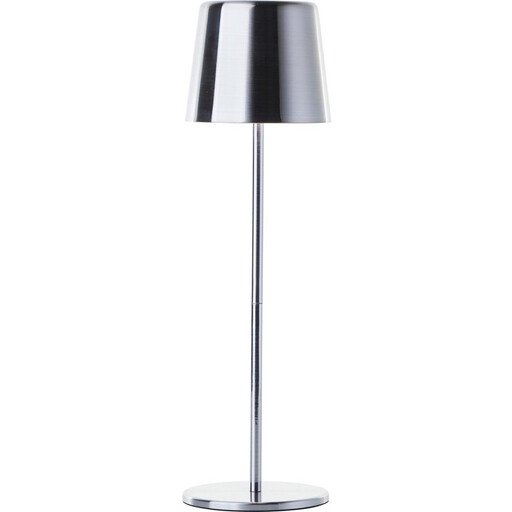
Why it suits this profile: This rechargeable outdoor light is freestanding, dimmable and suitable for use on a stable table on the patio, balcony or veranda.
The light has a stated luminous flux of 300 lumens and an integrated dimmer. IP44 means protection against splashing water, so do not place it in standing water or beneath a direct water jet.
4W integrated LED, 300 lumens, adjustable colour temperature from 3000K to 6500K and USB charging.
We have put together a complete, up-to-date list of products that fully meet these strict selection criteria and the applicable European safety regulations.
IP44 outdoor lighting is splash-resistant and can be used in many sheltered outdoor locations. Think of a covered patio, balcony or exterior wall beneath a roof edge. IP44 is not intended for immersion or direct water jets. You should also always check the installation instructions.
A solar outdoor light does not use electricity from the mains while it is switched on. Its practical performance does depend on the amount of sunlight, the position of the panel, the battery capacity and the selected light setting. In a shady Dutch garden, the runtime may therefore vary.
Lifespan varies depending on the model, usage time and conditions. Some product descriptions state an expected LED lifespan, but this is not a guarantee of an exact number of operating hours in every situation. Also check whether the light source is replaceable. With an integrated LED, the entire light often needs to be replaced if it develops a fault.
