
Vandaag of morgen in huis

Kwaliteit gegarandeerd

Welkomstaanbiedingen ontgrendelen: GRATIS bezorging | Tot 80% korting | Gratis 30 dagen JoyPlus-proefperiode
Download de app
A well-lit entrance, driveway or patio makes outdoor spaces more practical and enjoyable. However, not every outdoor light is suitable for where you want to use it. A lamp described as “waterproof” on a product page, for example, may only be able to handle splashes. And a solar outdoor light won’t perform well on a shady north-facing wall.
As a Joybuy Product Recommendation Officer, I always start by looking at verifiable specifications. Below, you’ll discover which pitfalls are often overlooked, which technical details matter, and what type of outdoor lighting best suits your situation.
The IP rating indicates how well a product is protected against solid particles and water. IP44 outdoor lighting is protected against splashing water, but not against strong water jets or immersion. So, place an IP44 outdoor light preferably under a canopy or on a sheltered wall.
IP65 outdoor lighting offers a higher level of protection against dust and water jets. This makes it a more logical choice for garden paths, open borders and areas where rain falls directly onto the light. IP65 does not mean you can use a fitting underwater.
Solar outdoor lighting needs enough daylight to charge its built-in battery. Under a tree, balcony or canopy, the burn time can noticeably decrease. According to the product description for the Huacan Solar Garden Lights, a full charge takes around 4 to 6 hours of sunlight, and the stated lighting time is 5 to 8 hours. Treat this as a product specification under the stated conditions, not as a guaranteed duration for every Dutch winter’s day.
More lumens doesn’t automatically mean the lighting will be pleasant for a patio or balcony. A bright light may be suitable for a driveway, but it can feel harsh as mood lighting for the garden. Also pay attention to:
Use IP44 outdoor lighting at a sheltered front door, balcony or covered patio. For an open garden path or border, a product with IP65 is generally more practical, provided the manufacturer clearly states the rating.
Always check the installation instructions too. An IP rating doesn’t automatically tell you about the quality of the wall bracket, cables or plug. For a fixed 230 V connection, installation must be carried out by a qualified electrician, according to the product information.
LED outdoor lighting uses an integrated or replaceable LED light source. An integrated LED is compact and ready to use straight away, but it usually cannot be replaced separately. With a GU10 or E27 fitting, you choose the light source yourself and can later adjust the colour temperature or brightness.
Solar outdoor lighting doesn’t require a fixed cable to the mains. However, performance depends on placement, the amount of sunlight and battery capacity. Mains-powered lighting is suitable when you need long-lasting, predictable light, but it requires a safe electrical connection.
Measure the wall, border or path before you order. A large sensor light can overhang on a narrow wall. Also check:
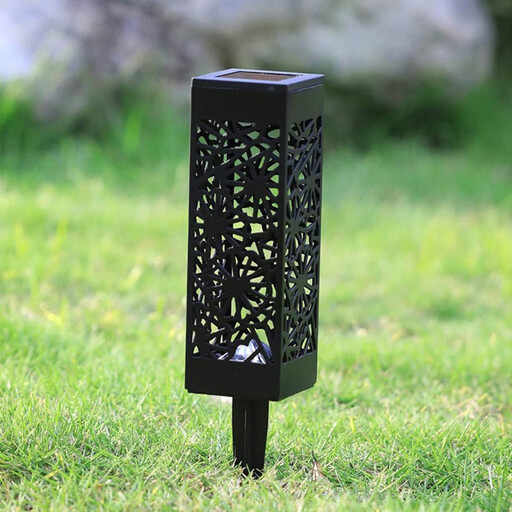
Why this fits the profile: Six ground lights are ideal for marking out a garden path, border or balcony planter without any fixed wiring.
The product information states IP65 and gives specific charging and burn times. Just make sure to place the lights in a sunny spot.
Six pieces, warm white LED and installation with ground spike, no wiring needed.
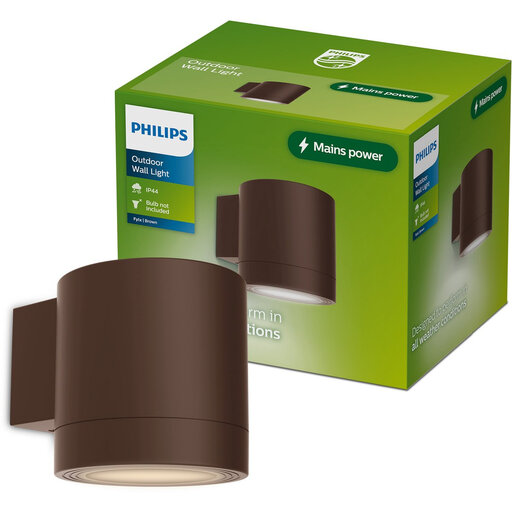
Why this fits the profile: This outdoor wall light is ideal for anyone looking for a fixed, adjustable lighting solution for a wall or entrance.
The light is supplied without a GU10 bulb. This is made clear upfront and prevents any wrong expectations about brightness.
GU10 fitting, aluminium housing and IP44 rating for sheltered outdoor locations.

Why this fits the profile: The wide light distribution and motion sensor are aimed at driveways, garages and larger yards.
The specifications mention 3 modes, IP65, a 180-degree detection angle and three adjustable heads.
302 LEDs, stated light output of 3000 lumens and wall mounting without fixed wiring.
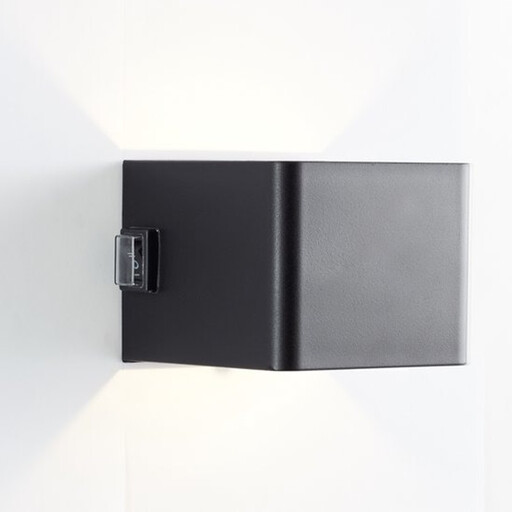
Why this fits the profile: The magnetic mounting and USB-C rechargeable battery are handy when you don’t want to drill or run cables.
The product information states IP44 and warns that the light is not waterproof. So use it in a sheltered spot and not where it will be hit by direct water jets.
300 lumens, 3000 K, motion sensor and removable mounting via a magnetic plate.
We’ve put together a full, up-to-date list of products that fully meet these strict selection criteria and comply with current European safety regulations.
For a sheltered wall, balcony or canopy, IP44 can be suitable. For an open garden path or exposed location, IP65 is more appropriate. Always check the full installation and safety instructions for the specific product.
The lifespan varies by product and usage conditions. With integrated LED lighting, the light source is often not replaceable. With a GU10 or E27 outdoor light, you can replace the bulb yourself. So don’t just look at the promised lifespan, but also at replaceability, warranty and the availability of spare parts.
Solar outdoor lighting doesn’t use mains power while it’s on. The battery charges during the day via the solar panel. The amount of light depends on sunlight hours, placement, temperature and battery condition. For constant lighting throughout the night, mains power or a larger battery solution may be more suitable.
