
Vandaag of morgen in huis

Kwaliteit gegarandeerd

Welkomstaanbiedingen ontgrendelen: GRATIS bezorging | Tot 80% korting | Gratis 30 dagen JoyPlus-proefperiode
Download de app
The right outdoor lighting can make your entrance easier to navigate, your patio more inviting and your garden usable after dark. But an attractive product photo isn’t enough to help you choose well. Many shoppers focus mainly on the number of LEDs or a low price, when other features have a greater impact on everyday use.
Three common pitfalls to watch out for:
The IP code consists of two digits. The first indicates protection against solid particles, and the second indicates protection against water.
IP65 doesn’t mean a light fitting can be placed underwater. Also check that the cable, plug and connections are suitable for outdoor use.
Light output is usually measured in lumens. For atmospheric garden lighting, a soft, warm colour is often more pleasant than very bright white light. More light can be useful for a driveway or back door.
Consider the following:
A motion sensor won’t prevent a light from being poorly positioned. If you want to avoid it switching on unnecessarily, don’t point the sensor directly at a busy pavement or moving branches.
An LED outdoor lighting product with a plug provides continuous light as long as a suitable socket is available. A battery-powered model is more flexible, but needs maintenance and timely battery replacement or recharging. A solar outdoor light needs to be placed where its panel will receive enough direct daylight. Shade from a fence, tree or canopy can affect how long it stays lit.
Before you buy, check:
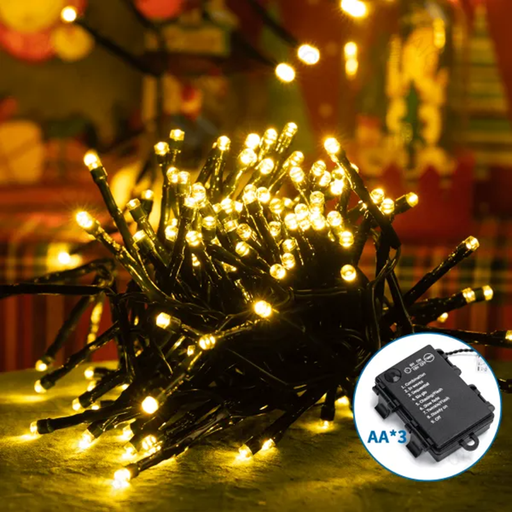
Why it suits this type of user: This string of lights runs on 3 AA batteries and is 5 metres long. That makes it suitable for a balcony, small garden or temporary decoration where there isn’t a socket nearby.
The product information lists an IP44 rating, 8 lighting modes, a timer and a memory function. Remember to check the battery level if you use it outdoors for long periods.
200 LEDs, 5-metre length, timer and battery power, with no fixed wiring.
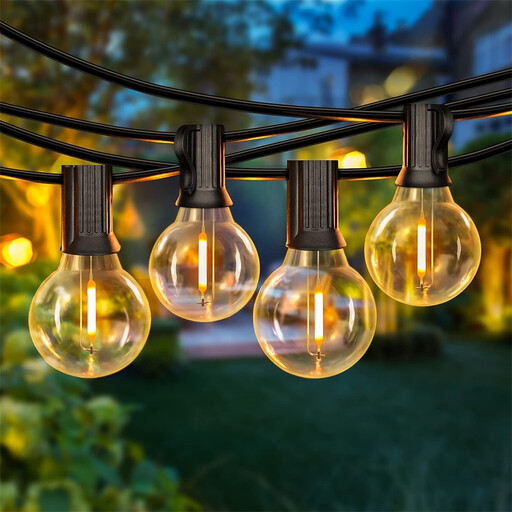
Why it suits this type of user: At 30 metres long, this string of lights is a good fit for a spacious garden, covered patio, event or long fence.
The product description mentions replaceable bulbs, dimmability and several lighting modes. Keep the connections out of standing water and don’t exceed the maximum number of connectable sets.
30 metres, 50+2 LEDs, plug-in power and replaceable G40 bulbs.

Why it suits this type of user: This solar outdoor light is designed for a driveway, garage, garden path or another spot where you don’t want a fixed connection.
According to the product information, the light has IP65 protection, three lighting modes and a motion sensor. Position the solar panel somewhere it will receive enough direct daylight.
302 LEDs according to the product description, three adjustable light heads, solar power and an IP65 rating.

Why it suits this type of user: Wireless magnetic installation and a rechargeable battery make it a flexible choice for a balcony, patio or entrance where you don’t want to drill or run cables.
The product information lists a motion sensor, USB-C charging and IP44 protection. The light is splash-resistant, not waterproof, so make sure the magnetic plate is firmly attached in a sheltered spot.
300 lumens, 3000 K, integrated LED, motion sensor and wireless installation.
We’ve put together a complete, up-to-date list of products that meet these strict selection criteria and the applicable European safety regulations.
Start by checking the IP rating and where you plan to install the light. An IP44 model is generally suitable for a sheltered exterior wall or covered area. An IP65 outdoor light may be a better choice for a more exposed spot. Always follow the manufacturer’s safety warnings and keep plugs and connections away from standing water.
Lifespan varies depending on the model, light source and conditions. An integrated LED usually can’t be replaced by the user. With a string of lights that has replaceable bulbs, you can replace individual bulbs. In either case, correct installation, dry connections and careful cleaning can help prevent unnecessary damage.
That depends on the wattage, how long it’s switched on and the power supply. LED lighting generally uses less energy than comparable traditional light sources, but the actual consumption is listed with the product. A timer, motion sensor or solar outdoor light can reduce the time a light draws power from the mains. For battery-powered models, also factor in the cost of replacement batteries or recharging.
