
Vandaag of morgen in huis

Kwaliteit gegarandeerd

Welkomstaanbiedingen ontgrendelen: GRATIS bezorging | Tot 80% korting | Gratis 30 dagen JoyPlus-proefperiode
Download de app
Suitable outdoor lighting does more than illuminate a façade or patio. The right lamp helps you find the front door, makes a driveway easier to navigate and gives a garden or balcony a welcoming look. Yet many people choose an outdoor lamp based solely on its appearance or lumen count. This can result in a lamp that quickly gets dirty, shines too brightly or is unsuitable for its intended mounting location.
In this buying guide, you’ll discover what to look for in an outdoor wall light, solar outdoor lamp, garden post light or lamp with a motion sensor. The recommendations are based on verifiable specifications such as IP rating, light output, power supply and lamp holder.
An IP44 outdoor lamp is protected against splashing water from various directions, but is not designed for immersion or powerful water jets. This makes IP44 particularly suitable for a sheltered façade, veranda, balcony or covered entrance.
An IP65 outdoor lamp offers greater protection against dust and water jets. This is more practical for an open driveway, shed or location where the lamp is directly exposed to rain. However, IP65 still does not mean that you can place the lamp underwater.
A high lumen count means plenty of light, but does not automatically guarantee a pleasant distribution. A 4,000-lumen lamp may be suitable for a wide driveway, but too bright next to a seating area. For ambient lighting, a lower light output and a warm colour temperature, such as 2,700K or 3,000K, are often a more sensible choice. For functional façade lighting or security lighting, bright, cooler light may be more suitable.
Also consider the beam angle. An outdoor lamp with several adjustable heads distributes light differently from a compact wall lamp that mainly shines downwards.
A solar outdoor lamp only works well if its panel receives enough direct sunlight during the day. Shade from a balcony, tree or roof edge reduces charging performance. According to manufacturers’ product information, a fully charged battery can last for several nights, but actual operating time depends on hours of sunlight, temperature, the selected mode and how often the motion sensor is activated.
So check the installation location beforehand. Wireless installation is convenient, but not every sunny spot is also the right place for the lighting effect you want.
Choose the IP rating according to the lamp’s exposure to rain:
Solar lighting and rechargeable outdoor lamps are useful when you do not want to run a cable. However, an integrated battery requires periodic charging or sufficient sunlight. A mains-powered lamp works more consistently, but requires fixed wiring and safe installation.
Also check whether the light source is included. A GU10 outdoor lamp or E27 wall light is sometimes supplied without a bulb. This allows you to choose the colour temperature and light output yourself, but you will need to purchase the light source separately.
For a path or border, even, glare-free lighting is important. A garden post light producing, for example, 800 lumens can mark a pathway without brightly illuminating the entire garden. For a driveway or large back garden, a solar floodlight with a motion sensor may be more practical.
When choosing an outdoor lamp with a motion sensor, look for:
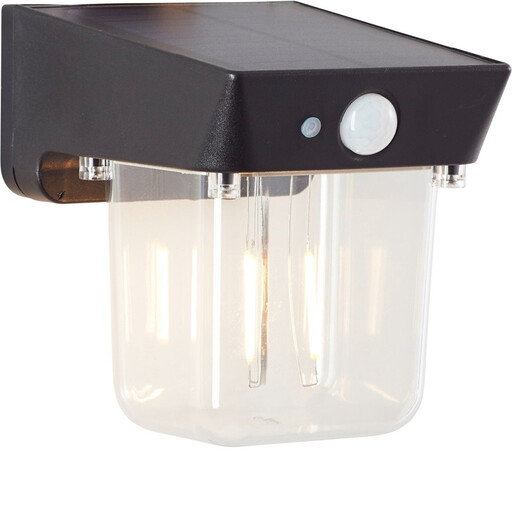
Why it suits this profile: This compact solar outdoor wall light works without fixed wiring and has an integrated motion sensor. It’s ideal for an entrance, balcony or small garden where you want to add lighting quickly.
The IP44 rating makes it clear that this model is splashproof, but is not designed for immersion. The installation location must therefore be suitably sheltered.
Solar power, integrated LED, 180 lumens, 2,700K and motion sensor.

Why it suits this profile: This fixed garden post light is ideal for borders, paths and patios where you want a neat, even line of light.
The specifications state IP44 protection and a requirement for earthing. Installation and electrical connection should therefore not be confused with fitting a simple plug-and-play lamp.
800 lumens, 2,700K, aluminium housing and a height of 96 cm.

Why it suits this profile: For a large driveway, garage or back garden, the wide detection range and high light output are particularly useful. The lamp has an adjustable head and solar power.
The product information states IP65, a dusk sensor and a detection range of 8 metres when approached directly and 16 metres from the side. However, check that the installation location receives enough sunlight.
4,000 lumens, 3,000K, integrated LED, IP65 and two lighting modes.
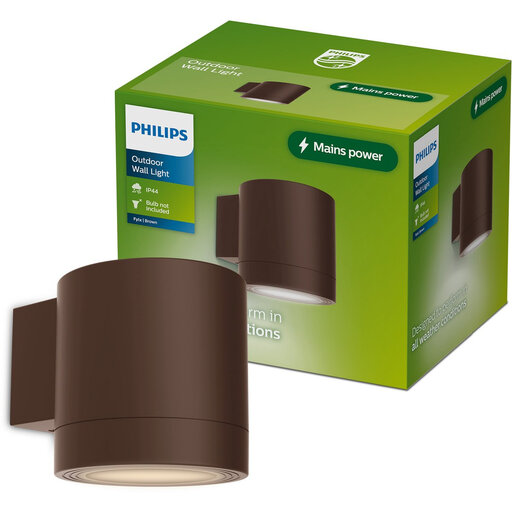
Why it suits this profile: This compact outdoor wall light is ideal if you want to choose the GU10 light source, light colour and light output yourself for a façade, veranda or entrance.
The lamp is supplied without a GU10 spotlight bulb. This is clearly stated in the product information, so you can account for purchasing a separate light source in advance.
GU10 fitting, aluminium housing, IP44 and replaceable light source.
We’ve put together a complete, up-to-date list of products that fully meet these strict selection criteria and the applicable European safety regulations.
Clean a solar panel regularly with a soft, slightly damp cloth. Dirt reduces the amount of light reaching the battery. For fixed lamps, check that the connections are properly sealed and switch off the power before carrying out maintenance.
When installing a lamp, always use fixings suitable for the surface. A magnetic lamp should only be mounted on a flat, clean and sufficiently magnetic surface. Do not install an IP44 lamp in a location where water collects. For mains power, earthing or new wiring, installation by a qualified electrician is advisable and may sometimes be required.
That depends on its function. A few hundred lumens may be sufficient for ambient lighting along a path. An entrance or driveway requires more light. As well as lumens, consider the beam angle, colour temperature and position to ensure the light does not shine directly into windows or people’s eyes.
An IP44 outdoor lamp is splashproof, but not waterproof in the sense of being suitable for immersion. Use this type mainly in a sheltered location and always follow the manufacturer’s safety information.
A solar outdoor lamp does not use electricity from the mains while it is lit. However, the battery may lose capacity over time and eventually need replacing. Performance depends on sunlight, the season, temperature and how often the motion sensor is activated.
