
Vandaag of morgen in huis

Kwaliteit gegarandeerd

Welkomstaanbiedingen ontgrendelen: GRATIS bezorging | Tot 80% korting | Gratis 30 dagen JoyPlus-proefperiode
Download de app
Good outdoor lighting should suit the location, how you’ll use it and the British weather. A light for a garden path has different requirements from an outdoor wall light by the front door or a camping lantern for trips away. Yet many shoppers focus mainly on appearance and price. This can lead to predictable problems: a light that isn’t bright enough, a battery that runs out quickly or a casing that isn’t as rain-resistant as expected.
With this buying guide, you can compare solar garden lights, LED lights, wall lights and portable models based on practical features. That makes it easier to choose the right option and avoid prioritising atmosphere over safety and ease of use.
The IP code indicates how well a product is protected against dust and water. IP44, for example, means protection against splashing water, but it doesn’t mean a product is fully waterproof. An IP44 light is therefore best placed under a canopy or in a sheltered spot. IP54 offers protection against dust and splashing water, while IP65 indicates a higher level of protection against dust and water jets.
Bear in mind that a higher IP rating doesn’t automatically make a product suitable for every situation. Always install a wall light according to the fitting instructions, and avoid exposing it to standing water for long periods.
A warm 10-lumen LED can be pleasant along a garden path, but it isn’t designed to light up an entire patio. You’ll need more lumens for practical lighting by a door or shed. A camping lantern with adjustable brightness is more useful if you want both soft light in the tent and brighter light for cooking.
So, look at lumens, not just wattage. Watts mainly indicate energy consumption; lumens tell you how much light the lamp produces.
A solar garden light only works well if its panel receives enough direct sunlight during the day. Shade from a fence, tree or parasol reduces charging time. According to the product description for the UME pathway lights, around 6 to 8 hours of sunlight is needed for a stated run time of 8 to 12 hours. This is a supplier’s product specification, not a guarantee for every British weather condition.
Also check whether the light needs to be switched to “ON” after delivery. Clean the solar panel regularly with a soft, damp cloth to remove dirt and residue.
An outdoor light with an E27 fitting, such as the Brilliant Newport, is supplied without a bulb. This lets you choose the light colour and wattage yourself, within the product’s maximum specification of 60 W. The Brilliant Keola has a GU10 fitting with a stated maximum of 10 W.
Solar garden lights don’t need a fixed power connection, but their performance depends on sunlight, the season and where they’re placed. A solar lantern is especially suited to ambient lighting or subtly marking out a path. For longer-lasting, brighter light, USB-rechargeable models are more practical.
According to the product information, the Xiaomi camping lantern has a 4800 mAh main battery and a separate 800 mAh battery. The main light can be adjusted from 6 to 230 lumens; the detachable part can be used as a torch or side light. Actual run time depends on brightness, colour settings and ambient temperature.
Check in advance whether the light:
According to the product information, a wired outdoor wall light running on 220–240 V must be connected by a qualified electrician. A portable USB-C LED light is easier to position, but needs to be recharged regularly. For magnetic fitting, use a flat, sturdy surface to prevent the light from falling.
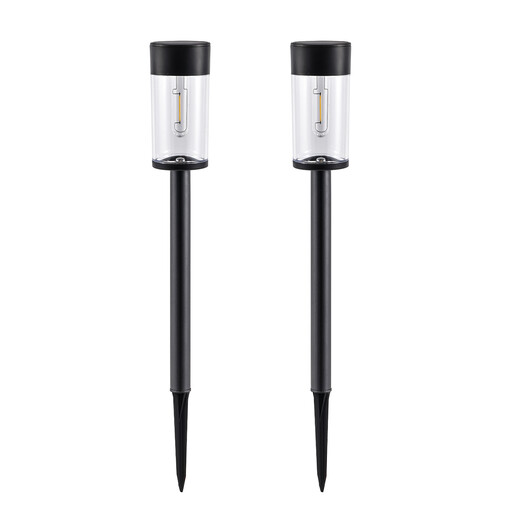
Why it suits this shopper: This set is designed for anyone who wants to mark out a garden path, border or driveway without installing cables. The ground stakes make it easy to position.
The product description states 10 lumens per light, a 3000K light colour and IP65. This makes expectations clearer than with a light that has no stated brightness or IP rating.
Set of two, automatic dusk activation, solar-powered and warm white light. The stated dimensions are approximately 2,8 × 2,8 × 20,98 cm.
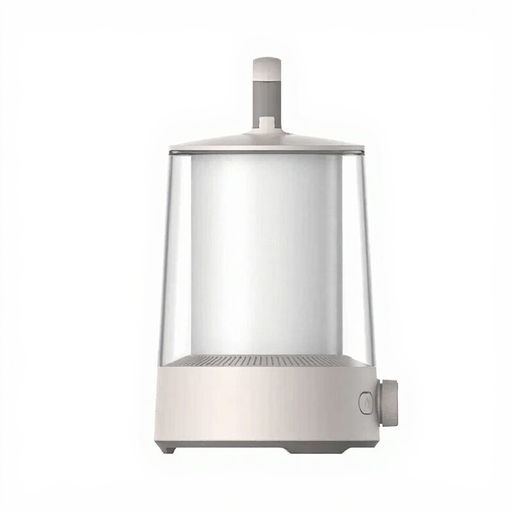
Why it suits this shopper: Ideal for campers who want one light for ambient lighting, inside the tent and for practical illumination on the go.
Adjustable brightness means you’re not limited to a single setting that might be too bright or too dim. The IP54 rating also makes the limits of outdoor use clear.
Main light from 6 to 230 lumens, detachable second light, Bluetooth control and USB-C charging according to the product description.
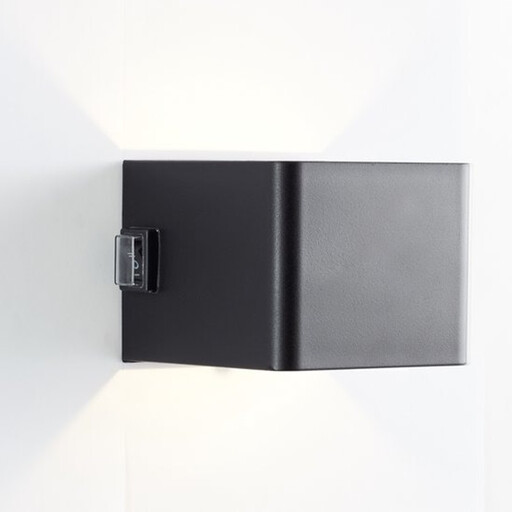
Why it suits this shopper: A handy option for a balcony, patio, shed or entrance where you don’t want to install fixed wiring and motion detection would be useful.
The specifications list 300 lumens, a motion sensor, USB-C charging and IP44. This makes it clear in advance that this is splash-resistant lighting, not a fully waterproof light.
Wireless magnetic fitting, integrated 3000K LED, two 18650 batteries and USB-C charging.
It depends on the product, battery, season and amount of sunlight. The stated run time is usually based on a full charge in favourable conditions. In winter or during prolonged cloudy weather, the light may not stay on as long. Position the panel in an open spot and clean it regularly.
IP44 is suitable for sheltered outdoor locations where the light won’t be exposed to direct water jets. Think of a covered balcony, veranda or sheltered exterior wall. For an exposed spot in the garden, it’s a good idea to check the product information and fitting instructions carefully.
Solar lights don’t use mains electricity while they’re on. With a rechargeable LED light, you mainly pay for the small amount of electricity used to charge it. A wired light with a separate LED bulb can also be energy-efficient, depending on the wattage and how many hours it’s on. A timer, dusk sensor or motion sensor can help prevent unnecessary use.
We’ve put together a complete, up-to-date list of products that meet these strict selection criteria and the applicable European safety regulations.
