
Vandaag of morgen in huis

Kwaliteit gegarandeerd

Welkomstaanbiedingen ontgrendelen: GRATIS bezorging | Tot 80% korting | Gratis 30 dagen JoyPlus-proefperiode
Download de app
Outdoor lighting makes a garden, balcony, driveway or entrance more usable after dark. But an attractive product photo doesn’t guarantee that a light is right for your needs. A small solar light, for example, may create a lovely atmosphere but not provide enough light along a dark garden path. A wall light may look suitable for outdoor use, while its IP rating only allows it to be used in a sheltered spot.
So, look out for these three common pitfalls:
For ambient garden lighting, a soft, warm light is often enough. Think of a solar lantern on a table, a decorative light by a planter or small solar lights along a patio.
An entrance, garage or dark pathway needs more light. Check the lumen output. A portable camping lantern with adjustable brightness is more versatile than a fixed light with a low output. An outdoor light with a motion sensor can also switch on briefly only when it detects movement.
Colour temperature affects the look of the light:
The IP code indicates how well a product is protected against solid particles and water. The exact suitability also depends on where it’s installed.
A product description may call a light “waterproof outdoor lighting”, but check the stated IP rating for yourself. A fixed 230-volt wall light must be installed by a qualified electrician.
Solar panels work best in a spot with plenty of direct daylight. Don’t place solar-powered garden lights under dense foliage or against a wall that’s in shade for most of the day. Clean the panel occasionally with a soft, slightly damp cloth.
Also check:
For a fixed wall light with an E27 or GU10 fitting, check whether the bulb is included. Some models require you to choose a bulb separately.
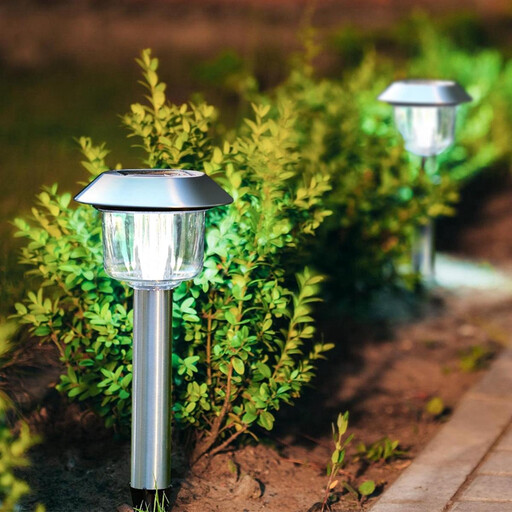
Why it suits this profile: This solar garden light is designed for easy placement in a garden or patio. According to the product information, it runs on solar power and doesn’t need a fixed electricity connection.
The 36.6 cm height and power type are clearly stated. Bear in mind that this is decorative lighting: the stated 0.08 W output isn’t designed for powerful practical lighting.
Solar-powered, made from stainless steel and compact enough for a garden or patio.
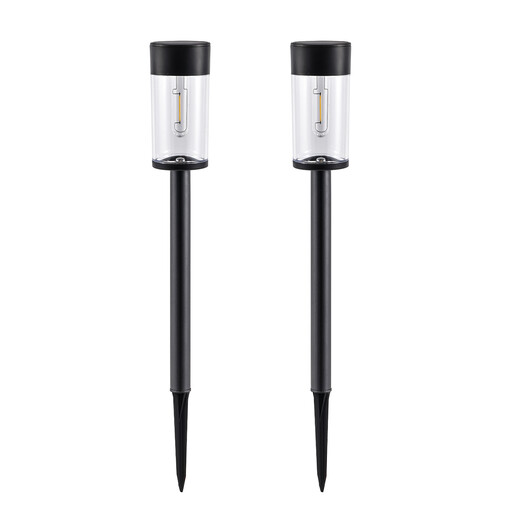
Why it suits this profile: This set is designed for garden paths, borders, driveways and lawn edges. According to the product description, the lights give off a warm white glow at 3000 K.
The product information states an output of 10 lumens per light, an IP65 rating and installation using ground stakes. This makes it easier to assess the brightness and protection before you buy.
Two lights per pack, warm white light and automatic switching on and off according to the stated specifications.
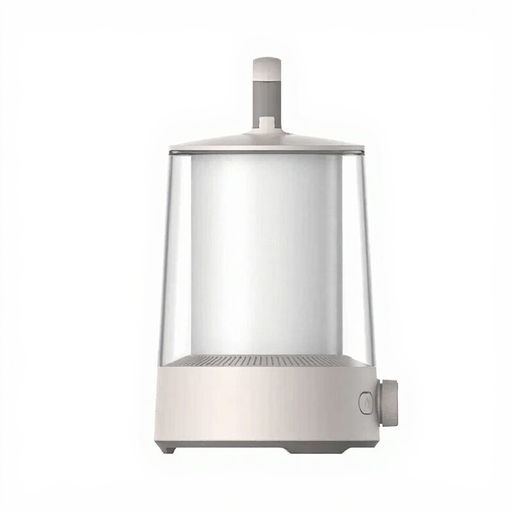
Why it suits this profile: This portable camping lantern is designed for camping and flexible use. According to the product description, it consists of a main unit and a detachable second light.
The stated IP54 rating makes it clear that the light is dust- and splash-resistant, but isn’t designed to be submerged. This helps set realistic expectations when using it in rainy weather.
Adjustable brightness, several light colours, USB-C charging and a detachable second light, according to the product information.

Why it suits this profile: This outdoor wall light runs on a rechargeable battery and, according to the product details, has a motion sensor. It’s a good fit for a balcony, patio or entrance where wiring would be difficult.
The IP44 rating and magnetic mounting are clearly stated. Use the light in a sheltered spot and secure the mounting plate firmly to a suitable surface.
Integrated LED, 300 lumens according to the specifications, motion detection and USB-C charging.
We’ve put together a complete, up-to-date list of products that meet these strict selection criteria and the applicable European safety regulations.
How long they stay on each evening depends on the amount of sunlight, the battery, the temperature and the age of the product. Product descriptions sometimes state how many hours a light will stay on after a full charge, but this isn’t guaranteed in every type of UK weather. Keep the panel unobstructed and clean it regularly.
Low-level solar path lights with ground stakes are a practical choice for a garden path. Check the lumen output, spacing and IP rating. Soft lighting is often enough for visibility and ambience; for clearly lighting a step or driveway, a brighter light or one with a sensor may be more suitable.
Solar lights don’t use mains electricity while they’re on. A mains-powered LED outdoor light is generally energy-efficient compared with older light sources, but its energy use depends on its wattage and how long it’s on. A motion sensor limits how long the light stays on, while a light that’s on all evening uses more energy.
