
Vandaag of morgen in huis

Kwaliteit gegarandeerd

Welkomstaanbiedingen ontgrendelen: GRATIS bezorging | Tot 80% korting | Gratis 30 dagen JoyPlus-proefperiode
Download de app
Buying an outdoor light sounds simple, until you discover that not every lamp is suitable for rain, a balcony without a socket or a long evening at the campsite. Marketing copy often focuses on ambience, multiple lighting modes or long battery life. The details that determine whether a product works in your situation are usually found in the technical specifications.
Pay particular attention to these three common pitfalls:
The IP rating indicates the extent to which a product is protected against solid particles and water. The first digit refers to dust and other particles; the second digit refers to water.
Also check the manufacturer’s instructions. A product with an IP44 rating is not automatically suitable for being left outdoors, unprotected, all year round.
Lumens indicate how much visible light a lamp produces. An LED outdoor light of around 100 to 300 lumens may be suitable for a table, balcony or small seating area. For general lighting across a larger patio, positioning, light distribution and the number of lamps are at least as important as the lumen figure.
Colour temperature is measured in Kelvin:
Outdoor string lights are generally intended for decoration. For a pathway or workspace, you need a more directional light source.
Choose the power source based on how you intend to use the lamp:
For portable models, also consider the weight, handle and stability. A lamp that stands securely on a table is not necessarily suitable for placement on a narrow balcony edge.
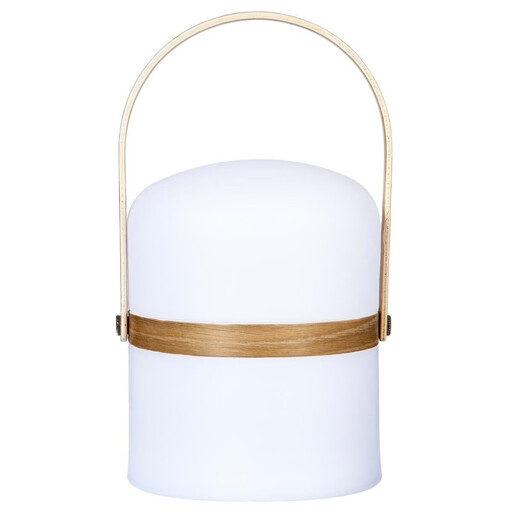
Why it suits this profile: This portable lamp is ideal for a balcony, garden table or patio where you want to add extra light with ease. The wooden handle makes it practical to move around.
The specifications list a rechargeable lithium-ion battery, 270 lumens and IP44. Place the lamp in a sheltered position and bear in mind the stated battery life of 8 hours.
Warm white light, 12 LEDs, USB charging and a compact size of approximately 26 cm in height.
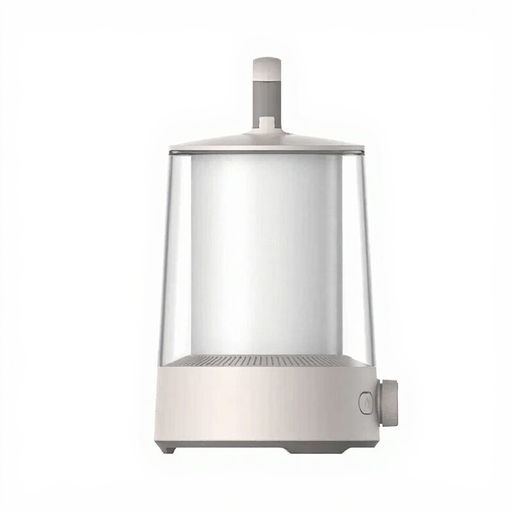
Why it suits this profile: Ideal for campers who want one lamp that can be used as a lantern, torch and side light, with control via an app.
The product description specifies an IP54 rating and separate batteries. This makes the intended usage context clearer than a general claim about outdoor use.
Adjustable from 6 to 230 lumens, with warm, cool and RGB light, plus USB-C charging.
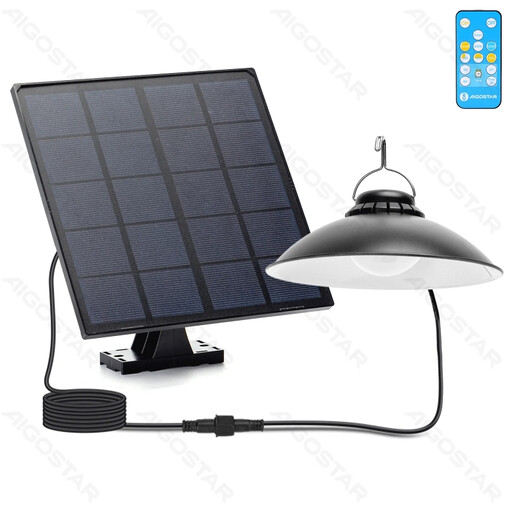
Why it suits this profile: A suitable choice if you are looking for a fixed pendant light for a covered outdoor area, veranda or another outdoor location with sufficient sunlight.
According to the product specifications, the lamp has an IP65 rating, a 175 by 175 mm panel and a 3-metre cable. Make sure the panel is positioned away from shade.
Three colour temperatures of 3000 K, 4000 K and 6500 K, a battery capacity of 5000 mAh and a stated operating time of up to 12 hours.
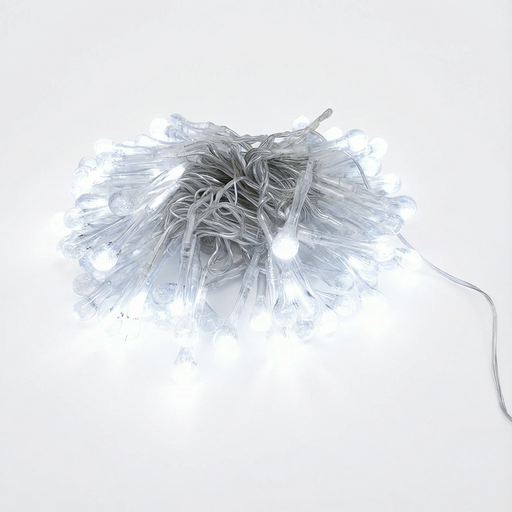
Why it suits this profile: This outdoor string light is ideal for parties, a balcony edge, pergola or patio where decorative lighting matters more than focused illumination.
The length of 8.3 metres, 100 LEDs, three AA batteries and IP44 rating are clearly stated. The batteries are not included, and connections must be kept away from standing water.
Cool white light at 6500 K, eight lighting functions with a memory setting and easy installation without permanent wiring.
We have put together a complete, up-to-date list of products that fully meet these strict selection criteria and the applicable European safety regulations.
A portable outdoor light, rechargeable outdoor light or string light is often practical for a balcony. Check the available space, whether there is a socket nearby and the IP rating. On a small balcony, a lamp with a handle or a slim string light helps keep the walkway clear.
Operating time varies according to the model, battery capacity, light setting and amount of sunlight. A cloudy day or a panel positioned in the shade can reduce charging performance. As well as the claimed operating time, check the charging time and placement instructions.
This depends on the type of battery and how often you use the lamp. A rechargeable lamp mainly requires electricity for charging, while a model with AA batteries involves recurring battery costs. For string lights that are only switched on during parties, standard batteries may be sufficient. With daily use, a rechargeable model may prove more practical.
