
Vandaag of morgen in huis

Kwaliteit gegarandeerd

Welkomstaanbiedingen ontgrendelen: GRATIS bezorging | Tot 80% korting | Gratis 30 dagen JoyPlus-proefperiode
Download de app
Good outdoor lighting should look attractive, but it also needs to suit its location, how you’ll use it and the British weather. A lamp for a sheltered balcony has different requirements from lighting along a driveway or exterior wall. Yet many shoppers focus mainly on appearance and lumen output, which can lead to the wrong purchase.
A rating such as IP44 outdoor lighting doesn’t mean the lamp is completely waterproof. IP44 protects against solid objects larger than 1 millimetre and water splashes from different directions. So, the lamp is suitable for many sheltered outdoor locations, but not necessarily for places exposed to direct water jets, immersion or prolonged extreme weather.
IP44 is often a practical choice for an exterior wall, covered area or patio. For a more exposed location, a higher rating, such as IP65, may be more suitable. Always check the manufacturer’s installation instructions too.
A high light output isn’t always pleasant. Bright light can be useful for practical lighting by a door or driveway. For a dining table or seating area, a warm white outdoor lamp often creates a more relaxed feel. A colour temperature of around 2700K to 3000K generally looks warmer than 4000K or 6500K.
Also consider how the light is distributed. An outdoor ground spotlight often directs light towards a tree, shrub or exterior wall, while an outdoor wall light can illuminate an entrance or path more evenly.
A mains-powered LED outdoor lamp can provide light for long periods, but it needs a suitable outdoor power connection and may require installation by a qualified electrician. A solar-powered outdoor lamp avoids the need for a cable to a socket, but needs enough daylight. In winter or in a shady spot, it may not stay lit for as long.
Rechargeable lamps need maintenance too. This might include cleaning a solar panel, charging the battery in good time, and checking cables, fixings and seals.
Choose the IP rating based on where the lamp will actually be installed:
First, decide where the lamp will go. A portable, rechargeable lamp is handy on a garden table. A solar pendant light works without a fixed power connection, but should be installed where its panel can receive enough sunlight. A 230V wall light needs a fixed connection. A plug-in ground spotlight is easier to move, but needs a suitable outdoor socket.
A dimmable outdoor lamp gives you more flexibility if you want to use it for both practical lighting and ambience. Check whether the dimmer is built in or whether you’ll need a compatible external dimmer. For rechargeable and solar models, check the stated run time at each brightness level. Manufacturer figures can vary depending on factors such as charge level, temperature and selected brightness.
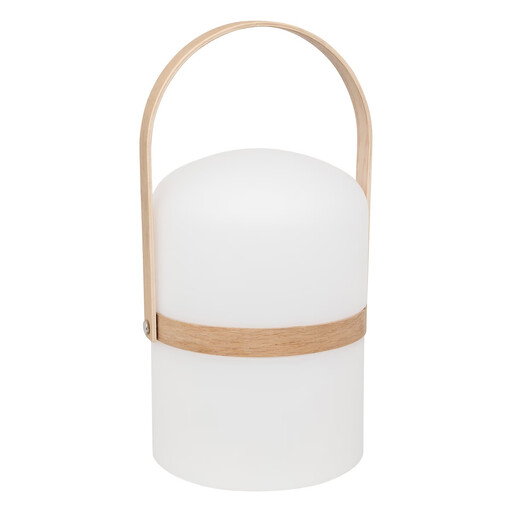
Why it suits this shopper: This portable lamp is a good choice if you want extra light on a garden table, balcony or patio without fixed installation. The product description lists warm white light, three brightness levels and a built-in dimmer.
The battery means there’s no loose extension lead on the table. IP44 makes the lamp suitable for water splashes, but not for immersion or direct water jets.
270 lumens, USB charging, a carry handle and a stated run time of 4 hours at full power and up to 60 hours on the low setting.
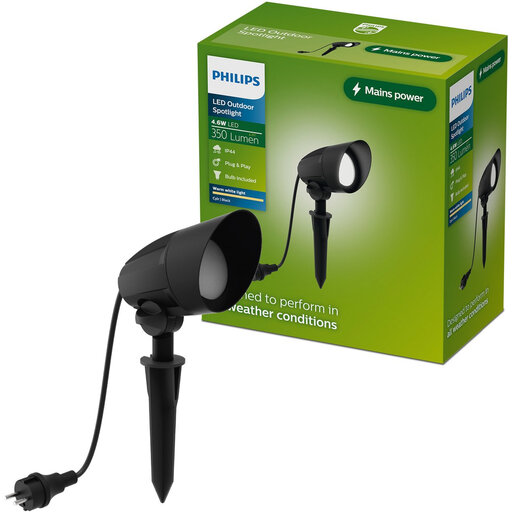
Why it suits this shopper: This adjustable ground spotlight is a good fit for garden owners who want to highlight a tree, flower bed, driveway or architectural feature with a fixed light source.
The included GU10 LED bulb means you won’t need to find a compatible light source straight away. IP44 is intended for water splashes and general outdoor use, not immersion.
350 lumens, 2700K warm white light, an adjustable spotlight, an aluminium housing and a 150 cm cable.
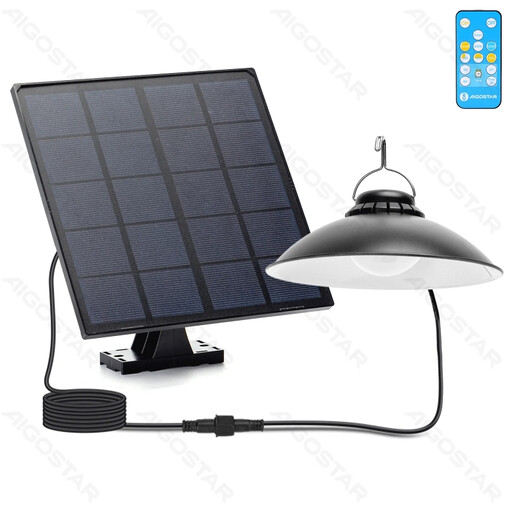
Why it suits this shopper: This solar pendant light is designed for anyone looking to illuminate a covered area, veranda or other outdoor space without a direct mains connection.
Solar power reduces the amount of cabling needed. Make sure the panel is positioned out of the shade; the product information states that sufficient sunlight is needed for optimal charging.
IP65, a choice of 3000K, 4000K and 6500K, a stated battery life of up to 12 hours and a charging time of 4 to 6 hours.
We’ve put together a complete, up-to-date list of products that meet these strict selection criteria and comply with current European safety regulations.
IP44 may be suitable for a sheltered entrance, covered area or patio. If the lamp is fully exposed to rain and splashing water, look for a model with a higher rating, such as IP65. Always check the installation instructions and avoid places where water can collect.
An LED outdoor lamp generally uses less electricity than many older lighting technologies. The actual cost depends on the wattage, how many hours it’s on and the price of electricity. Solar lighting uses little electricity while it’s in use, but its performance depends on sunlight, the season and battery capacity.
Lifespan varies depending on the light source, battery, housing and conditions of use. A fixed LED lamp doesn’t need a replaceable light source, while a rechargeable lamp may hold less charge over time. Clean solar panels, check the fixings and use the lamp only within its stated IP rating and temperature specifications.
