
Vandaag of morgen in huis

Kwaliteit gegarandeerd

Welkomstaanbiedingen ontgrendelen: GRATIS bezorging | Tot 80% korting | Gratis 30 dagen JoyPlus-proefperiode
Download de app
Choosing new outdoor lighting seems straightforward until you have to decide between a wall light, solar-powered outdoor lighting, LED outdoor lighting or a light with a motion sensor. A low price doesn’t mean much if the light gets little sun on your exterior wall, shines too brightly or isn’t suitable for exposure to direct rain.
So, look out for these three common pitfalls:
The IP code shows how well a fitting is protected against solid particles and moisture. An IP44 outdoor light is suitable for many sheltered spots, such as an entrance, balcony, patio or exterior wall beneath an overhang. The rating doesn’t mean you can expose the light to driving rain or water pressure without limit.
A higher IP rating may be more practical for an open driveway or a spot that gets a lot of rain. The range includes fittings rated IP65, such as the UME solar outdoor light. Always check the installation instructions and fit the light as directed.
A fitting with an E27 socket or GU10 socket gives you the freedom to choose the colour temperature and brightness yourself. For example, the Philips Ulio and Philips Juli use E27 bulbs, while the Philips Fylx uses GU10. Before buying, check whether the bulb is included and what the maximum wattage is.
With integrated LED, the light source is already built in. This makes installation more straightforward, but replacing it is usually not as easy as changing a separate bulb. The Philips Zyra, Capricorn and Nuvy have integrated LED, with 800 lumens and warm white light at 2700 K according to the product specifications.
Lumens indicate how much light a bulb produces. You’ll often need less light for atmospheric wall lighting than for a driveway or back door. Warm white light around 2700–3000 K creates a softer feel, while cooler light can seem more functional.
An outdoor light with a motion sensor is handy by an entrance, shed or driveway. Don’t just check whether it has a sensor; see whether you can adjust the time it stays on and its sensitivity too. With solar lighting, you’ll also need to consider the battery and how much sun it gets during the day.
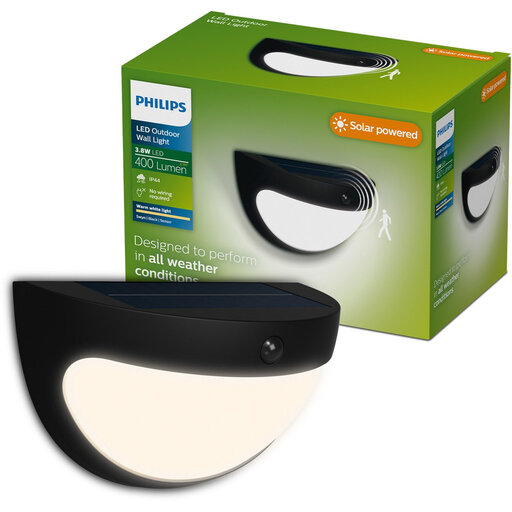
Why it suits this type of buyer: This solar-powered outdoor light works without fixed wiring and has two lighting modes, a daylight sensor and a motion sensor. It’s a good fit for a balcony, garden path or entrance without a nearby socket.
The product description clearly states that it’s solar-powered, has an IP44 rating and needs direct sunlight on the panel. So don’t install the light on a wall that’s permanently in the shade.
Integrated LED with 400 lumens per light, a motion sensor and installation without a mains connection.
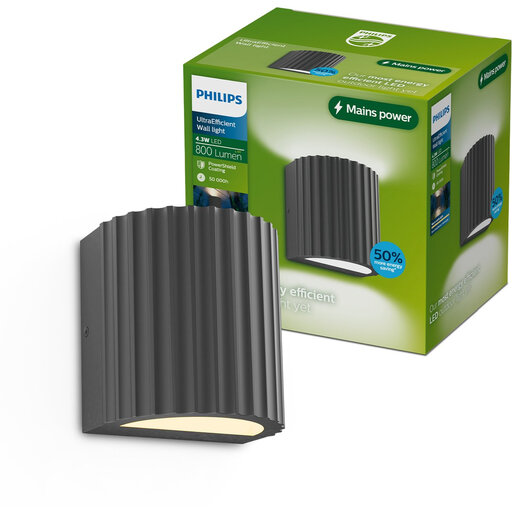
Why it suits this type of buyer: The Zyra is designed for permanent exterior wall lighting, with a modern look. It shines light in two directions and suits an entrance, patio or rear wall.
The built-in light source means you won’t need to buy a bulb or fitting that isn’t suitable. Check first, though, that 800 lumens and 2700 K are right for the intended use.
Integrated LED, 800 lumens, 2700 K, 4.3 W and an IP44 rating.

Why it suits this type of buyer: For a driveway, large garden, garage or patio, broad light coverage matters more than a purely decorative lighting effect.
The specifications list an IP65 rating, three adjustable lighting modes, three light heads and a 180-degree motion detection angle. This makes it clearer where the light is best used than with a small mood light.
Solar-powered, 302 LEDs, 3000 lumens according to the product specifications, and three adjustable modes.
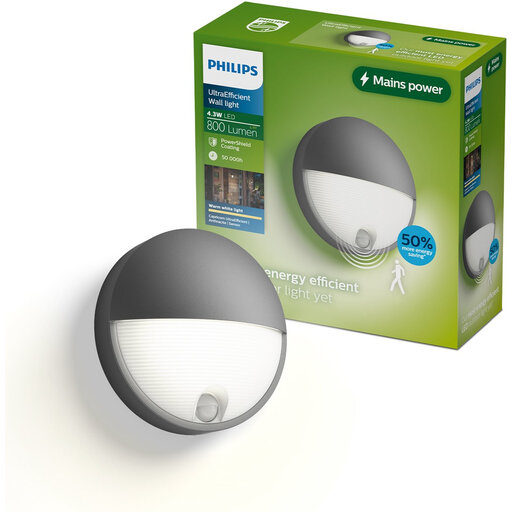
Why it suits this type of buyer: According to the product specifications, this outdoor wall light switches on using a motion and dusk sensor. That’s practical by a front door, garden path or balcony.
The light doesn’t rely solely on you switching it on manually. The IP44 rating still depends on correct installation and a position away from direct water jets.
Integrated 800-lumen LED, warm white light at 2700 K and an aluminium housing.
Before installing a fixed outdoor light, switch off the power. A 230-volt fitting, like many exterior wall lights, must be connected in accordance with local regulations. If you’re unsure, have electrical work carried out by a qualified professional.
When fitting the light, consider the surface, use suitable wall plugs and make sure it’s properly sealed. With solar-powered outdoor lighting, the panel needs an unobstructed view of the sky. Clean the panel and sensor regularly with a soft cloth. Don’t use harsh cleaning products, and never submerge an IP44 fitting.
An LED bulb usually uses less electricity than older light sources, but actual consumption depends on its wattage and how long it’s on. A sensor light may be on for less time than one that stays lit all evening.
We’ve put together a complete, up-to-date list of products that meet these strict selection criteria and the applicable European safety regulations.
Yes, an IP44 outdoor light is suitable for many sheltered outdoor locations and protects against splashing water. It isn’t designed to be submerged, exposed to direct water jets or left out in severe weather for long periods. Always follow the installation instructions.
Solar lighting can work in winter too, but shorter days, cloudy weather and the low position of the sun mean less energy for charging. Position the panel where it gets as much sunlight as possible and keep it clean. How long the light stays on varies by model, season and location.
LED outdoor lights generally have a low wattage. Total consumption depends on the power rating and how many hours the light is on. A light with a motion sensor may be on for less time than one that stays on continuously. Solar lights get their energy from the panel, without a connection to the mains.
