
Vandaag of morgen in huis

Kwaliteit gegarandeerd

Welkomstaanbiedingen ontgrendelen: GRATIS bezorging | Tot 80% korting | Gratis 30 dagen JoyPlus-proefperiode
Download de app
The right outdoor light can make an entrance easier to see, add atmosphere to a patio or illuminate a dark driveway. But buying outdoor lighting involves more than simply choosing a design you like. A light may appear suitable for outdoor use, for example, but offer insufficient protection from rain. Terms such as “extra bright” or “waterproof” can also be misleading if the technical specifications aren’t provided.
In this buying guide, you’ll find out what to look for in outdoor lighting, from IP protection and brightness to installation and energy use. We’ve also included a selection of products for different needs.
Not every outdoor light can withstand prolonged exposure to rain. A product with IP44 is protected against splashing water, but not necessarily against direct water jets or immersion. A wall light rated IP44 is generally better suited to a sheltered exterior wall, covered area or balcony than to a completely exposed spot.
For a more exposed location, consider IP65 outdoor lighting. According to the rating, IP65 provides protection against dust and water jets from different directions. Always check the manufacturer’s installation instructions too.
A high light output can be useful on a driveway, but may feel too bright on a small balcony or patio. So consider the following together:
An LED outdoor light generally uses less energy than older light sources, but check the stated energy consumption and energy rating for each product.
A 230-volt wall light must be connected safely. Fixed wiring should be installed by a qualified electrician. A battery-powered, USB or solar light offers more flexibility, but you’ll need to consider charging, battery life and where to position the solar panel.
Remember maintenance too. A solar panel won’t work as well if it’s regularly covered in dirt or leaves. With an outdoor light that has a motion sensor, branches, passing pets or a busy road can trigger it unintentionally.
Use IP44 mainly in sheltered spots, such as beneath a roof edge, on a balcony or under a covered area. For an exposed exterior wall, garden wall or driveway, a higher level of protection such as IP65 may be more practical. The IP code isn’t a quality ranking; it indicates protection against solid particles and moisture.
Solar outdoor lighting is handy when you don’t want to run a cable. Its performance depends on direct daylight, the season and where it’s positioned. A light powered by 3 AA batteries is easy to move, but you’ll need to replace the batteries periodically. Mains power provides consistent operation, but requires permanent installation and a correct electrical connection.
A motion sensor can save energy by switching the light on only when movement is detected. Check the detection angle and range, and whether the sensor can be adjusted. For decorative garden lighting, a timer and memory function are useful, so you don’t have to select a mode again every evening.
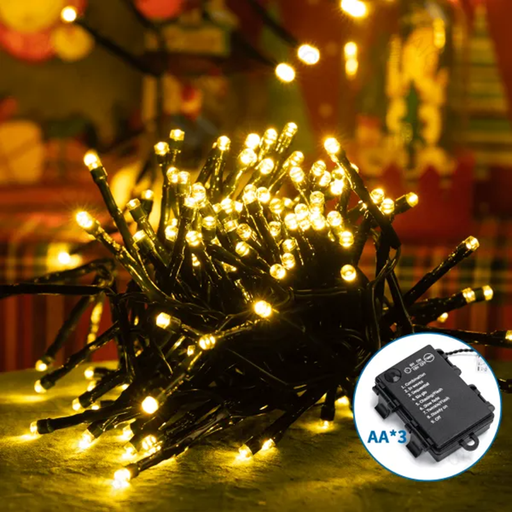
Why it suits this type of user: An affordable choice for a balcony, covered area or patio where you want to add atmospheric outdoor lighting without fixed wiring.
The product specifications state IP44, making it clear that these string lights can withstand splashing water outdoors but aren’t designed for direct water jets. Position them in a sheltered spot.
5 m long, 200 LEDs, 8 light modes, timer and memory function. Powered by 3 AA batteries.
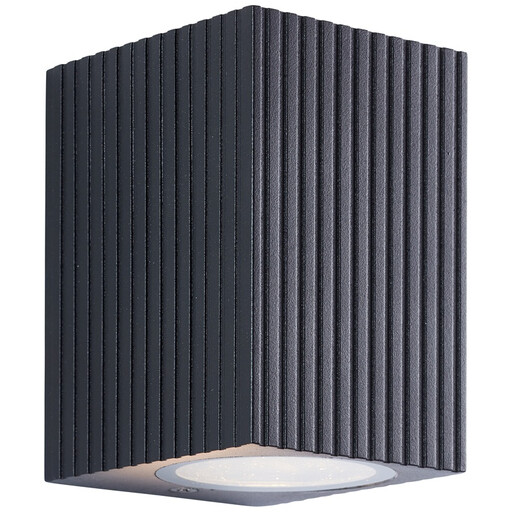
Why it suits this type of user: A good choice if you’re looking for a permanent outdoor wall light with a compact black design and a replaceable GU10 bulb.
The light is supplied without a bulb. This means an extra purchase, but it also lets you choose the colour temperature and brightness that suit you.
Aluminium, glass and plastic; GU10 fitting up to 10 W; IP44 protection and downward light distribution.

Why it suits this type of user: An option for a driveway, garage, garden or larger patio where motion detection, wide illumination and installation without mains power are important.
The product specifications state IP65 and include a solar panel. Make sure you position the panel somewhere with plenty of direct daylight; performance will drop if it doesn’t receive enough sunlight.
302 LEDs, stated light output of 3000 lumens, three light modes, three adjustable heads and a motion sensor, according to the product information.

Why it suits this type of user: With magnetic mounting and USB-C charging, this light is suitable for a balcony, shed, patio or rental home where fixed wiring isn’t wanted.
The IP44 rating shows that the light is splash-resistant, but not suitable for direct water jets. The magnetic mount must also be attached securely to a suitable surface.
Integrated LED, 300 lumens, 3000 K, motion sensor, magnetic mounting and USB-C charging.
We’ve put together a complete, up-to-date list of products that meet these strict selection criteria and the applicable European safety regulations.
For a sheltered spot, IP44 is often a practical choice. If a light will be directly exposed to rain and dust, consider a product with IP65. Always check the installation instructions, and don’t place an IP44 light somewhere exposed to direct water jets.
Solar outdoor lighting can work well when the panel receives enough direct light each day. It may stay lit for less time during dark or cloudy spells. Position the panel out of the shade and clean it regularly. Also check the battery capacity and the selected light mode.
The cost depends on the wattage, how many hours the light is on and the price of electricity. A light with a motion sensor uses less electricity if it only switches on when movement is detected. Battery-powered and solar lights don’t have fixed electricity costs, but batteries or replacement parts can mean ongoing expenses.
