
Vandaag of morgen in huis

Kwaliteit gegarandeerd

Welkomstaanbiedingen ontgrendelen: GRATIS bezorging | Tot 80% korting | Gratis 30 dagen JoyPlus-proefperiode
Download de app
Good outdoor lighting should be more than attractive. The lamp needs to suit its location, provide sufficient light and withstand the Dutch weather. Yet many people choose a product based on a striking product photo or a claim such as “waterproof”, without checking the technical details.
Three pitfalls occur frequently:
With the right checks beforehand, you can avoid discovering after a few dark or cloudy days that a lamp is less practical than expected.
The IP code indicates how well a lamp is protected against solid particles and water. For many applications, IP44 outdoor lighting is suitable. In practice, this means protection against solid objects measuring 1 millimetre or more and splashing water from different directions.
An IP44 outdoor wall lamp, for example, is suitable for a sheltered façade, veranda or entrance. Ideally, position the lamp so that water cannot collect on it. For an exposed location with greater exposure to rain, dust or water jets, IP65 outdoor lighting is a more logical choice. IP65 offers greater protection against dust and water jets, but this rating does not automatically make the lamp suitable for immersion.
Always check the complete product description. “Water-resistant” can sound broader in commercial copy than the specific IP rating actually justifies.
Light colour is measured in Kelvin:
Lumens indicate how much light a lamp produces. A decorative garden lamp generally needs fewer lumens than a solar security light. Subtle lighting may be sufficient for a pathway, while a motion-sensor lamp near a garage or driveway needs to illuminate a larger area.
Also consider the light distribution. A lamp with several adjustable heads can illuminate a wide zone, whereas a wall lamp with a single light source mainly highlights the immediate surroundings.
Solar outdoor lighting does not require a fixed power connection, but the panel must receive enough direct sunlight. Do not place it beneath a canopy, close to a tall fence or under a tree. Clean the panel regularly with a soft cloth.
Conventional LED outdoor lighting with an E27 or GU10 fitting offers greater flexibility in terms of colour temperature and dimming, but usually requires connection to the mains. When installing a fixed outdoor wall lamp, the power must be switched off. If you are not confident working with electrical systems, have the installation carried out by a qualified professional.
Battery life or operating time is not a fixed guarantee for every situation. Manufacturers generally state these figures under specific conditions. According to the relevant brands’ own product information, temperature, solar exposure, operating mode and sensor activity can all affect performance.

Why it suits this profile: This solar garden light is easy to install in the ground and is suitable for paths, borders and small gardens where cabling is not desirable.
The specifications clearly state IP44, a polycrystalline solar panel and an estimated battery life of 8–12 hours. Do not expect targeted security lighting in a shady location.
Stainless-steel housing, 6500 K cool white light, 550 mm pole height and no mains connection required.
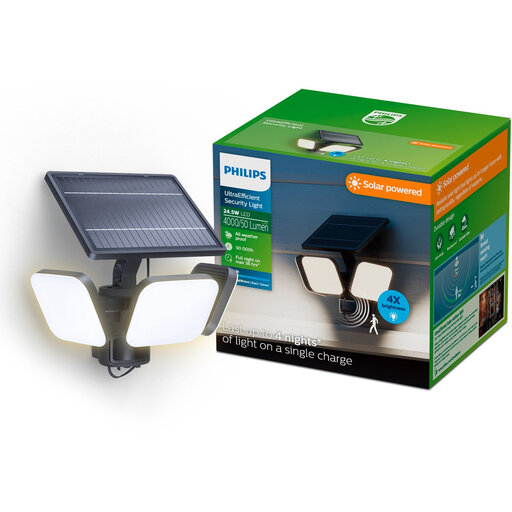
Why it suits this profile: This solar wall lamp is designed to provide broad, powerful illumination around a garage, rear entrance, driveway or spacious garden.
The IP65 rating is more specific than a general claim of weather resistance. However, make sure the installation receives enough sunlight to achieve the stated performance.
4000 lumens, integrated LED, 5000 K bright white light, motion and dusk sensors, and an adjustable light head.
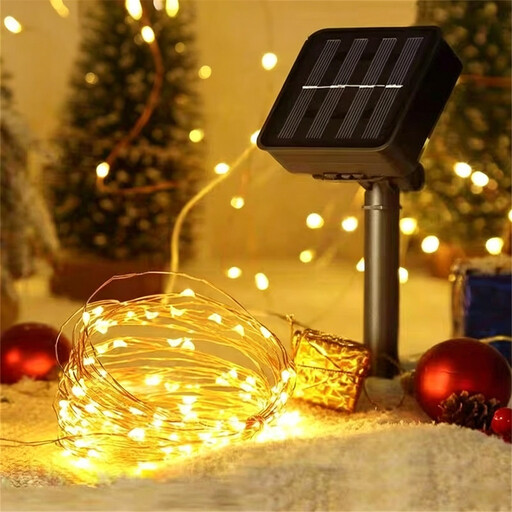
Why it suits this profile: Ideal for anyone who wants to decorate a patio, balcony, pergola or garden party flexibly with decorative lighting rather than functional pathway lighting.
The product information specifies two 49 ft strings, each with 75 LEDs, plus eight lighting modes. Keep the solar panel unobstructed and do not immerse the components in water.
Warm white light, eight modes with memory function, two strings and a stated charging time of 6–8 hours in direct sunlight.
We have compiled a complete, up-to-date list of products that fully meet these stringent selection criteria and the applicable European safety regulations.
A solar-powered string light is primarily intended to create ambience. For visibility near a front door or garage, a solar wall lamp or solar security light is more practical. For a fixed façade installation, an outdoor wall lamp with an E27 or GU10 fitting can offer greater flexibility.
The operating time per night depends on solar exposure, battery condition, temperature and the selected lighting mode. Product specifications often provide estimates based on ideal conditions. A lamp that receives little direct sunlight during the day may operate for less time in practice. Keep the panel clean and make sure it is not obstructed.
Yes, IP44 outdoor lighting is generally suitable for standard outdoor applications and protection against splashing water. The lamp is not designed for immersion or continuous exposure to direct water jets. For a more open location subject to intensive exposure, IP65 outdoor lighting may be a more suitable choice.
Solar lamps charge via a solar panel and do not require a connection to the electricity grid during normal use. Their output does depend on the weather and placement. Mains-powered LED lamps generally use less energy than traditional light sources, but exact consumption depends on the wattage and operating time.
