
Vandaag of morgen in huis

Kwaliteit gegarandeerd

Welkomstaanbiedingen ontgrendelen: GRATIS bezorging | Tot 80% korting | Gratis 30 dagen JoyPlus-proefperiode
Download de app
Good outdoor lighting makes a driveway, garden, balcony or exterior wall more usable after dark. But an attractive product photo isn’t enough to help you choose the right outdoor light. For example, a lamp might not provide enough light, have the wrong IP rating or prove more difficult to install than expected.
So, look out for these common pitfalls:
The IP rating consists of two digits. The first indicates protection against solid particles, and the second indicates protection against water.
An IP rating doesn’t automatically make a product suitable for every location. Correct installation, a properly sealed connection and following the manufacturer’s instructions are still important. If possible, avoid placing IP44 lighting somewhere it will be exposed to constant, heavy rain.
Colour temperature is measured in kelvins:
Also check the lumen rating. A pathway light with 10 lumens subtly marks a route, while a wall light with 800 lumens clearly illuminates an exterior wall. More lumens don’t automatically mean greater comfort. For a peaceful garden, even, low-level lighting is often more practical than a single bright light source.
Solar garden lighting uses an integrated solar panel and battery. According to the product information, UME pathway lights are designed to receive around 6 to 8 hours of sunlight and can then stay on for approximately 8 to 12 hours. Actual running time depends on the season, shade, panel direction and how clean the panel is.
Fixed LED outdoor lighting running on 230 V provides consistent brightness, but requires a suitable power connection. Have any work on the mains carried out in accordance with local regulations. A wireless outdoor lighting switch can be useful for connected devices, but it’s no substitute for a safe, correctly installed electrical connection.
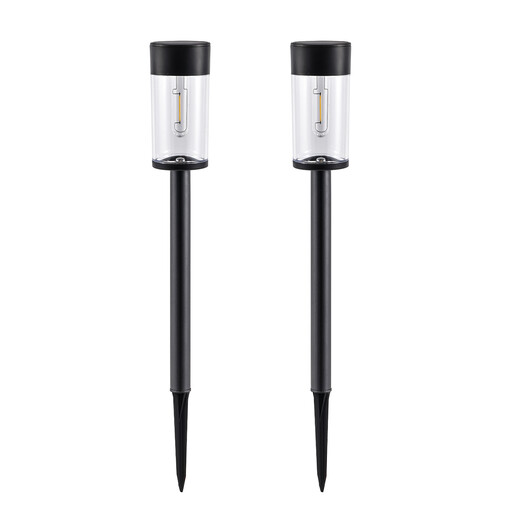
Why it suits this profile: This set is ideal if you want to mark a garden path, border or driveway without cables. The lights are installed using ground spikes and, according to the product information, switch on automatically when light levels are low.
The IP65 rating and stated output of 10 lumens per light make it clear that these are subtle pathway lights, not wide-coverage floodlights.
2 lights per set, 3000K warm white light, solar power and a stated running time of 8 to 12 hours, according to the product information.
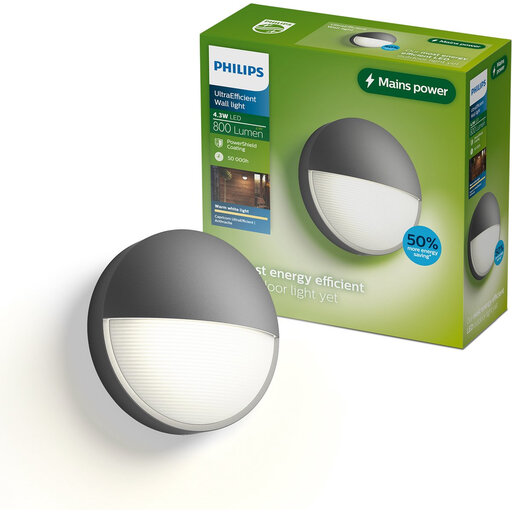
Why it suits this profile: This fixed wall light is a good choice for an exterior wall or balcony where you want a clean design and integrated LED lighting.
The product information lists an IP44 rating and 800 lumens. This makes it easier to compare the light with sheltered settings, rather than relying on general claims about outdoor use.
Integrated LED, 2700K warm white light, an aluminium casing and a stated power rating of 4,3 W per light point.

Why it suits this profile: This solar outdoor light is designed for a driveway, garage, patio or larger plot where motion detection and wide light coverage are important.
The listed specifications include 3 lighting modes, a 180° detection angle and IP65 protection. Do check that the installation spot gets enough direct sunlight.
According to the product information, 3000 lumens, 3 adjustable light heads, solar power and a motion sensor with a stated range of 60 feet.
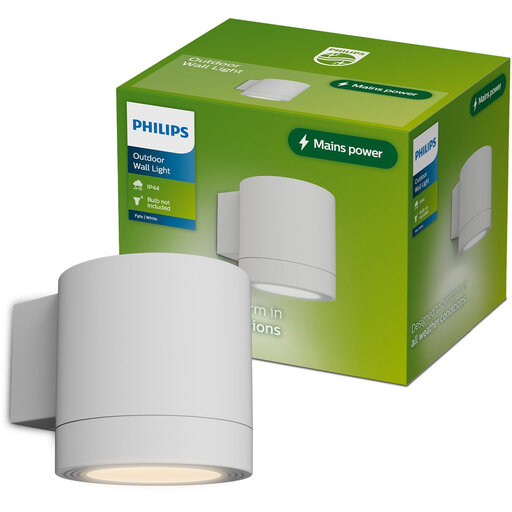
Why it suits this profile: The GU10 fitting lets you choose the light colour, dimming capability and brightness for your garden, balcony or exterior wall.
The fitting type and the fact that a GU10 bulb isn’t included are clearly stated. This lets you factor the extra purchase into your budget in advance.
Aluminium casing, IP44 rating, downward-facing light beam and a replaceable GU10 bulb.
We’ve put together a complete, up-to-date list of products that meet these strict selection criteria and the applicable European safety regulations.
For subtle pathway lighting, 10 lumens per light may be enough to mark a route. A front door or exterior wall often needs a higher light output. A light with 800 lumens will illuminate a wall more clearly, while around 3000 lumens is intended for a large area. Choose the brightness to suit the distance, purpose and atmosphere you want to create.
According to the classification, IP44 offers protection against splashing water, but it isn’t designed to provide unlimited protection against heavy rain or water jets. For example, use IP44 at a sheltered entrance, on a balcony or on an exterior wall. For a freestanding light in the garden, IP65 is generally a better choice, as long as it’s installed and connected correctly.
Solar garden lighting doesn’t use electricity from the mains while it’s on. However, the panels need to receive enough daylight and be kept clean. In winter or in a shady spot, the running time may be shorter. Also check whether the battery is replaceable and what warranty or maintenance information the manufacturer provides.
