
Vandaag of morgen in huis

Kwaliteit gegarandeerd

Welkomstaanbiedingen ontgrendelen: GRATIS bezorging | Tot 80% korting | Gratis 30 dagen JoyPlus-proefperiode
Download de app
A well-lit driveway, façade, garden or patio makes outdoor spaces more enjoyable to use. Yet choosing outdoor lighting isn’t always straightforward. A light might look powerful in the product photo, but in practice it can give out too little illumination. Terms like “waterproof”, “energy-efficient” and “security lighting” are also sometimes used more loosely than the technical specifications justify.
With this guide, you can compare outdoor lighting based on verifiable features. This way, you can make a more informed choice between solar outdoor lighting, an LED outdoor light, an outdoor wall light, path lighting or an LED outdoor string light.
An IP44 outdoor light is protected against solid objects larger than 1 millimetre and against splashing water from any direction. This makes IP44 suitable for many sheltered façades, balconies and canopies. It does not mean the light can withstand a powerful water jet or be submerged in water.
An IP65 outdoor light offers a higher level of protection against dust and water jets. Placement remains important: connections, cables and fixing points must also be suitable for outdoor use.
More LEDs do not automatically mean a more pleasant or better-distributed light. Pay attention to:
According to the product information, the UME solar spotlight, for example, delivers 3000 lumens with 302 LEDs. That is a stated product specification, not a guarantee that every area will be evenly lit.
Solar garden lighting only works well when the panel receives sufficient direct sunlight during the day. Shade from a fence, tree or north-facing wall reduces the charging capacity. In winter, the days are also shorter and the output is often lower.
Therefore, check where the solar panel will be placed and whether you can easily clean the light. With solar outdoor lighting, a clean panel and an unobstructed position are more important than just the battery capacity on paper.
For a sheltered outdoor wall light, choose at least IP44, provided the light is not exposed to direct water jets. For a more open spot, such as a fence or an unsheltered garden, IP65 can be more practical.
Also pay attention to the installation instructions. A light with a mains cable or fixed connection may require professional installation. Switch off the power and have fixed 230V connections carried out in accordance with current regulations.
An LED outdoor string light with a plug is handy for a patio or festive decoration. The VIVREAL G40 string is, according to the product information, 30 metres long, has 50+2 LEDs and replaceable bulbs. The manufacturer also mentions dimmability, multiple light modes and a timer. According to the safety information, the connections must not lie in standing water.
Warm white light at 2700–3000 K usually suits a patio, entrance or garden path. Cooler light can be more functional for a shed, garage or driveway. For security lighting, the detection angle, detection distance, light duration and adjustable modes are also relevant.
A motion sensor prevents a light from staying on continuously, but do not place the sensor directly on a busy path or next to moving branches. This can cause unnecessary activation.
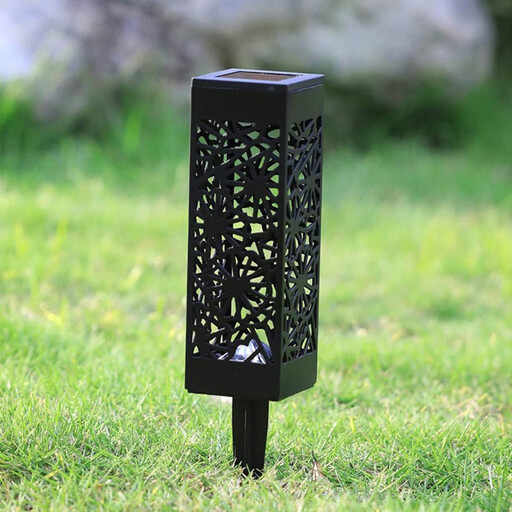
Why this fits: A simple set for renters, small gardens, balconies and garden paths without a mains connection.
The IP65 rating is clearer than just the term “weather-resistant”. Place the lights in a sunny spot and avoid trip hazards.
Set of 6, warm white LEDs, solar powered and, according to the product information, 4–6 hours charging time and 5–8 hours of use after a full charge.
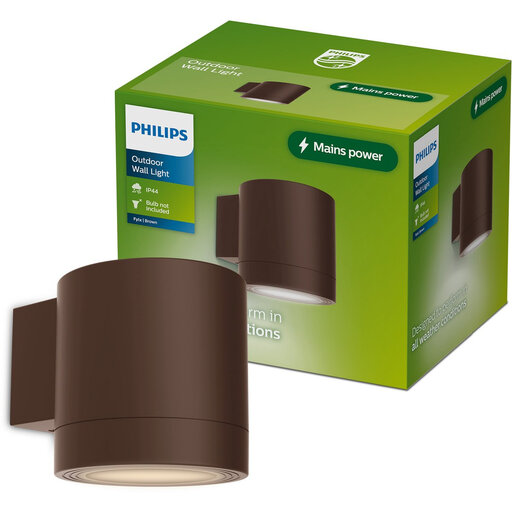
Why this fits: Ideal for those who want to choose their own GU10 light source and are looking for a compact light for a façade, entrance or patio.
The light is supplied without a GU10 bulb. This means you are not unknowingly paying for a light source that would already be in the box.
GU10 fitting, replaceable light source, aluminium housing and IP44 rating according to the product specifications.

Why this fits: A functional choice for a garage, driveway, patio or larger outdoor area where motion detection is desired.
The choice is not just about the number of LEDs: also check the placement of the solar panel, the three modes and the sensor settings.
According to the product information: 3000 lumens, IP65, three adjustable light heads, a 180-degree detection angle and a stated range of 60 feet.
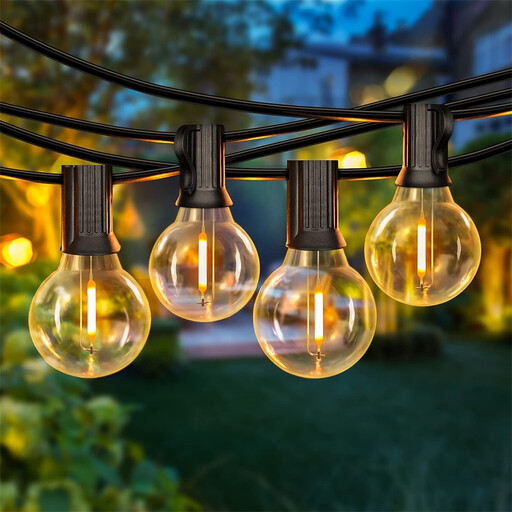
Why this fits: For ambient lighting along a patio, balcony, pergola or temporary party setup where a mains socket is available.
The product information states that the lights are not intended for submersion. Keep connections away from standing water and unplug before cleaning.
30 metres length, 50+2 warm white LEDs, dimming function, timer, multiple light modes and replaceable bulbs according to the product description.
Browse a current selection of outdoor lighting for patios, façades, balconies and gardens. Always compare the IP rating, light output, power supply and installation requirements.
Place path lights at a sufficient distance from walkways so that nobody trips over the fittings or ground spikes. When fitting wall lights, check that the surface is sturdy enough. A magnetic light must be attached to a flat, suitable surface; check regularly that the mounting plate is still secure.
Clean solar panels and sensors with a soft, slightly damp cloth. Do not use water or liquid cleaner on the connections of electrical lights. With an integrated LED, the light source is generally not user-replaceable. With a GU10 or E27 fitting, you can choose a suitable LED bulb yourself, within the maximum wattage of the fitting.
Solar outdoor lighting uses no mains electricity during use. However, the light needs enough daylight to charge the battery. The actual burn time varies by season, mode and location. Therefore, check not only the purchase price but also the battery, charging method and replaceability of parts.
For a sheltered spot, IP44 is often suitable, as long as the light is not submerged or exposed to strong water jets. For an unsheltered position, IP65 can offer more protection. Always check the full installation and safety instructions for the specific product.
An LED outdoor light typically uses less power than comparable older light sources, but consumption depends on the wattage and the number of hours it is on. A sensor, timer or dusk-to-dawn switch can limit the burn time. Look at the stated wattage and not just the term “energy-efficient”.
