
Vandaag of morgen in huis

Kwaliteit gegarandeerd

Welkomstaanbiedingen ontgrendelen: GRATIS bezorging | Tot 80% korting | Gratis 30 dagen JoyPlus-proefperiode
Download de app
The right outdoor lighting doesn't just add atmosphere to your garden, driveway, or balcony—it also enhances safety and functionality. However, the selection is vast, and marketing promises often paint a prettier picture than reality. Many people buy lighting that fails after a single autumn season or doesn't produce the desired effect. Before you make a decision, it's helpful to know where the most common pitfalls lie.
As a Product Recommendation Officer at Joybuy, I see which products are returned daily and why. Three issues stand out by a wide margin:
solar-powered outdoor lighting seems like a smart, sustainable choice. In reality, the solar panels and batteries are often low-quality. After a few overcast days, they provide only a faint glow, if they work at all.outdoor LED wall light. This is convenient—until the LED chip fails. If it's low-quality and cannot be replaced, you have to discard the entire fixture.By paying attention to a few key specifications, you can easily avoid these costly mistakes and choose the right garden lighting for your needs.
To avoid a bad purchase, you don't need to sift through a technical manual. Just focus on these three practical factors.
The IP (Ingress Protection) rating indicates how well a light is protected against dust and moisture. This is arguably the most critical specification for the lifespan of your outdoor light.
outdoor light with sensor next to the front door.garden spotlights along a pond edge or in a flower bed.These two values determine the atmosphere and functionality of your lighting.
ambient garden lighting, a low value of 2700K to 3000K (warm white) is ideal; it provides a cosy, candlelight-like glow. For functional lighting, such as for a driveway or security, a higher value of 4000K to 5000K (cool white) is more suitable. This light is brighter and ensures better visibility.Below are a few products that suit different needs and situations, selected based on their specifications and design.
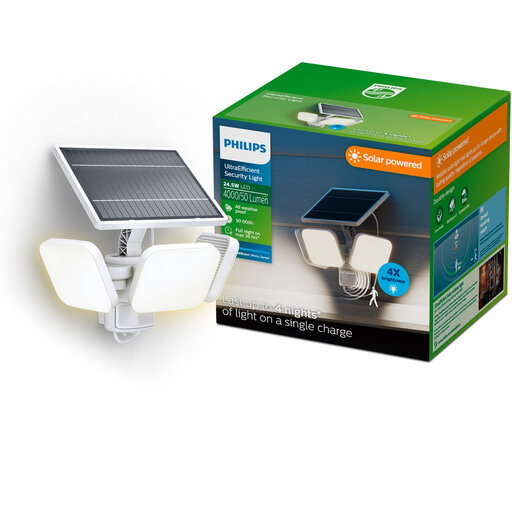
Why This Fits Their Persona: Ideal for those seeking maximum visibility and security for a driveway, shed, or back door. This light combines the simplicity of solar power with a very high light output.
This tackles both the "solar-power trap" and the "waterproof deception." Philips states its efficient technology can provide up to 4 nights of light on a single charge, indicating a high-quality battery. The IP65 rating makes it suitable for exposed installation.
Extremely high light output (4000 lm) and a wide sensor detection range (up to 16 metres). The bright white light (5000K) ensures maximum visibility.

Why This Fits Their Persona: Perfect for those who want to transform their garden or patio with dynamic ambient lighting. Ideal for highlighting plants, a garden path, or for a garden party.
This is not a simple on/off light. Its extensive smart features (dimming, colour temperature, and RGB colours) make it a versatile investment that avoids the "disposable LED" trap. The IP44 rating is sufficient for sheltered placement in flower beds.
Full control over colour and brightness via an app (Tuya Smart). Simple installation with ground spikes and a long cable (8 metres) for flexible placement.
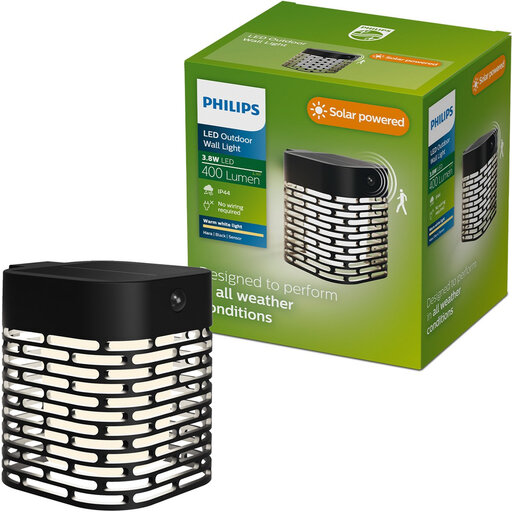
Why This Fits Their Persona: For those looking for a reliable, cost-effective, and easy-to-install light for a balcony, fence, or next to a door, without compromising on atmosphere.
This Philips model is a dependable choice that avoids the pitfall of cheap, unreliable solar panels. The combination of a motion sensor and a dusk-to-dawn sensor ensures efficient energy use.
Wire-free installation and no energy costs. The warm white light (2700K) combines the functionality of a sensor light with a warm, inviting look.
We have compiled a complete, up-to-date list of products that fully meet these strict selection criteria and local safety standards.
The performance of solar-powered outdoor lighting in winter depends heavily on its quality. High-end models with efficient solar panels and batteries, like those from Philips, are designed to function even with less sunlight. They store enough energy during the day for the night. Cheaper variants, however, will noticeably shine for a shorter duration or less brightly on overcast days. Placement in a spot with maximum daylight is crucial.
That depends on the purpose. For subtle ambient garden lighting along a border or on the patio, 100 to 300 lumens per light is often sufficient. For functionally lighting a garden path, you can aim for 300 to 500 lumens. If you need light for security at the front door or driveway, an outdoor light with sensor with 700 lumens or more is a good guideline.
The difference is the degree of water resistance. An IP44-rated light is splash-proof and can only be placed in a sheltered location, such as under an overhang. It is not resistant to direct rainfall. An IP65-rated light is jet-proof and can withstand rain. This is the recommended minimum rating for lights you mount on an exposed outdoor wall.
