
Vandaag of morgen in huis

Kwaliteit gegarandeerd

Welkomstaanbiedingen ontgrendelen: GRATIS bezorging | Tot 80% korting | Gratis 30 dagen JoyPlus-proefperiode
Download de app
Good outdoor lighting does more than just illuminate the driveway. It provides security, creates ambience on your patio, and can even give your home a completely new look. But the search for the right light can feel like a maze of specifications and marketing promises. The result? Often a light that breaks after a single autumn, is too bright for a cosy evening, or barely provides any light because the sun doesn't always cooperate.
As a Joybuy Product Recommendation Officer, I see where things go wrong every day. Let's go over the most common pitfalls so you can make a purchase you'll enjoy for years to come.
solar-powered outdoor light for its ease of installation but place it in a shady spot. The result: a dim, unreliable point of light.facade lighting for security, but then you're left sitting on your patio in an uninviting, cold glare. Or the other way around: an ambient light that fails to adequately illuminate the back door.To avoid these mistakes, you don't need to pore over a technical manual. Pay attention to the following three key points.
The IP rating indicates the degree of protection against dust and moisture. This isn't a marketing term, but an objective standard.
outdoor lighting. These lights are resistant to splashing water from all directions. Perfect for an outdoor wall light on a facade, as long as it's not exposed to driving rain.These two values determine the light output and the atmosphere.
outdoor light with a sensor.LED garden lighting where you want to see colours accurately.The choice of power source depends on the location and intended use.
Below are some popular choices, matched to different needs.

Why This Fits Their Persona: This person wants to effectively illuminate a dark driveway or backyard without any hassle. Security and functionality are paramount. The Fyns combines a high light output with the convenience of solar power.
It avoids the ambience-vs-security blunder. The light provides a very bright 1000 lumens when the sensor detects motion, which is ideal for security without permanently sitting in a harsh glare.
Powerful light output for security. It runs on solar power, so there are no installation costs or electricity consumption. The IP44 rating makes it suitable for general outdoor use.
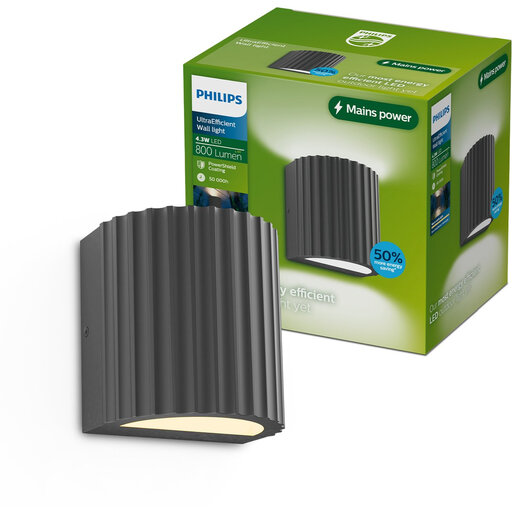
Why This Fits Their Persona: For those who see their garden or balcony as an extension of the living room. It's all about creating a warm, inviting atmosphere for long summer evenings. Design and light colour are crucial here.
This Philips outdoor light is designed for ambience. With a colour temperature of 2700K (warm white) and a two-way light effect, it prevents the cold, functional glare of a security lamp.
A stylish up-down light effect that transforms a wall. Made of durable aluminium and powered by the mains for reliable lighting, night after night.
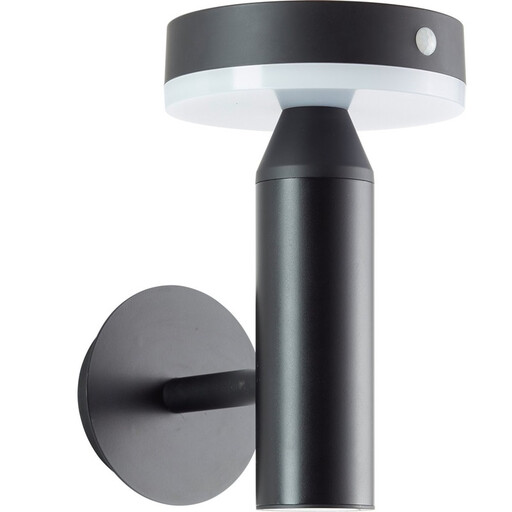
Why This Fits Their Persona: Someone looking for an affordable, sustainable, and easy-to-install solution for a balcony, shed, or garden path. No fuss with cables—just hang it up and you're done.
This light partially sidesteps the solar power trap thanks to its built-in motion sensor. The light only turns on when needed, ensuring the stored energy is used efficiently, even on less sunny days.
Fully solar-powered with no electricity costs. The combination of an IP44 rating and a motion sensor makes it a practical and low-maintenance all-rounder.
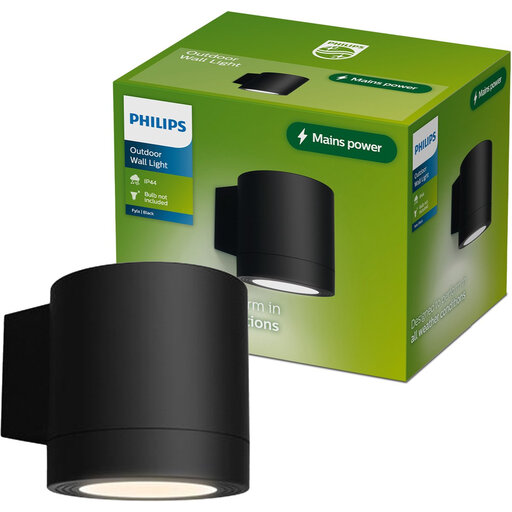
Why This Fits Their Persona: This user wants complete control. Warm white for a dinner party today, bright white for a DIY project tomorrow. The ability to choose (and replace) the light source themselves is essential.
This fixture completely solves the ambience-vs-security blunder. With the GU10 fitting, you determine the light source yourself. Choose a dimmable bulb, a smart bulb, or switch between different Kelvin values.
Maximum flexibility thanks to the replaceable light source. Its modern, minimalist design suits almost any facade and is available in multiple colours.
We have curated a complete, up-to-date list of products that meet these strict selection criteria and safety regulations.
That depends on the purpose. For ambient lighting on a patio, 100-400 lumens per light is often enough. For functionally lighting a path or staircase, 400-800 lumens is recommended. If you want to illuminate a driveway or a dark corner of the garden for security, look for lights with 800 lumens or more, preferably with a motion sensor.
Yes, but performance depends on the location. A solar-powered outdoor light needs direct sunlight to fully charge its battery. In winter, with shorter and often cloudy days, the runtime will be shorter. Therefore, place the solar panel in a south-facing spot that is free from shadows cast by trees or buildings. Models with a motion sensor are more efficient and therefore often perform better in winter.
An IP44 rating means the light is protected against solid objects larger than 1 mm (the first '4') and against splashing water from all directions (the second '4'). This is the standard for most outdoor lighting and is sufficient for mounting on a facade or under an overhang. It is not fully waterproof, so for in-ground installation or in a location where the light is fully exposed to rain, a higher rating like IP65 is a better choice.
