
Vandaag of morgen in huis

Kwaliteit gegarandeerd

Welkomstaanbiedingen ontgrendelen: GRATIS bezorging | Tot 80% korting | Gratis 30 dagen JoyPlus-proefperiode
Download de app
Good outdoor lighting does more than make your home’s exterior or garden look lovely. An outdoor light needs to suit its location, provide enough light and withstand moisture, dirt and temperature changes. Yet many people choose a light based solely on its appearance or a bold marketing claim.
An IP44 outdoor light is protected against solid objects and water splashes from different directions. That doesn’t mean you can submerge it or use it where it’s exposed to powerful jets of water. So don’t install an IP44 light in a low-lying spot where rainwater collects. For an outdoor wall light, fitting it beneath an overhang is often a sensible choice.
Solar outdoor lighting needs direct daylight to charge its battery. It may produce less power under a balcony, close to a tall fence or on a north-facing wall. Its run time can also decrease in winter and after several cloudy days. So check that the solar panel has an unobstructed view of the sky and is easy to clean.
A GU10 outdoor light or E27 outdoor light doesn’t always come with a bulb. If a fitting is supplied without one, remember to include the cost of a suitable LED bulb in your budget. Also check the maximum wattage, the colour temperature you want and whether the light can be dimmed. An integrated LED is ready to use straight away, but on some models the light source can’t be replaced.
IP44 can be suitable for sheltered walls, balconies and patios, provided the light is installed correctly. For an outdoor ground spotlight, pay extra attention to its position: avoid puddles, muddy areas and spots where the cable could get damaged. An IP rating only tells you about protection against ingress, so check the manufacturer’s installation instructions too.
Brightness is measured in lumens. A lower lumen output is often enough for atmospheric lighting on a balcony. For a driveway, entrance or dark passageway, more light is useful. Warm white light at around 2700 to 3000 K creates a soft glow. A higher colour temperature looks cooler and can work well for functional lighting.
A plug-in light, such as a plug-in ground spotlight, is generally easier to install than a hardwired outdoor wall light. Don’t leave cables loose across a path, and only use an outdoor socket designed for this purpose. A fixed connection to 230 volts must be installed in accordance with local regulations. Switch off the power, and if you’re unsure, have the work carried out by a qualified installer.
The recommendations below are based on specific product details. Before buying, always check the current product page, what’s included and the installation requirements.
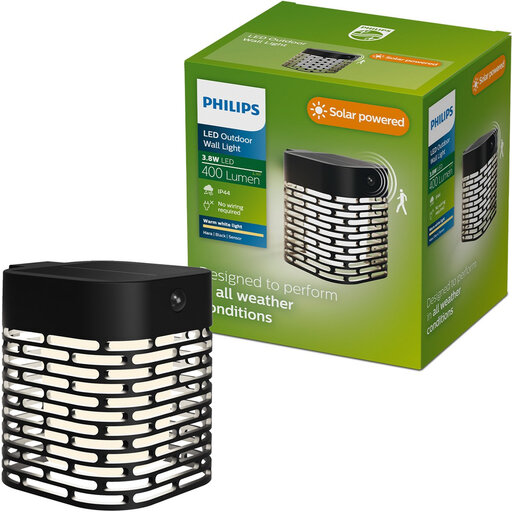
Why it suits this profile: This solar outdoor light works without mains electricity or fixed wiring. That makes it a practical choice for a balcony, shed or exterior wall where you want to add light quickly.
The product description clearly states that it’s solar-powered and has two light modes, a dusk sensor and an IP44 rating. Make sure the solar panel gets enough direct daylight.
Integrated 400-lumen LED, warm white light at 2700 K and installation without wiring.
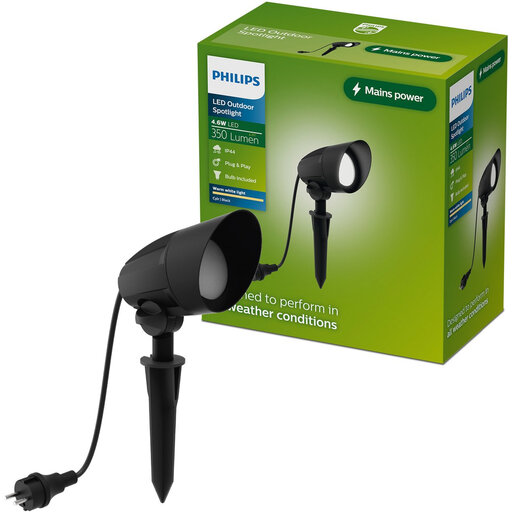
Why it suits this profile: This plug-in ground spotlight is ideal for homeowners looking for a permanent lighting solution for a driveway, gate, lawn or statement plant.
The included GU10 LED bulb means you don’t have to find a separate light source. IP44 means splash protection, not protection against submersion.
Adjustable spotlight, 350 lumens, 2700 K, 150 cm cable and an aluminium housing with a glass component.
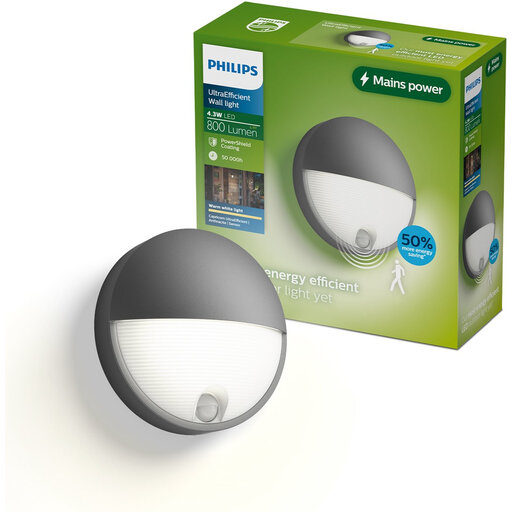
Why it suits this profile: This outdoor light with a motion sensor is designed for entrances, back doors and dark passageways where you want light to come on automatically.
The motion and dusk sensors reduce the need for manual operation. Check beforehand whether a fixed connection and professional installation are required.
Integrated LED, 800 lumens, 2700 K and IP44. The product details specify aluminium and one light point.

Why it suits this profile: This set is ideal if you want flexible lighting for garden paths, borders or plants and value control via an app or voice assistant.
The specifications state IP44 and include a ground stake, but there’s also a cable. Keep it away from paths and bear in mind that you’ll need to set up the app and Wi-Fi.
Three integrated LED lights, dimming, RGB, adjustable colour temperature from 3000 to 6500 K and Tuya compatibility.
We’ve put together a complete, up-to-date list of products that meet these strict selection criteria and current European safety regulations.
IP44 is suitable for many sheltered outdoor applications, such as a wall, balcony or patio. The light is protected against splashes, but not submersion or direct water jets. Install the fitting according to the instructions and prevent water from collecting around it.
Solar outdoor lighting doesn’t use electricity from the mains during normal operation. Its solar panel charges an internal battery. Performance depends on the amount of daylight, where it’s positioned and the condition of the panel. The light may stay on for less time when there’s little sun.
Lifespan varies by product and conditions of use. Product specifications sometimes give an estimated figure, such as 15,000 or 25,000 operating hours. Some Philips models state a longer lifespan in their product descriptions; this is a specification provided by the brand, not a guarantee of a particular period of use. Also check whether the LED can be replaced.
