
Vandaag of morgen in huis

Kwaliteit gegarandeerd

Welkomstaanbiedingen ontgrendelen: GRATIS bezorging | Tot 80% korting | Gratis 30 dagen JoyPlus-proefperiode
Download de app
A dark driveway, poorly lit entrance or uninviting balcony calls for a practical solution. However, choosing outdoor lighting is not simply a matter of picking an attractive design. A lamp may appear suitable in the product photo, yet disappoint in practice because of insufficient light output, inadequate protection against moisture or an awkward power connection.
Pay particular attention to these three common pitfalls:
Below, we explain what to look for when choosing solar outdoor lighting, smart outdoor lighting and traditional outdoor lamps.
The right lamp depends on its location and purpose.
With smart outdoor lighting, control is also important. According to Aigostar’s product specifications, Bluetooth Mesh lighting can be connected to more than 200 devices. Actual control depends on the compatible equipment, its placement and the app being used.
The IP code consists of two digits. The first digit indicates protection against solid particles, while the second refers to water.
It is best to install an IP44 lamp where it will not be exposed to a direct, powerful jet of water or prolonged water accumulation. A lamp with IP65 outdoor lighting offers greater protection in exposed locations, but it still needs to be installed correctly. Always check the installation instructions; the rating only applies when the seals and connections have been fitted properly.
Lumens indicate how much visible light a lamp produces. A 200-lumen lamp is mainly suitable for ambient lighting or limited orientation. For a driveway or functional entrance, a higher light output may be more practical.
Colour temperature is measured in kelvin:
A 120-degree beam angle spreads the light widely. This can be useful for a façade or border, while a narrower beam works better for highlighting a tree or garden feature.
Solar outdoor lighting uses a solar panel and battery. According to the stated product specifications, various Aigostar models have a charging time of 4 to 6 hours and a maximum battery life of 24 hours. This is a stated maximum value; cloud cover, shade, temperature and battery ageing all affect day-to-day performance.
When checking solar lighting, make sure:
With 230V outdoor lighting, such as some Philips models, the connection must be suitable for outdoor use. Switch off the power before installation. If in doubt, have fixed electrical connections installed by a qualified electrician.
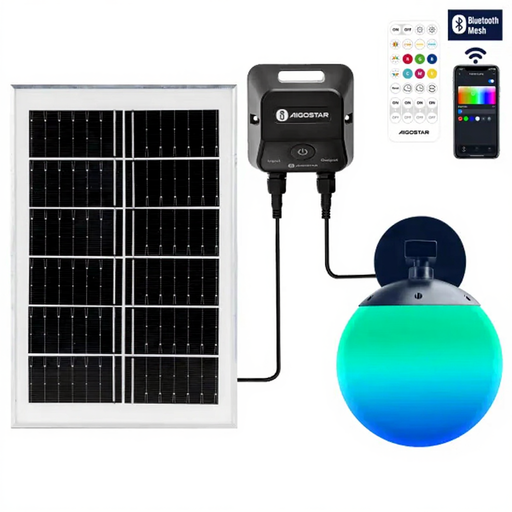
Why it suits this profile: This solar wall lamp works without fixed wiring and, according to the product specifications, switches on automatically when it gets dark. This makes it suitable for a balcony, shed or small façade.
There is no need to run a power cable. However, make sure the panel is placed in a sunny location and note the stated light output of 200 lumens.
RGBCCT lighting, 4000mAh battery, 5W solar panel and Bluetooth Mesh functionality according to the product specifications.
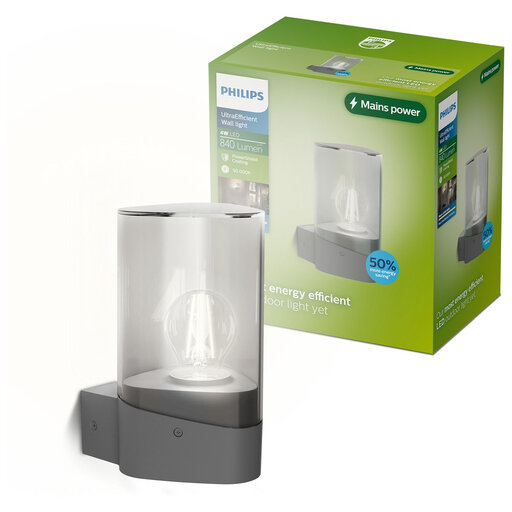
Why it suits this profile: This fixed outdoor wall lamp is designed for anyone who wants neat façade lighting with a 230V connection and warm white light.
The E27 LED light source is included according to the product information. This means you do not need to check separately whether you still need to buy a suitable bulb.
IP44, 840 lumens, 2700K warm white light and an E27 fitting according to the stated specifications.
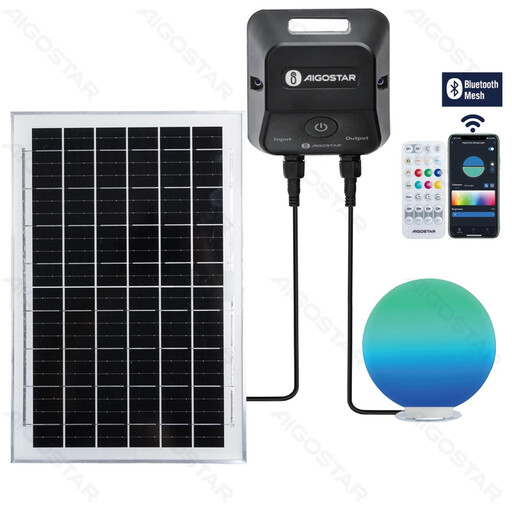
Why it suits this profile: This solar ground spotlight is designed for larger borders, a driveway or a garden where multiple smart light points need to work together.
The stated IP65 rating offers greater protection than IP44. Nevertheless, install the lamp according to the instructions and keep the panel clear.
35W, 350 lumens, 8000mAh battery, RGBCCT and Bluetooth Mesh according to the product information.
Solar outdoor lighting does not use mains electricity while switched on, but the purchase price and battery replacement are still part of the total cost. In winter or in a shady location, the operating time may be shorter.
A traditional E27 outdoor lamp or GU10 outdoor lamp requires a fixed power connection, but often provides a more predictable light level. With fittings supplied without a light source, remember to factor in the additional cost of a suitable LED bulb. Smart models may offer useful features such as timers, dimming and colour selection, but check compatibility with your existing system beforehand.
We have put together a complete, up-to-date list of products that fully meet these strict selection criteria and the applicable European safety regulations.
IP44 may be suitable for a sheltered façade or balcony. For a more exposed location, IP65 offers additional protection against dust and water jets according to the classification. Always check the installation instructions.
Operating time varies depending on the battery, charge level and weather conditions. The product specifications for the Aigostar models mentioned state a maximum battery life of up to 24 hours. This is not a guaranteed duration for every night.
A solar-powered outdoor lamp does not use mains electricity during normal operation. The solar panel charges the battery during the day. Operating time depends on the amount of daylight, the lamp’s position and the condition of the battery.
