
Vandaag of morgen in huis

Kwaliteit gegarandeerd

Welkomstaanbiedingen ontgrendelen: GRATIS bezorging | Tot 80% korting | Gratis 30 dagen JoyPlus-proefperiode
Download de app
Good outdoor lighting should suit the place where you’ll use it. A light for a sheltered balcony has different requirements from a powerful outdoor light for the driveway. Yet product pages often focus mainly on lumens, design or terms such as “waterproof”. This can make it easy to overlook important details.
A high lumen count means a light can produce plenty of light, but it doesn’t automatically mean your whole garden will be well lit. The beam spread, mounting height and direction of the light source all matter too. A powerful light with a narrow beam, for example, can create one brightly lit spot with dark areas around it.
For atmospheric lighting along a flower bed, a soft LED garden light is often enough. For a driveway or garage, an outdoor light with a motion sensor and wider light distribution may be more practical.
Check the IP rating rather than relying on marketing claims alone. An IP44 outdoor light is protected against solid objects larger than 1 millimetre and splashing water from different directions. This makes IP44 suitable for many sheltered exterior walls, balconies and covered areas.
An IP65 outdoor light is dust-tight and protected against water jets. This offers greater protection on an exposed exterior wall, shed or driveway, but an IP65 light should not be placed underwater either. Also, always check that the cables, fittings and connection points are suitable for outdoor use.
Solar outdoor lighting is easy to install, as it usually doesn’t need mains electricity or cables. However, performance depends on direct sunlight. A panel under a canopy, next to a tall fence or on a north-facing balcony may not receive enough energy.
When choosing solar garden lighting, consider the panel’s position, the battery capacity and the stated operating time. According to some brands’ product information, the stated operating hours are based on a full charge in suitable light conditions. In the UK autumn and winter, the lights may stay on for less time.
Lumens (lm) indicate the total light output. Low to medium light output is usually suitable for garden path lighting. A wall light by the front door or a light for a driveway can be brighter and more functional.
Colour temperature is measured in kelvin (K):
Pay attention to the light settings too. A light that only comes on brightly when it detects movement will generally use solar power differently from one that stays dimly lit all night.
A sensor works most reliably when it’s positioned to suit the direction people approach from. Check:
A sensor light directly above a door may respond differently from a model designed to monitor a wide driveway. Fit the light securely and avoid placing branches, reflective surfaces or a busy road within its immediate detection area.
Aluminium, plastic and glass each have different properties. Plastic is often lightweight and easy to install. Aluminium can have a solid look, but check the finish and fittings. A qualified installer is needed to fit a wired 230 V wall light.
Solar outdoor wall lights are usually easier to install. Make sure the panel has an unobstructed view of the sky and clean it occasionally with a soft, slightly damp cloth. For ground lights, also check that the stake is stable and doesn’t create a trip hazard.
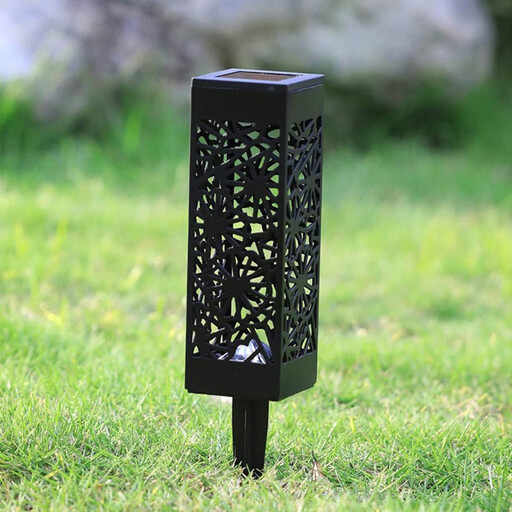
Why it suits this profile: This set is for anyone who wants to mark out a path, flower bed, patio or border without wiring. The six lights can be placed directly in the ground.
The product information lists IP65, a charging time of 4–6 hours and a stated operating time of 5–8 hours. For the best chance of a full charge, place the lights in a sunny spot.
A set of six, warm white LEDs, automatic activation and tool-free, wire-free installation according to the product description.
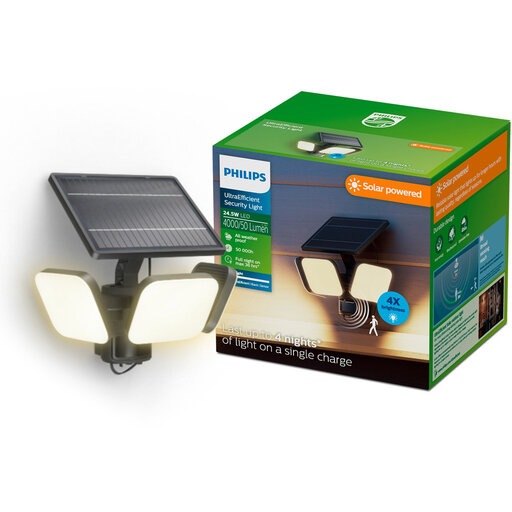
Why it suits this profile: Suitable for an entrance, garage or larger outdoor area where a high stated light output and wide motion detection are desirable.
According to the product information, this model has IP65, a stated light output of 4000 lumens and a sensor range of 8 metres when approached directly and 16 metres from the side. Check that the brightness suits the location.
Solar-powered, with an adjustable light head, two light settings and a stated colour temperature of 3000 K.

Why it suits this profile: This model is designed to light a garden, patio, garage or driveway over a wide area, where a single small garden light wouldn’t provide enough coverage.
The three adjustable heads and stated 270-degree coverage make it easier to control the light distribution. According to the product information, the sensor range is stated as 60 feet and 180 degrees; check the equivalent distance and mounting height for your situation.
302 LEDs, a stated light output of 3000 lumens, three settings and IP65 protection according to the product description.
We’ve put together a full, up-to-date list of products that meet these strict selection criteria and the applicable European safety regulations.
Choose a spot where the solar panel receives direct sunlight during the day. Avoid shade from trees, walls and balconies. Also, don’t place ground lights where they could easily cause you to trip. For an outdoor solar wall light, check that the panel isn’t facing a dark side wall.
Lifespan varies depending on the model, usage, battery and weather conditions. With integrated LED lighting, the light source usually isn’t designed to be replaced by the user. If a fitting takes a GU10 or E27 bulb, you can replace it, but always check the maximum wattage and the correct fitting.
A solar outdoor light doesn’t use mains electricity during normal operation, but its output depends on sunlight and battery capacity. A wired LED outdoor light generally uses less electricity than a comparable halogen light. A motion sensor or timer can limit the number of hours the light is on. Before buying, check the wattage, light settings and whether the light stays on continuously or only comes on when it detects movement.
