
Vandaag of morgen in huis

Kwaliteit gegarandeerd

Welkomstaanbiedingen ontgrendelen: GRATIS bezorging | Tot 80% korting | Gratis 30 dagen JoyPlus-proefperiode
Download de app
Good outdoor lighting needs to do more than look attractive. A light by the front door should provide enough visibility, garden path lights should be positioned sensibly, and solar outdoor lighting needs enough sunlight to remain useful. However, there are a few common pitfalls that can make a purchase disappointing in practice.
A high lumen rating doesn’t automatically mean a light will work well in the right place. A powerful outdoor LED light may be suitable for a driveway, but too bright next to a patio or balcony. Also consider the light distribution, colour temperature and mounting angle.
For ambient lighting, warm white light around 2700K to 3000K is often more soothing. For practical lighting by a garage, shed or driveway, a higher light output may be more useful.
The IP code consists of two digits. The first indicates protection against solid particles, while the second indicates protection against water.
So don’t just check whether a product is advertised as a “waterproof outdoor light IP44”. Check where the product information says it can be installed, too. An IP65 outdoor light isn’t necessarily suitable for immersion.
An outdoor solar wall light or solar-powered garden light needs direct daylight. If you place the solar panel under a roof overhang, behind a tall fence or on a north-facing wall, the battery may not charge fully. According to the product descriptions for the solar lights, around 6 to 8 hours of sunlight is important for charging.
In winter, during cloudy weather and in shaded gardens, the light may stay on for less time. Clean the solar panel regularly with a soft, damp cloth and check that the switch is in the correct position before first use.
Solar outdoor lighting works without a fixed mains connection, making it handy for a garden path, fence, balcony or anywhere that’s difficult to run cables to. Check the stated battery capacity, charging time and operating time. These figures depend on sunlight and the selected operating mode.
A fixed outdoor wall light with a GU10 or E27 fitting usually needs to be connected to the mains. In return, you can choose and replace the light source yourself. With an integrated outdoor LED light, the light source is part of the fitting. So check whether it can be replaced before you buy.
An outdoor light with a motion sensor can be useful by an entrance, garage or driveway. Check:
A sensor with a wide angle can cover more ground, but the mounting height and position are still important. If you want to avoid the light switching on unnecessarily, don’t point the sensor at a busy road or moving branches.
A GU10 outdoor light uses a compact spotlight fitting. An E27 outdoor light has room for a larger standard bulb. Several Philips and Brilliant models don’t include a light source. This gives you a choice of colour temperature and dimmability, but you’ll also need to factor in the cost of a suitable LED bulb.
For fixed connections, the product descriptions recommend having the light installed by a qualified electrician. Switch off the power at the consumer unit before working on any wiring or installation.
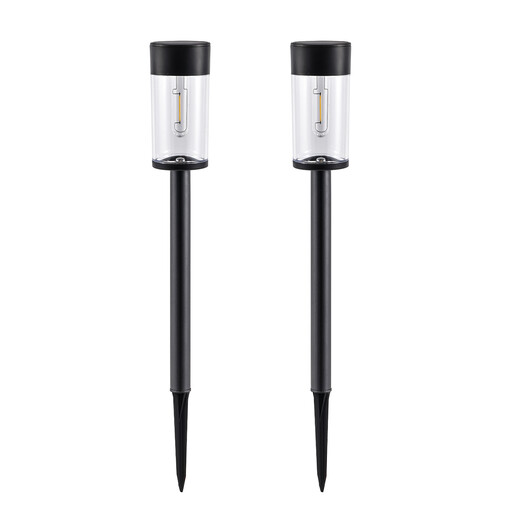
Why it suits this profile: This set is designed for garden paths, borders and driveways, with no cables or fixed connection needed. Each light produces 10 lumens of warm white light at 3000K.
The IP65 rating and ground stakes make it easier to judge where to install these lights than decorative models with no stated protection rating. Just make sure you place the panels somewhere sunny.
A set of two, automatic switching on and off via a light sensor, and a stated operating time of 8 to 12 hours in suitable conditions.
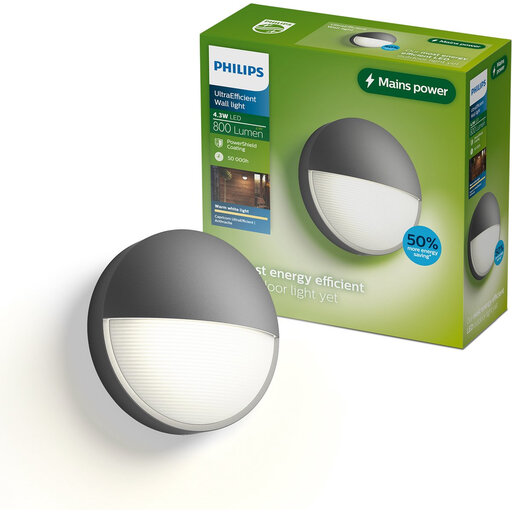
Why it suits this profile: This fixed outdoor wall light has an integrated LED with a stated output of 800 lumens and warm white light at 2700K. It’s a good fit for a façade, entrance or balcony where you want a fixed light source.
The specifications list both the lumen output and colour temperature. The IP44 rating also makes it clear that a sheltered outdoor location is the sensible choice.
800 lumens, 2700K and an aluminium/plastic housing. The LED is integrated and, according to the product information, cannot be replaced.

Why it suits this profile: A good choice for a driveway, garage or large garden where a wide beam and motion detection matter more than subtle ambient lighting.
The product information lists a detection range of 60 feet, an angle of 180° and an IP65 rating. Before installation, check that these specifications suit the coverage you need and the conditions at your property.
302 LEDs, a stated output of 3000 lumens, three lighting modes and three adjustable heads with a 270° range of movement.
Install a solar outdoor light so that its panel receives direct sunlight during the day. For a fixed garden or façade light, make sure the surface can support its weight and the fixings. Ideally, place an IP44 light somewhere sheltered from direct water jets.
Clean panels, sensors and fittings with a soft cloth. Don’t use abrasive products. For GU10 or E27 fittings, check the fitting, maximum wattage and suitability for outdoor use before replacing a bulb. Replacing a separate bulb is usually easier than replacing a fitting with an integrated LED, but you’ll still need a suitable light source.
We’ve put together a complete, up-to-date list of products that meet these strict selection criteria and the applicable European safety regulations.
Solar outdoor lighting doesn’t use mains electricity while it’s on. Its performance does depend on sunlight, battery capacity and the selected mode. A fixed LED outdoor light generally uses less electricity than many older types of light source. So compare wattage, lumens and operating time together.
Lifespan varies by type. A fitting with a replaceable GU10 or E27 bulb can remain useful for longer because you only need to replace the light source. With integrated LED systems, you may need to replace the entire fitting when the light source reaches the end of its life. Batteries in solar lights are wear-and-tear parts; cold weather, limited sunlight and frequent switching can all affect operating time.
Point the sensor towards the route you want to light, such as a front door, driveway or path to the garage. Make sure the light is securely fitted and avoid pointing it directly at road traffic, reflective surfaces or moving plants. Also check that the IP rating is suitable for how exposed the light will be to rain.
