
Vandaag of morgen in huis

Kwaliteit gegarandeerd

Welkomstaanbiedingen ontgrendelen: GRATIS bezorging | Tot 80% korting | Gratis 30 dagen JoyPlus-proefperiode
Download de app
Good outdoor lighting should suit the location, purpose and British weather. A light for your front door needs different features from a string of lights on a covered balcony or an LED light along the driveway. Yet many product pages focus mainly on lumen counts, LEDs and “waterproof” claims. As a result, you may end up buying a light that is too bright in practice, runs out of charge quickly or turns out to be unsuitable for where you want to install it.
More lumens don’t automatically mean a light is a better fit. A powerful floodlight can be useful on a driveway, but impractical by a patio or bedroom window. The number of LEDs also tells you little without information about light distribution, colour temperature and operating time.
So, check:
An IP rating consists of two digits. The first indicates protection against solid particles, while the second refers to water. IP44 outdoor lighting is protected against splashes from different directions, but isn’t designed to be submerged or exposed to direct jets of water. IP65 outdoor lighting offers greater protection against dust and water jets.
It’s best to install an IP44 light in a sheltered spot, such as under a canopy or on a wall with limited exposure. An IP65 light is more suitable for an exposed wall, garage, fence or large garden, although it’s still important to install it according to the instructions. No IP rating automatically means a product can be used underwater.
Solar outdoor lighting only works well when its panel receives enough direct sunlight during the day. Under a tree, balcony or north-facing wall, the battery may not charge as much. Cloudy weather, short winter days and dirt on the panel can all affect how long the light stays on.
When choosing solar garden lighting, check:
A wall light for outdoors is a practical choice for an entrance or exterior wall. A model with a motion sensor can provide light for a short time when someone approaches. A wider beam is more useful for a driveway or large garden. A motion-sensor outdoor light also means the light won’t stay on all night, but be sure to check the detection range and how long it stays on.
Low garden bollards or path lighting are suitable for pathways. Check the spacing, cable length and stability of any ground spikes. A portable LED table lamp is a better fit for a patio or balcony. For decorative lighting, choose an outdoor string of lights, outdoor mood lighting or RGB garden spotlights.
Solar lights don’t need a mains connection, but they do rely on sunlight. Rechargeable USB LED lights are easy to move around, but need charging regularly. Wired 220–240V lighting requires more care with installation and safety. Fixed electrical connections should be installed in line with current regulations and, where necessary, by a qualified installer.
A GU10 outdoor light supplied without a bulb gives you the freedom to choose the colour and brightness. If so, check the maximum wattage and the correct fitting before buying an LED bulb.
Aluminium, glass, ABS and plastic are commonly used for outdoor lights. Don’t just look at the material; check the seals, fixings and cable entry point too. Clean solar panels and sensors with a soft, slightly damp cloth. Don’t use a pressure washer on IP44 models or submerge the light.
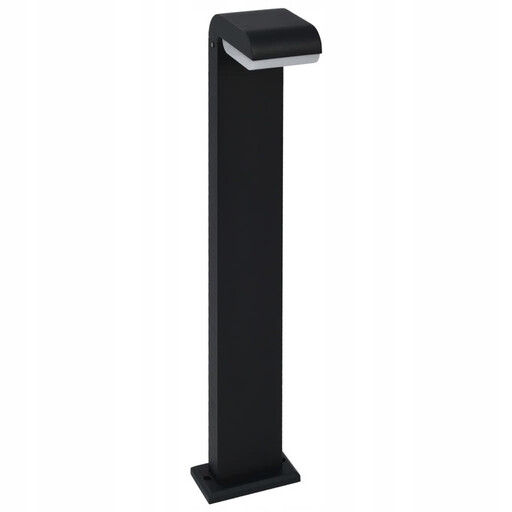
Why it suits this profile: This compact path light provides steady LED illumination for a garden path or entrance, with no complicated settings. The specifications state 550 lumens, 9W and IP54.
The light output and IP rating are clearly stated. Bear in mind that it should be installed away from direct splashes of water.
Integrated LED, cast aluminium and a height of 80 cm for clear guidance along a path.

Why it suits this profile: This solar outdoor light is designed for a wall, entrance or shed where you’d rather not run a cable. The product details state 1000 lumens, 3000K, two lighting modes and a motion sensor.
It’s described as more than just a “security light”: the relevant specifications, IP44 rating and lighting modes are all listed. Position the panel in direct sunlight.
No fixed wiring required; integrated LED, warm white light and a stated light output of 1000 lumens.

Why it suits this profile: A wide spread of light is useful for a driveway, garage or larger garden. According to the product description, this model has three light heads, a 180-degree detection angle and an IP65 rating.
The product information gives more than just the number of LEDs: it also lists 3000 lumens, three modes, a detection range of around 18 metres and an IP65 rating. Actual performance depends on sunlight and other conditions.
Three adjustable heads, wide coverage, solar power and an integrated 1800 mAh battery.
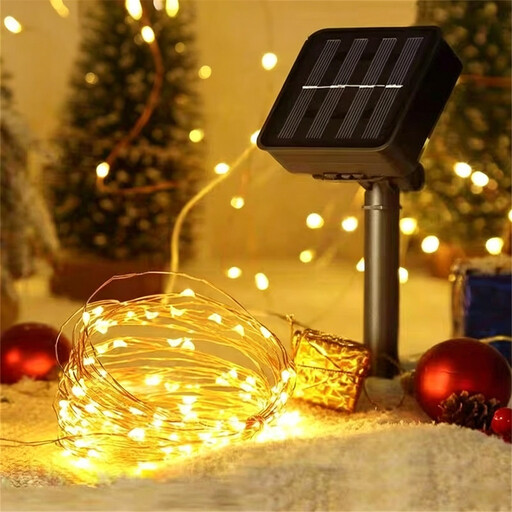
Why it suits this profile: This set is designed for decorative garden lighting on a balcony or patio, or around trees or a pergola. Each string is 49 ft long and has 75 warm white LEDs.
The set includes a solar panel and offers eight lighting modes, with a charging time of around 6–8 hours. According to the product information, it stays lit for 8–14 hours, depending on the weather.
Two strings, warm white light, a memory function and eight adjustable lighting effects for flexible outdoor mood lighting.
We’ve put together a complete, up-to-date list of products that meet these strict selection criteria and the applicable European safety regulations.
A few dozen to a few hundred lumens is often enough for decorative lighting. Around 300–600 lumens can work well for a path light or wall light. A driveway or wide-area security light will need more. As well as the lumen output, consider the beam angle, installation height and distance from the surface you want to illuminate.
It can be, as long as the solar panel gets enough direct light during the day. Don’t position it under dense foliage or in a permanently shaded spot. Bear in mind that operating time may decrease in cloudy weather and during the darker months. For consistent illumination, wired LED outdoor lighting is more predictable.
Its lifespan depends on the LED module, battery, seals, temperature and how long it’s used for. With integrated LED lights, the light source often can’t be replaced by the user. So, check the warranty, maintenance instructions and IP rating. Clean sensors and solar panels regularly, and don’t install an IP44 light somewhere it will be continually exposed to direct jets of water.
