
Vandaag of morgen in huis

Kwaliteit gegarandeerd

Welkomstaanbiedingen ontgrendelen: GRATIS bezorging | Tot 80% korting | Gratis 30 dagen JoyPlus-proefperiode
Download de app
Good outdoor lighting should suit the location, how it is used and the British weather. A light for a garden path has different requirements from an outdoor wall light by the front door. Even so, many buyers focus mainly on appearance, brightness or a low price. This can lead to practical problems: a solar light receives too little sunlight, an IP44 light is left exposed to rain, or a motion sensor responds to every cat in the garden.
With this buying guide, you can compare solar outdoor lighting, LED outdoor lighting, garden path lights and outdoor wall lights based on verifiable product specifications.
The IP code consists of two digits. The first digit indicates protection against solid particles and dust; the second relates to water.
IP65 does not mean that a light can be placed underwater. Always check the complete installation and safety instructions.
Solar-powered garden lighting uses a solar panel and a built-in battery. The stated operating time depends on the amount of sunlight, positioning and the season. In a garden with shade, a north-facing façade or frequent cloud cover, the battery may charge less than it would on a sunny summer’s day.
For this reason, do not place solar garden lights directly beneath a tree, roof edge or balcony. Also check that the solar panel remains free from leaves and dirt.
Lumens indicate the total light output, but not how the light is distributed. For creating atmosphere along a border, soft, warm light is often sufficient. A wider spread of light is more practical for a driveway or entrance. A light with a high lumen output may also be uncomfortably bright if it shines directly towards a window or seating area.
Light colour is expressed in Kelvin:
For an outdoor string light or decorative solar garden lights, light colour is often more important than a high light output. For a front door, garage or driveway, lumens and motion detection play a greater role.
Solar lights and rechargeable outdoor lights do not require a permanent mains connection. This is useful for tenants or locations where no cable is available. However, check the charging time, expected operating time and battery specifications.
A fixed 230-volt outdoor wall light must be connected by a qualified electrician in accordance with the product information. A light with a GU10 or E27 fitting gives you greater freedom to choose a suitable LED bulb yourself, but pay attention to the maximum wattage.
An outdoor light with a motion sensor can be useful by an entrance or shed. Check the detection angle, range and adjustment options. Do not point the sensor towards a busy road or a moving tree branch if you want to avoid unnecessary activation.
Also pay attention to the mounting method and surface. A magnetic light must be mounted on a flat, clean and sufficiently magnetic surface. For ground spotlights or path lights, the stakes must be firmly secured in the ground without creating a trip hazard.
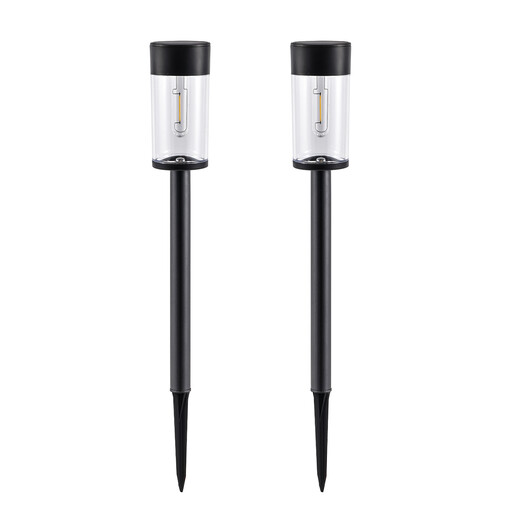
Why it suits this profile: This set is designed for garden paths, lawn edges and borders. The lights are installed using ground stakes and, according to the product information, switch on automatically at dusk.
The stated IP65 rating and solar power supply make the set suitable for an open garden path, provided the panel receives enough direct sunlight each day.
Set of 2, warm white light at 3000K and a stated light output of 10 lumens per light.
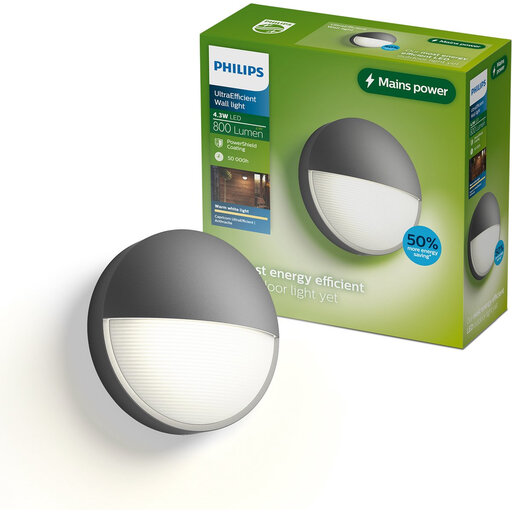
Why it suits this profile: This fixed outdoor wall light is suitable for a façade, entrance or balcony where a permanent connection is available and a well-finished fitting is desired.
The product information clearly states IP44, 800 lumens and an integrated LED. This means you can see in advance that it requires fixed installation and offers splash protection.
Warm white light at 2700K, an aluminium housing and a stated consumption of 4.3W per light point.

Why it suits this profile: For a driveway, garage, patio or large grounds, this model offers three adjustable heads and motion detection according to the product specification.
The IP65 rating is clearly stated. This makes the light a logical choice for a more exposed location, but it must still be installed correctly.
302 LEDs, a stated output of 3000 lumens, a 270° light range and a sensor range of 60 feet according to the product information.
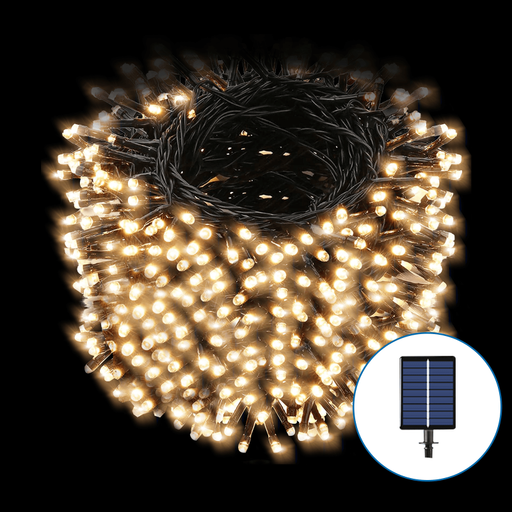
Why it suits this profile: This outdoor string light is designed for a balcony, window, pergola, fence or Christmas tree where decorative lighting is the main priority.
The stated length of 10 metres, IP65 rating and 2-metre cable between the panel and string make it easier to plan the installation in advance.
100 LEDs, eight lighting modes, a stated charging time of 4–6 hours and an operating time of 8–12 hours according to the product information.
We have put together a complete, up-to-date list of products that fully meet these strict selection criteria and the applicable European safety regulations.
For subtle path lighting, a few lumens per light are often sufficient, as several lights work together to mark the path. For an entrance, driveway or security light, a higher light output is more practical. Do not look at lumens alone; also consider the distance between the lights and the direction of the light beam.
The operating time per night depends on sunlight, battery capacity, temperature and the lighting mode. Manufacturers often state an operating-time range under specific conditions. According to the product information for the selected solar products, this can range from 5–8 or 8–12 hours, for example. Clean the solar panel regularly, and do not automatically replace a light simply because one cloudy day produces less light.
LED lights generally have a low stated wattage compared with traditional light sources. With fixed lighting, you still pay for the electricity used from the mains. Solar outdoor lighting does not use mains electricity while switched on, but its performance depends on sufficient sunlight. So, as well as the light source, check the wattage, operating time and how the light is activated.
