
Vandaag of morgen in huis

Kwaliteit gegarandeerd

Welkomstaanbiedingen ontgrendelen: GRATIS bezorging | Tot 80% korting | Gratis 30 dagen JoyPlus-proefperiode
Download de app
Outdoor lighting needs to do more than look attractive. A light by the front door should switch on reliably, a patio light should provide pleasant illumination and a solar wall light needs to receive enough sunlight. Yet many buyers only discover after purchase that the light output is disappointing, the IP rating is unsuitable or the fitting does not meet their needs.
As a Joybuy Product Recommendation Officer, I filter product information for practical details. Below, you’ll find what to look for before buying outdoor lighting and which models suit different uses.
IP44 outdoor lighting is protected against solid objects from 1 millimetre in size and splashing water from different directions. This makes the rating suitable for many sheltered façades, balconies and patios. However, IP44 does not mean that the light can be submerged or withstand powerful jets of water.
For an exposed location or a façade that receives a lot of rain, an IP65 outdoor light may be more practical. IP65 offers greater protection against dust and water jets. Always check the installation instructions: even a higher IP rating does not make incorrect installation safe.
Lumens indicate how much light a lamp produces. For atmospheric patio lighting, 170 to 400 lumens may be sufficient, while a light for a driveway or back garden may need to produce more light. Light distribution, mounting height and colour temperature also affect the result.
Warm white light around 2700 to 3000 K generally feels softer. Cooler light around 5000 K is clearer and more functional, but may feel less relaxing in a seating area. So don’t just look at the lumen figure; consider the location and purpose too.
Solar outdoor lighting does not require a fixed mains connection, but the solar panel must receive enough daylight. A north-facing wall, a position beneath a canopy or a shady garden can limit charging performance. According to the product information for the Philips models concerned, direct sunlight is important for charging.
A sensor outdoor light may also react sooner than expected when people, pets or moving branches enter the detection area. Therefore, check the positioning and range of the sensor before permanently mounting the light.
Use a water-resistant outdoor light according to its stated application:
Also pay attention to cables, mounting hardware and connection points. A wired outdoor wall light, such as a model with an E27 or GU10 fitting, may require installation by a qualified electrician.
There are three practical options:
A solar wall light with a motion sensor usually only comes on when movement is detected. This can save energy, but it is less suitable if you want constant light throughout the evening.
Check whether the light has an integrated LED or uses a replaceable light source. A GU10 or E27 fitting gives you greater freedom to choose the colour and brightness of the light. Some outdoor wall lights do not include a bulb.
Indoor spaces have different requirements. An adjustable table lamp or desk lamp with an E27 fitting is intended for a dry environment. For example, the Brilliant Desk Lamp has an IP20 rating, a cord of approximately 1.6 metres, an adjustable head and hinged joints. This is useful for focused reading or task lighting, but not for a balcony or garden.
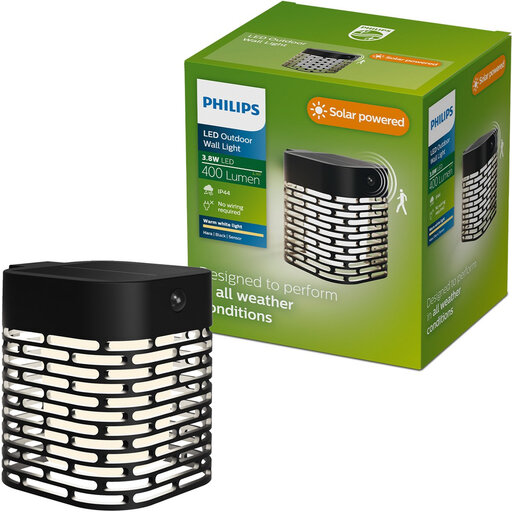
Why it suits this profile: This solar wall light is ideal if you want to illuminate a façade, balcony or entrance without wiring. It has two modes, warm white light at 2700 K and 400 lumens per light point.
The product information clearly states the IP44 rating and solar power supply. However, position the light where the panel receives direct daylight; IP44 is not intended for submersion.
No mains connection required; two light modes; warm white light; compact dimensions of approximately 12.7 × 11.2 × 13 cm.
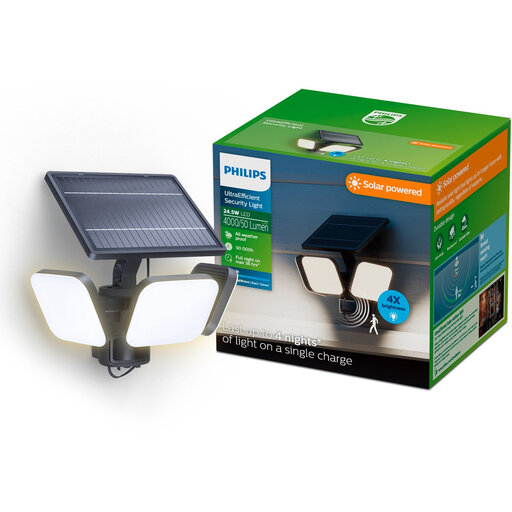
Why it suits this profile: A higher light output is important for driveways, back gardens and larger façades. This model offers 4000 lumens, IP65 protection, an adjustable head and a motion sensor.
The specifications distinguish between high light output and water protection. Even so, check the installation location and avoid pointing the sensor towards a busy public pathway.
IP65; 4000 lumens; detection range according to the product information of up to 8 metres for direct approach and 16 metres for sideways approach.

Why it suits this profile: This sensor outdoor light is designed for anyone looking for practical lighting by an entrance, shed or garden path. The stated light output is 1000 lumens, with warm white light at 3000 K.
The intended use matches the sensor function: the light comes on when movement is detected rather than staying on continuously. The IP44 rating requires a suitable installation location that is not excessively wet.
Solar power; two light modes; integrated motion and dusk sensor; 1000 lumens according to the product specifications.
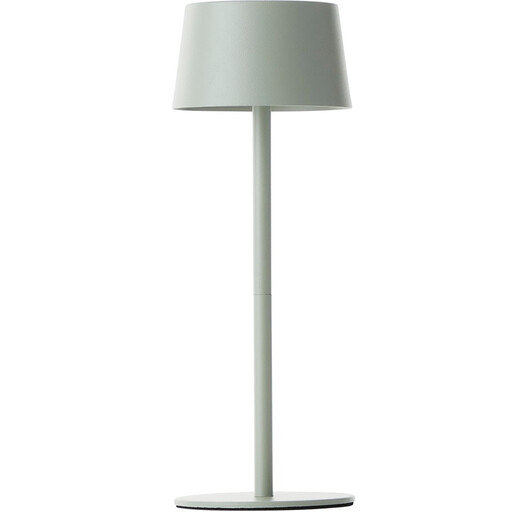
Why it suits this profile: This outdoor table lamp is ideal when you do not want to mount a light on the wall. It works via solar power or USB, has three dimming settings and provides 170 lumens at 3000 K.
You are not entirely dependent on sunny weather: the battery can be charged via USB. However, the IP44 rating means that the lamp is resistant to splashing water and must not be submerged.
Solar and USB charging; three brightness settings; integrated LED; freestanding placement without wiring.
For indoor spaces, you can complement your lighting with a desk lamp, ceiling light or floor lamp. Pay particular attention to IP20 for dry areas, the fitting and the desired light colour. This will help prevent a garden light from accidentally being used indoors, or vice versa.
We have put together a complete, up-to-date list of products that fully meet these strict selection criteria and the applicable European safety regulations.
IP44 is sufficient for many sheltered applications, such as a balcony, covered patio or façade. For locations with greater exposure to dust and water jets, IP65 is the more suitable choice. Always check the light’s exact installation instructions.
The operating time per night depends on sunlight, battery capacity, temperature and the selected light mode. A sensor setting generally uses less energy than continuous operation. According to the product information for some Philips models, the light source is stated to have a lifespan of 25,000 hours; this does not automatically indicate how long the battery will last.
A solar outdoor light does not draw energy from the mains while in use. The battery is charged via the solar panel. Models with USB charging can also be topped up manually when there is little sunlight. When comparing total running costs, remember to factor in the initial purchase and any battery replacement.
