
Vandaag of morgen in huis

Kwaliteit gegarandeerd

Welkomstaanbiedingen ontgrendelen: GRATIS bezorging | Tot 80% korting | Gratis 30 dagen JoyPlus-proefperiode
Download de app
Good outdoor lighting improves visibility at an entrance, creates atmosphere on a terrace and helps keep walkways clear and easy to navigate. However, not every outdoor light is suitable for every location. A light that performs well under a canopy may wear more quickly when exposed to direct rain. Light output, solar performance and motion sensors are also often presented more favourably than the specifications justify.
With this buying guide, the Joybuy Product Recommendation Officer filters out the most important information. This makes it easier to compare garden lighting, an LED outdoor light, solar outdoor lighting and outdoor wall lights based on verifiable specifications rather than appearance alone.
A water-resistant outdoor light is not automatically suitable for every weather condition. The IP rating consists of two digits. The first indicates protection against solid particles; the second refers to moisture and water.
IP44 does not mean that you can place a light underwater or expose it to a powerful water jet for an extended period. Also check whether the installation location is sheltered. An outdoor wall light installed beneath a roof performs differently from one mounted on a completely exposed façade.
A high number of LEDs means little without context. Lumens (lm) indicate the total light output, while kelvin (K) describes the colour temperature. Warm white light around 2700–3000 K is often well suited to a terrace or entrance. Cooler light can be more functional for a driveway, but it is not automatically more comfortable.
You generally need less light for orientation along a path than for illuminating a wide driveway. Excessively bright lighting can also create distracting glare. Consider the direction of the light, the diffuser and the positioning—not just a high lumen figure.
A solar garden light needs sufficient direct daylight to charge its battery. In a Dutch garden with shade, a north-facing wall or short winter days, the operating time may be shorter than suggested by a sunny product photograph.
According to Huacan’s product description, the Solar Garden Lights charge in approximately 4–6 hours of sunlight and then remain illuminated for around 5–8 hours. These are stated product specifications; actual operating time depends on the season, placement and condition of the solar panel. Clean the panel regularly and do not position it beneath dense foliage or a roof edge.
First determine where the light will be installed:
The CE marking indicates that the manufacturer declares the product complies with relevant EU requirements. It does not guarantee that every light is suitable for every installation. Fixed 220–240V lighting must be connected in accordance with local regulations. Have hardwired models installed by a qualified electrician.
An integrated LED light is ready to use immediately, but the light source is often non-replaceable. With a light featuring a GU10 or E27 fitting, you can choose a suitable LED bulb yourself and replace it later.
For solar and battery-powered lighting, pay attention to:
The Brilliant Iseo, for example, is a portable LED wall light with an integrated 4W LED, 300 lumens, 3000 K colour temperature, USB-C charging, a motion sensor and IP44 protection. The battery is integrated and the light uses magnetic mounting. The mounting plate should therefore be installed on a clean, flat and suitable surface.
Measure the wall, pathway or available space before ordering. A tall path light may work well beside a low garden path but become inconvenient in a narrow passage. The vidaXL LED Outdoor Lamp is 800 mm high, has a power rating of 9W and produces 550 lumens. According to the product description, its opal diffuser directs the light downwards.
For ambience, a diffuser, warm-white colour temperature and indirect light distribution are important. For orientation on a driveway, range, mounting height and sensor settings are generally more relevant than a decorative design.
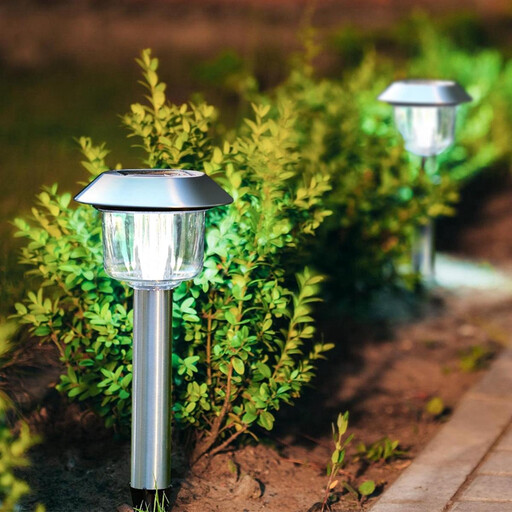
Why it’s a good fit: A straightforward choice for marking a garden path, balcony or terrace without installing cabling.
The power source is clearly solar, and the light is intended for garden or terrace use. However, check the exact IP specification on the product page.
Solar-powered, made from stainless steel and 36.6 cm high; suitable for installation without a mains connection.
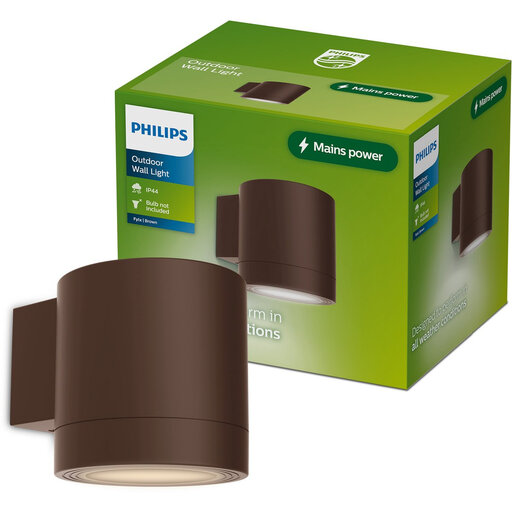
Why it’s a good fit: A fixed façade or entrance solution for choosing your own GU10 LED bulb and colour temperature.
The fitting and maximum 5W per light point are specified. The light is supplied without a bulb, so you can plan for this in advance.
Aluminium housing, GU10 fitting, replaceable light source and IP44 rating for sheltered outdoor locations.

Why it’s a good fit: For a driveway, garage or larger property where broad illumination and automatic activation are priorities.
The product description lists three lighting modes, a motion sensor and IP65 protection. Before installation, check that the solar panel receives sufficient direct light.
A stated output of 3000 lumens, three adjustable light heads, 180° sensor detection and IP65 protection.
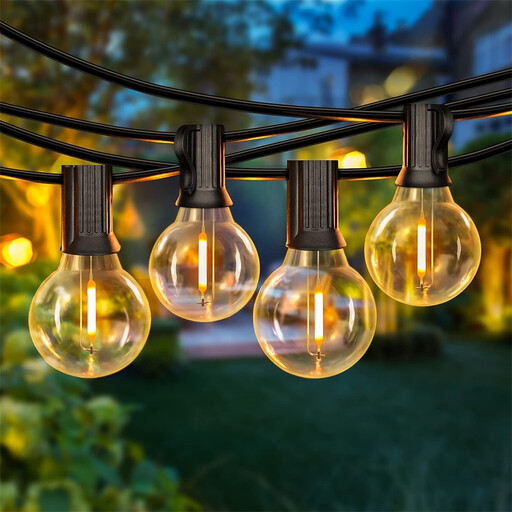
Why it’s a good fit: For long terraces, balconies and pergolas where decorative illumination matters more than bright functional lighting.
The set specifies 30 metres, 50+2 LEDs, replaceable bulbs and a plug connection. Keep connections away from standing water and follow the maximum connection length.
Dimmable, with multiple lighting modes, a timer function and replaceable G40 LED bulbs for flexible terrace and balcony lighting.
Explore a current selection of outdoor and garden lighting with a range of light sources, IP ratings and mounting options.
Before installation, check that the surface is strong enough and that cables are properly protected. For a magnetic light, the mounting plate must be able to support the weight securely. When working on a fixed outdoor wall light, switch off the power before carrying out maintenance and have the connection installed in accordance with applicable regulations.
Do not position motion sensors directly opposite a busy road or an area where branches are constantly moving. Adjust the sensor so that it detects the path or entrance rather than every passer-by. Clean solar panels and sensor windows regularly with a soft cloth. Do not use harsh cleaning products and never submerge outdoor lights.
That depends on the installation location. IP44 is suitable for splashing water and is often appropriate beneath a canopy or on a sheltered façade. For a fully exposed location, IP65 may offer greater protection. Always check the product description and consider exposure to rain, snow and water jets.
Solar outdoor lighting does not use mains electricity during normal operation because its battery is charged by a solar panel. Operating time does depend on sunlight, temperature, battery capacity and the selected lighting mode. According to brands’ own product information, stated charging and operating times are indicative of specific conditions and are not a fixed guarantee for every season.
An LED outdoor light generally has a lower stated wattage than many traditional light sources. Actual energy consumption depends on power rating, operating hours and the electricity price. Compare both wattage and usage time. With a light featuring a motion sensor, the operating time may also be significantly shorter than with permanent illumination.
