
Vandaag of morgen in huis

Kwaliteit gegarandeerd

Welkomstaanbiedingen ontgrendelen: GRATIS bezorging | Tot 80% korting | Gratis 30 dagen JoyPlus-proefperiode
Download de app
A new outdoor light may seem easy to choose, but the wrong combination of power supply, IP rating and brightness can quickly lead to disappointment. A light that looks sturdy and bright in a product photo may provide too little light in practice, be difficult to install or turn out to be unsuitable for a completely exposed location.
Pay particular attention to these three common pitfalls:
The right outdoor lighting depends on the location and purpose. An outdoor wall light is practical for an entrance, while a portable outdoor light is better suited to a balcony, veranda or flexibly arranged garden.
The IP code consists of two digits. The first digit refers to protection against solid particles; the second refers to water.
No IP rating automatically means that a product can be used underwater. Also check the installation instructions and seals. An IP65 model is not necessarily the right choice if the solar panel receives little direct daylight.
Brightness is usually expressed in lumens. A compact wall light of 180 to 300 lumens may be sufficient for finding your way by a door or balcony. A higher lumen output may be more practical for a driveway or large patio.
Colour temperature is measured in kelvin:
Also consider the direction of the light. A downward-facing light helps to limit light spill. A light with multiple adjustable heads can instead illuminate a wider area.
Fixed mains-powered LED outdoor lighting provides a constant power supply, but installation must comply with local regulations. With an E27 or GU10 fitting, the light source is sometimes not included. You can then choose a suitable LED bulb yourself, but check the maximum wattage.
Solar outdoor lights work without a cable connected to the mains. Position the panel where it will receive sufficient direct sunlight and keep it clean. A motion sensor can help save energy, but pay attention to the detection range and the required activation time.
With a portable outdoor light, battery capacity, charging time and mounting are important. Magnetic mounting is convenient, but is only safe on a suitable, flat surface.
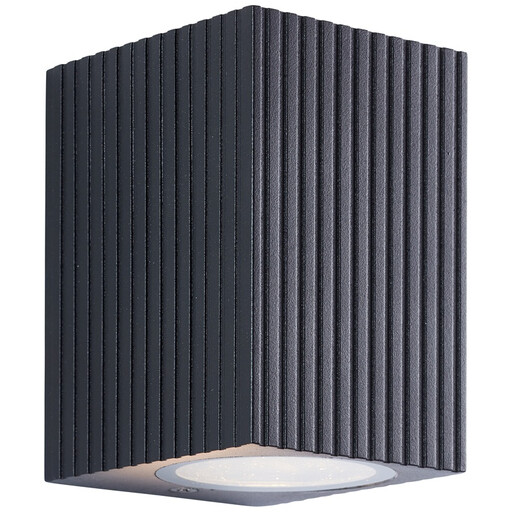
Why it suits this profile: This compact outdoor wall light has a GU10 fitting and measures approximately 10 × 6.9 × 7.8 cm. It is therefore well suited to a small entrance, fence or patio wall.
The product details specify IP44 and a maximum power of 10W. Check in advance that the installation location is sheltered and choose a suitable LED GU10 bulb.
Aluminium, plastic and glass; downward-facing light; choose your own light source.

Why it suits this profile: This solar outdoor light combines a daylight sensor, motion sensor and two lighting modes. It is ideal for anyone who wants a fixed wall light without running a power cable to the exterior wall.
The IP44 specification makes it clear that the light is splash-resistant, but not designed for immersion. Install it in a sheltered location and keep the solar panel free from dirt.
According to the product description: integrated LED, 400 lumens per light point, 2700K and two lighting modes.

Why it suits this profile: This model is designed for driveways, garages, gardens or larger patios where broad light distribution and motion detection are desirable.
The product details specify IP65, but performance still depends on sufficient sunlight. Do not place the panel under a balcony or close to a tall fence.
According to the product specifications: 302 LEDs, 3000 lumens, three lighting modes and three adjustable light heads.
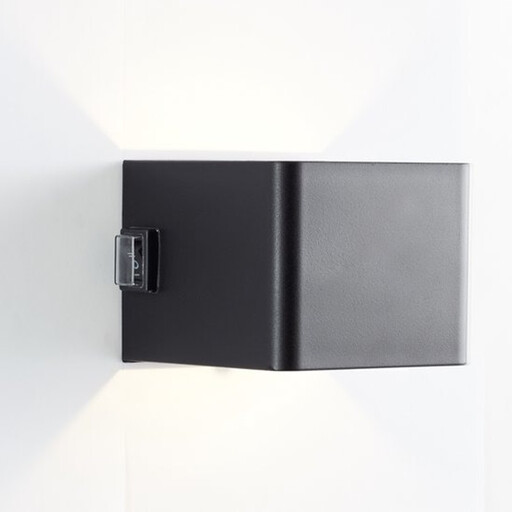
Why it suits this profile: This wireless light is suitable for locations without a fixed power connection. Magnetic mounting makes it easier to move and recharge.
You avoid fixed wiring, but still need to consider charging and a secure mounting point. IP44 only means protection against splashing water.
Integrated LED, 300 lumens, 3000K, motion sensor and USB-C charging according to the product description.
We have put together a complete, up-to-date list of products that fully meet these strict selection criteria and the applicable European safety regulations.
Around 180 to 300 lumens may be sufficient for a small entrance or balcony. A driveway, garage or large patio requires more light. Do not look at lumens alone; also consider the beam angle, installation height and light colour.
IP44 is suitable for outdoor use in sheltered or partially sheltered locations, such as beneath a covered area. The light is protected against splashing water, but not against powerful water jets or immersion. For a completely exposed location, a higher level of protection, such as IP65, may be more practical.
The service life depends on the type of product, the quality of its components, temperature, moisture and the number of hours it is switched on. With integrated LED lighting, the light source is often not replaceable. With an E27 or GU10 outdoor light, you can usually replace the light source separately. Before buying, therefore, check that the system suits your maintenance preferences.
