
Vandaag of morgen in huis

Kwaliteit gegarandeerd

Welkomstaanbiedingen ontgrendelen: GRATIS bezorging | Tot 80% korting | Gratis 30 dagen JoyPlus-proefperiode
Download de app
Good outdoor lighting should suit the location, the British weather and how you intend to use the light. A solar light can be useful on a balcony without a power socket, while a fixed outdoor wall light is more suitable for everyday use by the front door. However, if you focus solely on appearance or a high lumen rating, you may quickly be disappointed.
An IP44 outdoor light is protected against splashing water, but not against water jets or immersion. This makes IP44 suitable for many sheltered façades, patios and entrances, but less suitable for a completely exposed position where rain falls directly on the light.
For more demanding conditions, IP65 outdoor lighting is more suitable. According to the product specification, this rating provides protection against dust and water jets. Still, check the installation instructions: a good IP rating does not automatically make a product suitable for every location.
A solar wall light only works reliably when its panel receives enough daylight. A north-facing wall, a balcony beneath a canopy or a position under a dense tree can limit charging time. Stated operating and charging times depend on conditions such as sunlight, temperature and dirt.
Therefore, position an outdoor solar light so that its panel is not covered. Clean the panel occasionally with a soft, dry cloth. During prolonged dark or overcast periods, the operating time may be shorter than stated.
An outdoor light with a motion sensor is practical by an entrance, shed or garden path. For patio lighting where you sit outside for longer periods, a light that only switches on when movement is detected is less suitable. Consider the detection direction, installation height and whether the light can be switched on manually.
The difference between an integrated LED and a replaceable light source is also important. A light with an E27 or GU10 fitting gives you more choice, but is often supplied without a bulb. With an integrated LED, you do not need to buy a separate light source, but it generally cannot be replaced by the user.
Light output is measured in lumens. For atmospheric garden lighting or a garden lantern, a soft level of brightness is often sufficient. At an entrance, driveway or shed, you will generally need more functional light. Also consider the colour temperature:
A high lumen rating is not always desirable. A powerful light can cause glare if it is aimed incorrectly. An adjustable head or downward-facing beam helps direct the light towards the path or entrance.
There are three common options:
For a light with a bulb fitting, always check whether the light source is included. For example, the Brilliant Todd outdoor light has an E27 fitting, a maximum power of 60 watts and an integrated motion sensor, but is supplied without a bulb. The compact Brilliant Jelani and Keola use a GU10 fitting with a maximum power of 10 watts.
Measure the available wall or floor space before ordering. A light that is 108 cm high will have different visual and stability requirements from a small façade spotlight. Also check the mounting hardware and the surface. A magnetic cordless outdoor light must be attached to a flat, clean and sufficiently magnetic surface.
For fixed lighting on a façade, not only the material but also the mounting method is important. Aluminium, metal, plastic and glass each have their own appearance and maintenance requirements. Always follow the manufacturer's safety instructions and switch off the power before carrying out maintenance or installation.
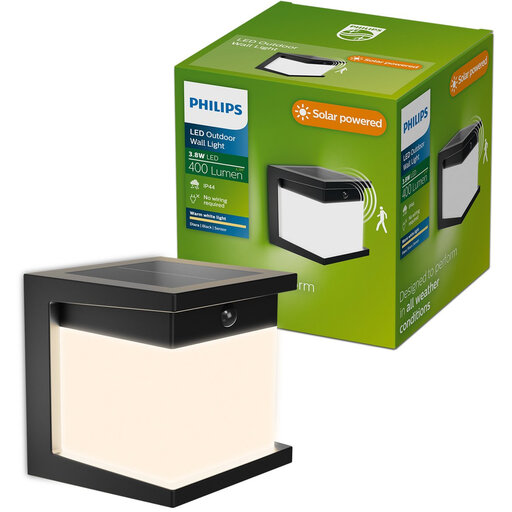
Why it suits this profile: This solar wall light is suitable for an entrance, balcony or small garden without a mains connection.
The product specification clearly states that it has an integrated LED, 400 lumens, two lighting modes and IP44 protection. This means you know in advance that you will not need a separate bulb or wiring.
2700K warm white light, motion sensor, two modes and an IP44 rating.
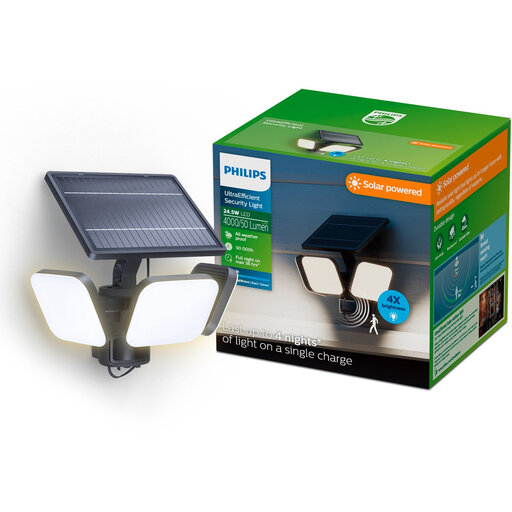
Why it suits this profile: If you want to illuminate a large entrance, driveway or façade with plenty of light, this solar solution offers a high stated light output.
The stated specifications include 4000 lumens, IP65 protection, an adjustable light head and a detection range of up to 16 metres to the side. Check beforehand that this level of brightness is suitable for your location.
IP65 protection, integrated LED, adjustable head and two sensors according to the product description.
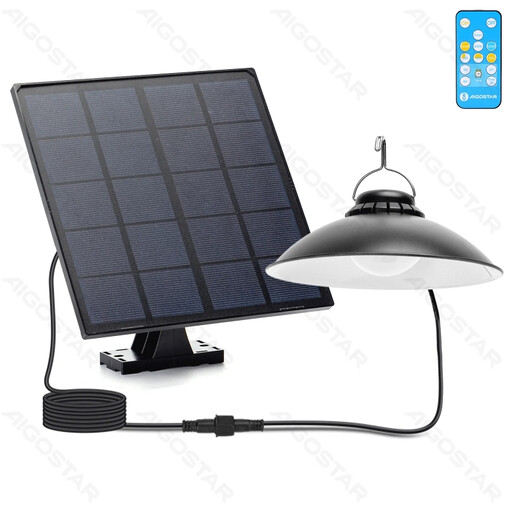
Why it suits this profile: This pendant light is designed for a canopy, veranda or patio where adjustable colour temperature is preferred.
The solar panel has a 3-metre cable, allowing you to position it separately from the light in a sunnier area. The stated charging time is 4–6 hours; the result depends on the weather.
IP65 protection, three colour temperatures from 3000K to 6500K and a stated battery capacity of 5000 mAh.
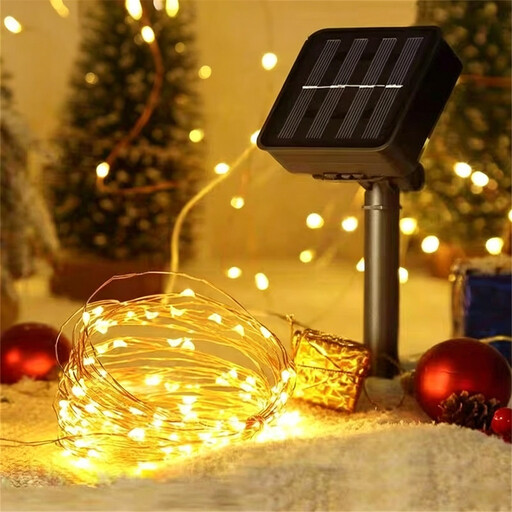
Why it suits this profile: These solar-powered string lights are designed for decorative lighting around a patio, balcony, tree or planter.
The set contains two 49 ft strings, each with 75 LEDs, and a solar panel. The manufacturer states a lighting time of 8–14 hours, depending on the charging conditions.
Eight lighting modes, a memory function and warm white light for decorative garden lighting.
We have put together a complete, up-to-date list of products that fully meet these strict selection criteria and the applicable European safety regulations.
For a sheltered façade or patio, IP44 may be suitable, as this rating indicates protection against splashing water. For a more exposed position, consider IP65 outdoor lighting. Always check the installation manual and position the light according to the instructions.
It can be, but its performance depends on the amount of sunlight available. Shorter days, cloudy weather, shade and dirt on the panel can reduce the operating time. Choose a position with as much direct daylight as possible and keep the panel clean. For consistent lighting, a fixed mains-powered LED outdoor light is more predictable.
An LED outdoor light generally uses little electricity, but consumption depends on its wattage and the number of hours it is switched on. A sensor can limit unnecessary operating hours. Solar lighting does not use mains electricity, but it does have a battery that may provide less capacity over time. So do not look only at the purchase price; also consider the power supply, maintenance and whether the light source can be replaced.
