
Vandaag of morgen in huis

Kwaliteit gegarandeerd

Welkomstaanbiedingen ontgrendelen: GRATIS bezorging | Tot 80% korting | Gratis 30 dagen JoyPlus-proefperiode
Download de app
Good outdoor lighting makes an entrance, driveway, balcony or patio more usable once it gets dark. However, an attractive product photo is not enough to make the right choice. A lamp may not provide enough light, may be unsuitable for the place where you want to install it or may result in additional installation costs.
So pay particular attention to the intended use, IP rating, light source and power supply. Below, you’ll find the key points to consider, along with some popular choices for different situations.
An IP44 outdoor lamp is protected against solid objects larger than 1 millimetre and splashing water from different directions. This makes it suitable for many sheltered outdoor locations, such as a covered balcony, façade or entrance.
However, IP44 does not mean that the lamp can withstand direct jets of water, immersion or prolonged exposure to extreme weather. It’s therefore best to install an IP44 outdoor wall light under an overhang or somewhere where water cannot collect.
An IP65 outdoor lamp offers greater protection against dust and jets of water. Always check the complete installation instructions and whether the lamp is suitable for the specific location.
Wattage tells you how much electricity a lamp uses, but not how much light it produces. For that, look at lumens:
The desired colour temperature also plays a role. Warm white light around 2700 to 3000 kelvin suits patio lighting and a welcoming garden atmosphere. At around 4000 kelvin, the light appears more neutral and functional. Higher values may be more suitable for a work area or security-focused lighting.
A solar outdoor lamp works without being connected to the mains, but its solar panel does need enough direct daylight. Under a solid canopy, between tall walls or in a north-facing location, the battery may not charge as effectively.
According to information provided by the relevant brands, some models can use multiple light settings or a motion sensor to make more efficient use of the battery. When buying, check the installation requirements, battery and expected operating time. A solar wall light is particularly useful when running cables is difficult or undesirable.
An LED outdoor lamp with an integrated light source is ready to use straight away and often has a low stated power consumption. The downside is that if the LED module fails, you’ll usually need to replace the entire fitting.
With an E27 outdoor lamp or GU10 outdoor lamp, you can choose the light source yourself. This gives you greater freedom over colour temperature, brightness and dimming. Always check:
Solar and table-top models can usually be installed without permanent wiring. According to the product information, a fixed outdoor wall light connected to 230 volts will often need to be installed by a qualified electrician. Switch off the power before carrying out maintenance and use fixings suitable for the wall.
The height is important for garden path lighting. A low model provides focused light along a path, while a taller lamp can illuminate a larger area. For example, the vidaXL LED lamp below is 80 centimetres high, uses 9 watts and has a stated luminous flux of 550 lumens.
Aluminium is lightweight and widely used for façade and garden lighting. Plastic can be practical for solar models, while glass is mainly found on classic outdoor lamps. Clean a lamp with a soft, dry cloth and keep solar panels free from dirt and leaves. Also check regularly that the housing, cable and fixings are still undamaged.
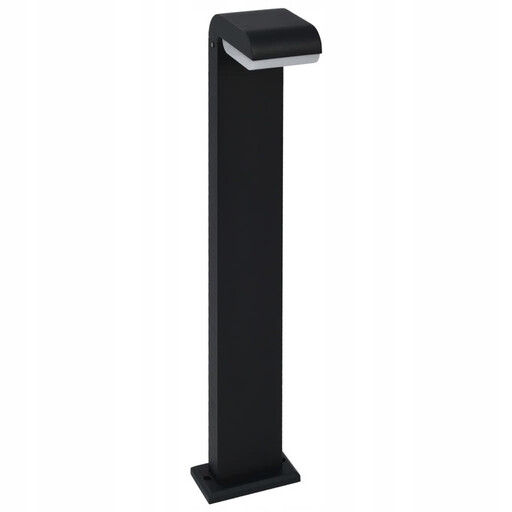
Why it suits this profile: This black outdoor lamp is designed for path lighting and has an integrated 9-watt LED with 550 lumens.
The product specifications state both the lumen output and IP54 rating, so you don’t have to rely solely on appearance or wattage.
Cast aluminium, 80 cm height and an opal diffuser for downward lighting.
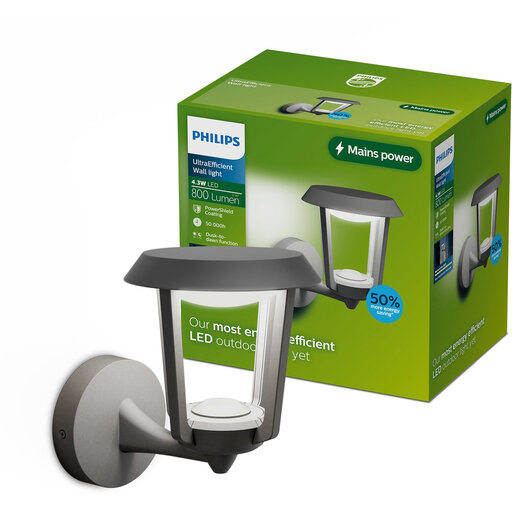
Why it suits this profile: This fixed outdoor wall light combines an integrated LED, 800 lumens and warm white light at 2700 kelvin.
The brightness and colour temperature are clearly stated, although the IP44 rating means that the installation location is important.
Aluminium housing, PowerShield coating according to the product description and 4.3 watts of power.

Why it suits this profile: For a driveway or large area, the stated luminous flux of 4000 lumens is relevant. This solar-powered model has an IP65 rating.
The higher IP rating is better suited to a less sheltered location than IP44, but you still need to compare it directly with your intended installation position.
PIR motion sensor, adjustable lamp head and a stated detection range according to Philips.
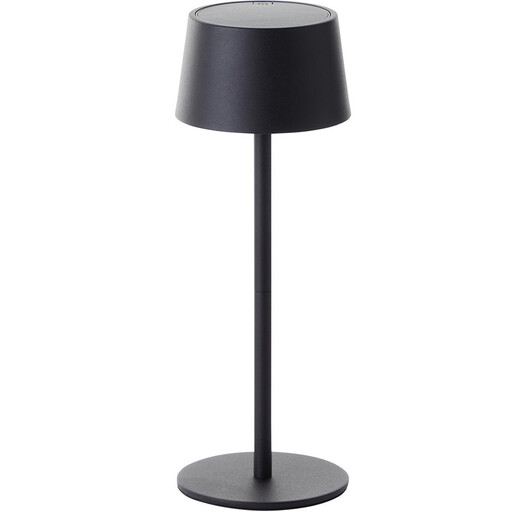
Why it suits this profile: This freestanding outdoor lamp is suitable for a balcony, table or patio where a permanent connection is not wanted.
The lamp works via solar power or USB and has three dimming settings, so you’re not dependent on just one charging method.
170 lumens, warm light at 3000 kelvin, USB charging and IP44 splash protection.
We’ve put together a complete, up-to-date list of products that fully meet these strict selection criteria and the applicable European safety regulations.
For a sheltered façade, balcony or entrance, IP44 is often suitable. For a location exposed to more dust and water, IP65 may be the more sensible choice. Also check the installation instructions and make sure an IP44 lamp is not exposed to direct jets of water.
A solar outdoor lamp does not use electricity from the mains during normal operation. However, its practical performance depends on sunlight, panel position, battery and light setting. For a location with little daylight, a USB-rechargeable or wired LED outdoor lamp may be more suitable.
For subtle patio lighting, a lower lumen output is often sufficient. Garden paths, entrances and driveways generally need more light. Compare lumens, beam angle and installation height together; wattage alone does not give you the full picture.
