
Vandaag of morgen in huis

Kwaliteit gegarandeerd

Welkomstaanbiedingen ontgrendelen: GRATIS bezorging | Tot 80% korting | Gratis 30 dagen JoyPlus-proefperiode
Download de app
Good outdoor lighting should suit the location, how it will be used and the British weather. Yet many shoppers focus mainly on appearance or the number of LEDs. As a result, a solar wall light may disappoint when there is little sunshine, an outdoor light with a motion sensor may switch on every time someone walks past, or a light with IP44 may prove unsuitable for a fully exposed wall.
Before buying, watch out for these three common pitfalls:
The right choice therefore depends on the intended use: atmospheric terrace lighting requires something different from outdoor security lighting for a driveway.
The IP code indicates how well a product is protected against solid particles and moisture.
An IP rating does not automatically make a light suitable for every situation. Also check whether water could collect at the installation point and follow the manufacturer's instructions.
Lumens indicate the light output. For balcony lighting or a table lamp, 170 lumens may be enough to create a pleasant atmosphere. An entrance or driveway requires more light. The Philips Fyns, for example, lists 1000 lumens, while the Philips Zyren lists 4000 lumens. These are product specifications taken from the product information, but perceived brightness also depends on the installation height, direction of the light and surroundings.
Colour temperature is measured in kelvins:
A dimmable outdoor light is useful when you want to use one fitting at different times. The Brilliant Viani has three dimming settings, allowing you to adjust the light level without installing an additional lamp.
Solar-powered garden lighting works without a permanent cable, but requires a location with sufficient daylight. A USB option is practical when the battery needs recharging on cloudy days. With wireless outdoor lighting, check:
A fixed 230V light, such as the Brilliant Todd, must be connected by a qualified electrician according to the product information. This makes it less suitable for tenants or anyone who wants to install lighting without wiring.
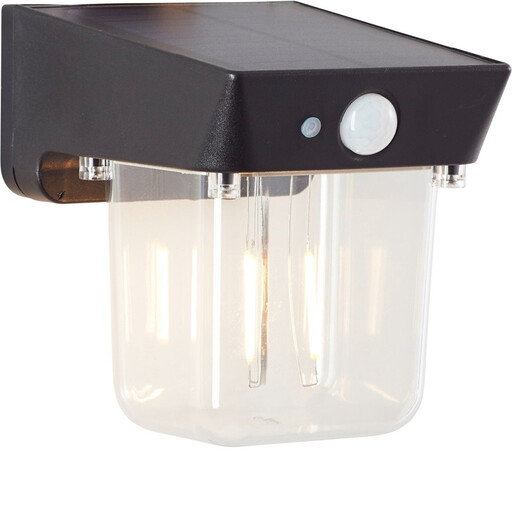
Why it suits this profile: This compact solar wall light works without mains electricity and combines automatic lighting with simple wall mounting. It is ideal for an entrance, balcony or small garden where wiring would be impractical.
The specifications clearly state integrated solar power, a motion sensor, 180 lumens and IP44. This makes it easier to assess the intended use than with a light that only gives a general claim about brightness.
Integrated 2 W LED, warm white light at 2700 K, integrated battery and three stated functions: solar, sensor and dimming.
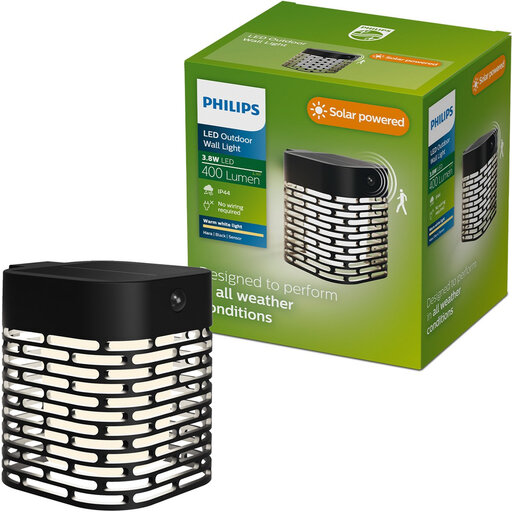
Why it suits this profile: The combination of two lighting modes, a dusk sensor and warm white light gives you control over a wall, terrace or entrance without having to run a power cable.
The product information lists IP44, 400 lumens, 2700 K and the two operating modes. According to Philips' product description, the light is intended for damp outdoor environments; IP44 still only means protection against splashing water.
400 lumens, integrated LED, solar power and a stated statutory warranty of at least two years according to the product information.

Why it suits this profile: With a stated light output of 4000 lumens, IP65 and an adjustable light head, this model is designed for a driveway, garage or larger wall where visibility is important.
The product details specify both IP65 and the sensor's detection range: 8 metres when approached directly and 16 metres when approached from the side. However, check that the installation height is suitable for your situation.
4000 lumens, IP65, solar power, dusk and motion sensors, and an adjustable light head. You can choose between 5000 K and a 3000 K version.
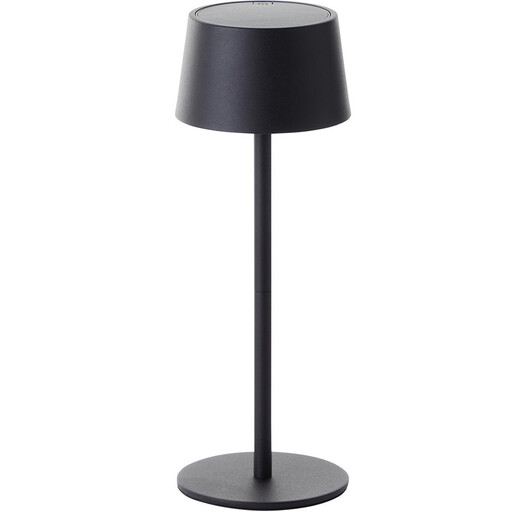
Why it suits this profile: This freestanding lamp requires no installation and is suitable for terrace lighting, balconies or temporary use. Solar and USB charging offer greater flexibility in changeable weather.
When there is little sunshine, the integrated battery can be charged via USB A. The stated IP44 rating makes it clear that the lamp is splash-resistant, but not designed for immersion.
170 lumens, warm white light at 3000 K, three dimming settings, solar and USB charging, and two possible installation heights.
We have put together a complete, up-to-date list of products that fully meet these strict selection criteria and the applicable European safety regulations.
It can be, but performance depends on daylight, shade and battery capacity. Position the panel in as open a location as possible and keep it clean. A model with USB charging provides an alternative after several cloudy days.
For a sheltered wall, balcony or covered terrace, IP44 may be suitable. For a fully exposed location or a light by a driveway, IP65 is a more sensible starting point. Always check the installation and safety instructions.
An integrated LED outdoor light generally uses little power compared with traditional light sources. With a mains-powered model, wattage and operating time together determine energy consumption. Solar and battery-powered versions do not draw electricity from the mains while lit, but they do need to be charged sufficiently.
