
Vandaag of morgen in huis

Kwaliteit gegarandeerd

Welkomstaanbiedingen ontgrendelen: GRATIS bezorging | Tot 80% korting | Gratis 30 dagen JoyPlus-proefperiode
Download de app
Good outdoor lighting makes a path easier to see, creates a welcoming atmosphere on the patio and helps you find your front door or driveway. However, choosing the right product is not always straightforward. Product pages often focus on lumens, solar operation or an IP rating, while important details may be less obvious.
Pay particular attention to these three common pitfalls:
For a garden path, path lights and low-level solar lights are practical choices. They mark the route without shining directly into your eyes. For a patio, warm white lights of around 2700K to 3000K often create a relaxed atmosphere. Cool white light around 5000K to 6500K is more visible and functional, for example on a driveway or in a work area.
An outdoor wall light works well by the front door, garage or façade. Check in advance whether you are buying a light with an integrated LED or whether you still need a separate E27 or GU10 bulb. An LED outdoor light with an integrated light source is ready to use straight away, but the light source is not always replaceable.
If you want decorative lighting without a socket, look at solar garden lights, solar garden lighting or string lights. For security-focused lighting, an outdoor light with a motion sensor is a suitable choice. Outdoor lighting with a dusk sensor switches on automatically when it gets dark. Some models combine both functions.
The IP code consists of two digits. The first digit indicates protection against solid particles, while the second relates to water.
The housing will only provide the stated level of protection if the light is installed correctly and the seals are properly fitted.
Colour temperature is expressed in Kelvin:
You should also look at lumens. A path light producing 10 lumens mainly provides marker lighting. An 800-lumen wall light is more functional. A 4000-lumen solar floodlight is designed for a larger area and may be too bright for a small garden.
Solar lighting does not require a permanent connection, but it needs to be placed somewhere with sufficient direct sunlight. According to the UME path light’s product description, 6 to 8 hours of sunlight is recommended for the stated operating time. On cloudy days in the Netherlands, the output may be lower.
Also check:
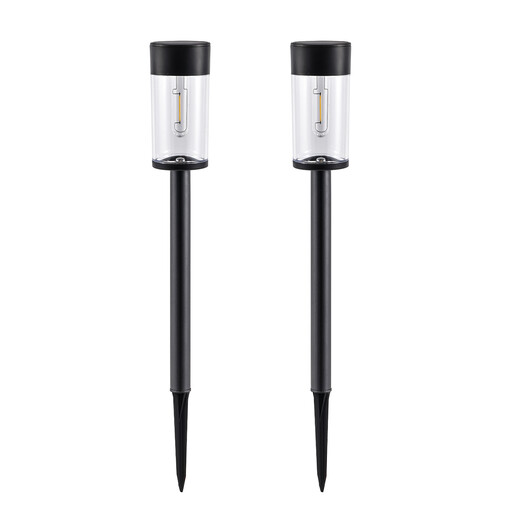
Why it suits this profile: This set is designed for anyone who wants to mark two points along a path, border or driveway without wiring.
The specifications state 10 lumens per light, 3000K and IP65. This makes it clear that the lights provide soft marker lighting rather than powerful area lighting.
Set of two, automatic on/off switching, ground installation and a stated IP65 rating.
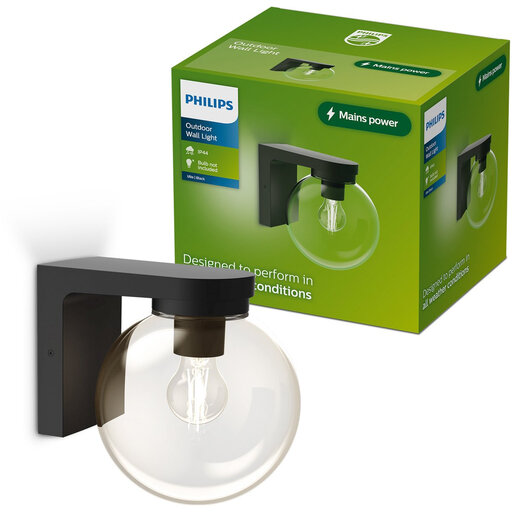
Why it suits this profile: This aluminium and glass wall light is ideal for a façade, exterior door or dining area where you want to choose the light source yourself.
The light is supplied without a light source. This prevents you from being tied to the wrong fixed light colour, but it does mean you will need to purchase a suitable E27 LED bulb.
E27 fitting, removable light source, 360-degree diffuse light distribution and IP44 splash protection.

Why it suits this profile: This model is designed for a façade, shed or driveway where automatic detection and plenty of light matter more than subtle decoration.
The product details list a motion sensor, dusk sensor, two lighting modes and IP65 separately. This allows you to adjust the function according to movement and darkness.
4000 lumens according to the product specification, integrated LED, adjustable light head and a stated detection range of 8 metres when approached directly.
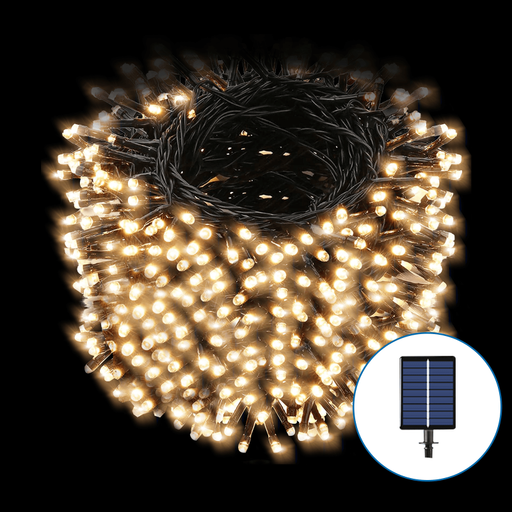
Why it suits this profile: A 10-metre string light is practical for a fence, balcony edge, pergola or patio where you want an even, atmospheric glow.
The set includes a 2-metre cable between the panel and string lights, 8 lighting modes and IP65. However, check that the panel will receive enough sunlight in your chosen location.
100 LEDs, warm light, solar power and a stated operating time of 8 to 12 hours after 4 to 6 hours of charging.
We have put together a complete, up-to-date list of products that fully meet these strict selection criteria and the applicable European safety regulations.
Place the solar panel somewhere with as much direct daylight as possible. Avoid shade from trees, walls and coverings. Clean the panel regularly with a soft, damp cloth. Bear in mind that short winter days and cloudy weather can reduce charging capacity.
IP44 means that the light is protected against solid particles from 1 millimetre and against splashing water. The light is therefore suitable for many sheltered outdoor locations, but not for immersion or direct water jets. For a fully exposed location, a model with a higher level of water protection may be more suitable.
A solar outdoor light uses the energy stored in its battery during the day while it is switched on. It does not need to be connected to the mains. The operating time depends on the amount of sunlight, the battery, the selected lighting mode and the design of the light. As well as the marketing copy, check the stated charging time and autonomy.
