
Vandaag of morgen in huis

Kwaliteit gegarandeerd

Welkomstaanbiedingen ontgrendelen: GRATIS bezorging | Tot 80% korting | Gratis 30 dagen JoyPlus-proefperiode
Download de app
A dark driveway, poorly lit entrance or atmospheric terrace in need of a lift calls for a practical solution. However, choosing outdoor lighting is not simply a matter of picking the lamp with the most lumens. A high light output can be unnecessarily harsh, a sensor may respond incorrectly and a solar outdoor lamp will work less effectively if its panel is in the shade for much of the day.
Pay particular attention to three common pitfalls:
By checking the specifications carefully, you can make a more informed choice between an outdoor lamp with sensor, outdoor wall light, path lighting or atmospheric garden lighting.
The IP code consists of two digits. The first digit refers to protection against solid particles and dust; the second refers to water.
An IP44 lamp is not designed to be submerged or exposed to powerful water jets for prolonged periods. Also check the installation instructions and the mounting location. A good IP rating does not replace correct installation or suitable wiring.
Lumens indicate the total light output. A modest light level is often sufficient for a garden path, while a driveway or large grounds may require more light. For example, an LED outdoor lamp with 180 to 400 lumens is suitable for orientation or ambience. Models with 1,000 lumens or more are generally intended for functional lighting.
Colour temperature is measured in kelvins:
Also consider the light distribution. A lamp with several adjustable heads can illuminate a wide façade or driveway more evenly. For path lighting, a focused beam is usually more practical than a powerful lamp that shines in every direction.
An outdoor solar-powered lamp does not require a fixed power connection. This makes installation easier and is useful for a rented property, balcony or remote corner of the garden. However, performance depends on the amount of direct sunlight, battery capacity and selected light setting.
When choosing a solar wall light, check:
According to Philips’ own product information, the Swyn, Fyns and Diara models run on solar power and do not need to be connected to the mains. In practice, direct sunlight is still needed to charge the battery sufficiently. For fixed mains-powered lighting, such as some Philips outdoor wall lights, installation must be carried out by a qualified installer.

Why it suits this profile: This compact spike light is designed for simple garden path lighting without wiring. Its height of 550 mm makes it easy to position along a border or walkway.
The specifications state IP44, a charging time of 4–6 hours and an expected operating time of 8–12 hours. This makes it clear in advance that sufficient sunlight is important.
Stainless steel construction, polycrystalline solar panel, 6500K light and a NiMH battery.

Why it suits this profile: A great choice for an entrance, balcony or terrace where warm light and automatic activation are important.
The product information lists two light settings, a daylight sensor and a motion sensor. The IP44 rating makes it clear that the lamp can withstand splashing water, but is not designed for submersion.
2700K warm white light, integrated LED with 400 lumens per light point and installation without wiring.

Why it suits this profile: Ideal for a driveway, garage or large grounds where wide detection and high light output are desirable.
The product specifications state IP65, 4000 lumens and a sensor range of 8 metres for direct approach and 16 metres for side approach. This makes its application clearer than a general claim about safety alone.
IP65, adjustable lamp head, motion and dusk sensor, and a stated colour temperature of 5000K.
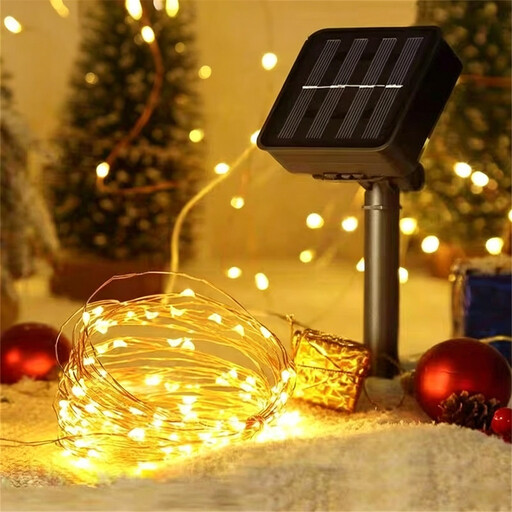
Why it suits this profile: Suitable for tenants and garden enthusiasts who want to decorate a balcony, pergola, tree or terrace temporarily without permanent installation.
The set includes two 49 ft strings with 75 LED lights each, eight lighting modes and a memory function. The solar panels need direct sunlight; the stated operating time remains dependent on the weather.
Warm white light, two solar string lights, eight modes and a memory function.
We have put together a complete, up-to-date list of products that fully meet these strict selection criteria and the applicable European safety regulations.
Place the solar panel where it will receive as much direct daylight as possible. Avoid shade from a roof edge, tree or tall fence. Then direct the light towards the desired area and check that the sensor is not constantly being triggered by passing traffic or moving branches. Clean the panel regularly with a soft, slightly damp cloth.
The lifespan depends on the type of lamp, the battery, the weather and maintenance. Manufacturers may state an expected lifespan for an LED light source, for example, but this is not a guarantee of the lamp’s total service life. With solar lighting, the battery is particularly prone to wear. Therefore, check whether the battery type and replacement policy are specified.
During normal use, a solar-powered outdoor lamp does not draw electricity from the mains. According to information provided by various brands, this can help reduce the energy costs associated with that lamp. However, the actual lighting depends on sunlight, charging time, temperature and the selected light mode. A mains-powered lamp uses electricity according to its wattage and the number of hours it operates.
