
Vandaag of morgen in huis

Kwaliteit gegarandeerd

Welkomstaanbiedingen ontgrendelen: GRATIS bezorging | Tot 80% korting | Gratis 30 dagen JoyPlus-proefperiode
Download de app
Buying an outdoor light seems simple, until you discover a few months later that it’s too dim, the battery barely charges or the light isn’t suitable for the spot where you’ve installed it. There are three main pitfalls to watch out for with outdoor lighting: marketing terms without clear specifications, choosing the wrong IP rating, and overlooking the power supply and installation requirements.
With a few checks beforehand, you can find an outdoor light that suits your exterior wall, entrance, garden path, balcony or patio. Below, we explain which specifications to look at and which types of product suit different needs.
A product description may say that a light is suitable for outdoor use, but that doesn’t automatically mean it can withstand direct rain, splashing water or a pressure washer. So check the IP rating.
An IP44-rated outdoor light is often suitable for a sheltered exterior wall, balcony or patio. Don’t install one where water regularly collects or where sprinklers spray directly onto the casing.
An outdoor solar light needs enough daylight to charge its built-in battery. Under a covered area, next to a tall fence or on a north-facing wall, it may receive less sunlight. As a result, the light may not stay on as long or shine as brightly.
Check the position of the solar panel, the battery capacity and the operating mode. A motion sensor usually uses power only when it detects movement, while continuous lighting requires more capacity. According to the product specifications for various Philips models, the automatic modes use dusk and motion sensors. The actual run time depends on how much sunlight the light receives and how it’s used.
A light fitting with a GU10 or E27 socket doesn’t always come with a bulb. Check whether you’ll need to buy a compatible LED bulb separately. With an integrated LED, the light source is built into the fitting. This makes for a compact design, but it usually can’t be replaced.
A fixed outdoor wall light must also be connected to the mains correctly. The product specifications for several models recommend installation by a qualified electrician. A portable or rechargeable light needs less installation, but will need to be charged regularly.
Choose the IP rating to suit the location, not just the look of the light. IP44 may be suitable for a sheltered balcony or covered patio. For a more exposed spot, consider a model with a higher level of protection, such as IP54. Always check the installation instructions, and avoid direct contact with water if the manufacturer advises against it.
Brightness is measured in lumens. A lower output is often suitable for ambient lighting on a table or around a patio. A brighter light is more practical for a path or entrance.
Colour temperature is measured in kelvin:
An LED outdoor light typically uses little energy for the amount of light it produces, but check the stated wattage and energy-label information too.
Decide in advance whether you want a mains connection, a USB-rechargeable battery or a solar panel. Also look out for:
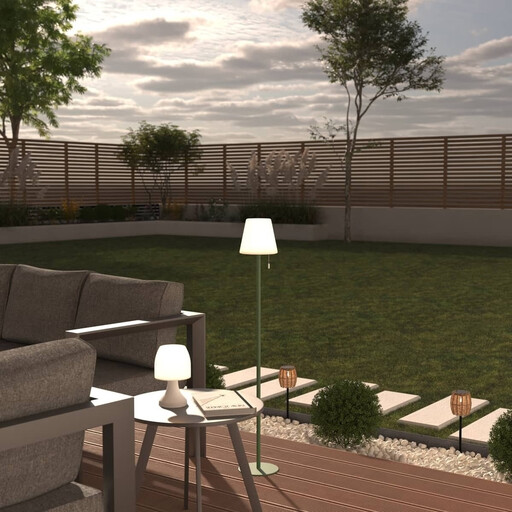
Why it suits this need: This portable freestanding outdoor light runs on batteries, so there’s no need for a fixed connection. That makes it easy to move around a balcony or patio.
The product specifications state that it has an IP44 rating, a weather-resistant plastic shade and a run time of up to ten hours. Bear in mind that it needs to be operated manually and the batteries require maintenance.
108 cm tall, three lighting modes and no wiring needed.
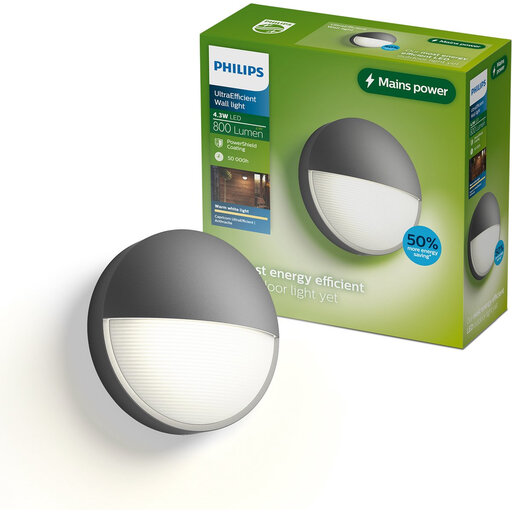
Why it suits this need: A great choice if you’re looking for fixed, compact wall lighting with a warm white glow and clearly stated light output.
The stated specifications include IP44, 800 lumens, 2700 K and 4.3 W. The light does need to be connected to the mains.
Integrated LED, warm light and an aluminium casing with stated corrosion protection.
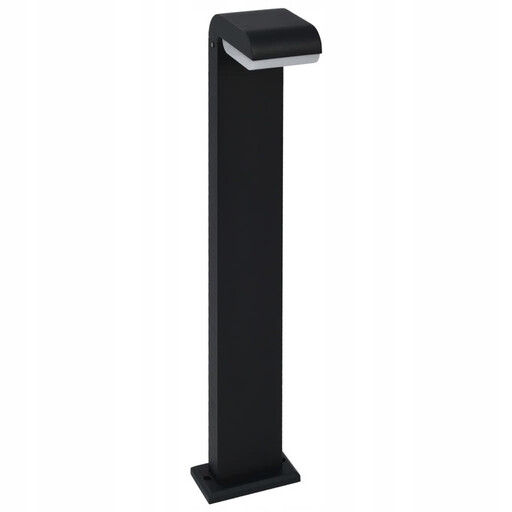
Why it suits this need: This 80 cm path light is designed for lighting a garden path, flowerbed or entrance where you want focused light directed downwards.
The product specifications state that it has an IP54 rating and produces 550 lumens. This makes its protection rating and light output easier to assess than a product described simply as an “outdoor light”.
9 W integrated LED, 550 lumens and a die-cast aluminium casing.
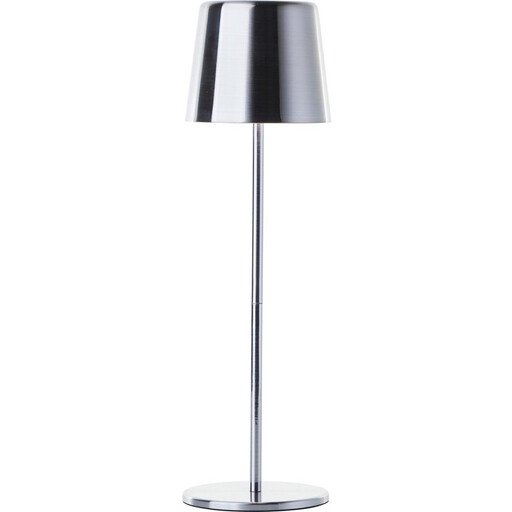
Why it suits this need: A rechargeable lamp for a garden table, balcony or patio, with no fixed installation required.
The specifications state that it has an IP44 rating and specifically advise against direct contact with water or submersion. It’s best to use the lamp in a sheltered spot.
4 W LED, 300 lumens, adjustable colour temperature from 3000 to 6500 K and touch dimming.
We’ve put together a full, up-to-date list of products that meet these strict selection criteria and the applicable European safety regulations.
IP44 is often used for a sheltered balcony, patio or entrance. This rating protects against splashing water, but not direct jets of water or submersion. A higher IP rating may be more suitable for an exposed location. Always check the requirements for the specific light fitting.
The cost depends on the wattage, how many hours the light is on and your energy tariff. A 4 W light left on for five hours a day uses around 7.3 kWh a year. A light with a motion sensor or dusk sensor may be on for less time than one that stays on all evening. Solar lights don’t need to be connected to the mains, but their batteries still need to charge sufficiently.
A garden light with a motion sensor can switch on when it detects movement, making it handy by an entrance, garage or path. However, it’s no guarantee of security. Check the detection range, installation height, brightness and whether the sensor can be adjusted. This helps prevent the light coming on unnecessarily when animals or traffic pass by.
