
Vandaag of morgen in huis

Kwaliteit gegarandeerd

Welkomstaanbiedingen ontgrendelen: GRATIS bezorging | Tot 80% korting | Gratis 30 dagen JoyPlus-proefperiode
Download de app
Good outdoor lighting needs to suit the location, how you plan to use it and the British weather. A light for a covered balcony has different requirements from lighting along a driveway or a lamp above the front door. Yet many buyers focus mainly on appearance, brightness or a low price. This can lead to problems: a solar outdoor light may not get enough sun, an IP44 light may be installed in an exposed spot, or a decorative string light may turn out to be too short.
In this guide, the Joybuy Product Recommendation Officer helps you narrow down the key choices from our range. You’ll find out what to look for and which products suit different needs.
IP44 outdoor lighting is protected against splashing water, but isn’t designed to be submerged or exposed to direct jets of water. This makes IP44 suitable for many exterior walls, balconies and sheltered patios. For an exposed area that gets a lot of rain, a higher level of protection, such as IP54 or IP65, may be more practical.
So don’t rely on the words ‘water-resistant’ in a product description alone. Check the exact IP rating and the installation instructions. A product with an IP44 rating isn’t automatically a fully waterproof outdoor light.
Solar garden lights use a solar panel and a built-in battery. If the panel is in the shade for much of the day, the light may not stay on for as long as you expect, especially during the darker months. Trees, overhanging roofs and north-facing walls can all reduce the amount of sunlight available for charging.
Solar outdoor lighting is a handy choice if you don’t want to run a cable, but where you install it still matters. Also check whether the panel can be installed separately from the light and whether the battery is replaceable or built in.
More lumens mean more light, but that doesn’t always make a better solution. A bright light along a garden path can be uncomfortable, while an entrance needs practical lighting. With an LED outdoor light, the colour temperature, beam angle and positioning all matter too.
For ambience, warmer colour temperatures, such as 2700K to 3000K, are often a good choice. Neutral or cooler light may work better for a driveway, shed or workspace. Also check whether the light source is included, integrated or replaceable.
Use the IP rating as your first filter:
Always check the product instructions. A light with an IP44 rating, such as various outdoor wall lights, must not be submerged or exposed to direct jets of water.
A fixed outdoor light connected to 220-240V will generally need to be installed by a professional. This applies, for example, to a GU10 or E27 wall light. A solar light or USB-rechargeable light is easier to install, but may have limitations in terms of how long it stays on and how well it can charge.
When choosing solar outdoor lighting, check:
An integrated LED is compact and generally energy-efficient, but usually can’t be replaced by the user. With a GU10 or E27 fitting, you can choose your own LED bulb and colour temperature. This gives you more flexibility, but the light source may not be included.
For atmospheric garden lighting, a dimmer, RGB colours or a string of lights can be appealing. For visibility, a fixed light colour and a motion sensor are often more practical. An outdoor light with a motion sensor switches on only when movement is detected, but the detection range and how long it stays on vary by model.

Why it suits this type of buyer: This solar wall light doesn’t need a mains connection and, according to the product specifications, has two light modes, a motion sensor and an IP44 rating.
The product information clearly states the IP44 rating and recommends placing the light where the panel gets direct sunlight. This helps you choose a realistic installation location.
Solar-powered, with warm white 2700K light and automatic operation via dusk and motion sensors.
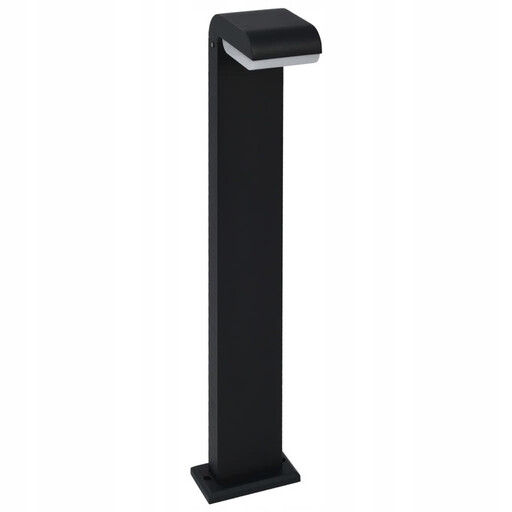
Why it suits this type of buyer: This LED garden post light combines an aluminium housing with an integrated LED, 550 lumens and IP54 protection, making it suitable for paths and borders.
The product specifications list not just the LED, but also the material, light output and IP54 rating. This makes it easier to choose a light that suits your garden path.
Cast aluminium, 9W power, integrated LED and a height of 800 mm for clear path lighting.

Why it suits this type of buyer: For driveways, garages and larger outdoor spaces, the product description lists 302 LEDs, 3000 lumens, three light modes, three adjustable heads and IP65 protection.
The higher IP65 rating is more specific than a general claim about weather resistance. Check that the stated detection angle and brightness suit your space.
Solar-powered, with motion detection, lighting adjustable through 270 degrees and a stated detection range of approximately 18 metres.
For a patio, balcony or festive display, an LED outdoor string light is a better choice than a functional wall light. The VIVREAL G40 string light is 30 metres long and has 50+2 LED bulbs, several modes, a dimmer and replaceable bulbs. The manufacturer states that it’s suitable for indoor and outdoor decoration. Keep the connections away from standing water, and unplug the light before cleaning.
A colourful alternative is the M.TK Meteor Shower Lights with 8 tubes and 192 LEDs. This model covers an area of 5 × 0.3 metres and comes with a 6W adapter, memory function and IP44 rating. Use it as decorative lighting, not as the main light for a path or entrance.
We’ve put together a complete, up-to-date list of products that meet these strict selection criteria and current European safety regulations.
A lower light output may be enough for ambient lighting. An entrance, driveway or large patio needs more light. As well as lumens, consider the direction of the beam and how far you want the light to reach. A high light output won’t necessarily suit a small garden.
IP44 is suitable for splashing water and many sheltered outdoor locations, such as a covered veranda, exterior wall or balcony. The rating doesn’t mean the light is waterproof. For a completely exposed location, IP54 or IP65 may be a more suitable choice, depending on where you install it and the manufacturer’s instructions.
An LED outdoor light generally uses less power than comparable traditional light sources. Actual consumption depends on the wattage, how long the light is on and whether it has a sensor. A light that switches on only when it detects movement will be on for less time than one that stays on all evening. When buying, check the stated wattage and, for fixed lighting, the expected hours of use.
