
Vandaag of morgen in huis

Kwaliteit gegarandeerd

Welkomstaanbiedingen ontgrendelen: GRATIS bezorging | Tot 80% korting | Gratis 30 dagen JoyPlus-proefperiode
Download de app
Finding the right outdoor light sounds simple—until you have to choose between a solar outdoor light, a hardwired outdoor wall light, cordless outdoor lighting or decorative garden lighting. Marketing copy often highlights lumens, sensors or a high IP rating, while important details remain less visible.
Pay particular attention to these three common pitfalls:
With the right specifications, you can choose outdoor lighting that suits the location, intended use and installation method.
The IP code indicates how well a light is protected against solid particles and moisture. Many models in this selection are listed as IP44. In practice, this means the light can withstand splashing water and is suitable for sheltered outdoor locations such as a covered patio, balcony or entrance.
An IP44 outdoor light is not designed for:
For a more exposed driveway or facade, IP65 outdoor lighting may be more practical. According to the product information, the UME solar spotlight in this guide has an IP65 rating. Always check the installation instructions as well, and mount the light on a suitable surface.
Lumens indicate the amount of light produced. An outdoor wall light offering 180 to 400 lumens may be suitable for an entrance, balcony or atmospheric garden lighting. A driveway or larger property may require more light. The Philips Fyns, for example, is listed at 1,000 lumens, while the Philips Diara provides 400 lumens.
Colour temperature is measured in Kelvin:
Also consider the light distribution. A downward-facing outdoor light mainly illuminates the wall and immediate surroundings. A model with multiple light heads spreads light across a larger area.
A fixed outdoor wall light operating at 220–240 V will generally need to be connected by a qualified electrician. This applies, for example, to GU10 and E27 models supplied without a bulb. The advantage is a consistent power supply, but installation requires more preparation.
A solar outdoor light uses an integrated battery and solar panel. No mains connection is required, but the light needs sufficient direct daylight. For this reason, do not place the solar panel under a solid canopy or behind a tall fence.
A cordless outdoor light with a USB-rechargeable battery can be positioned flexibly. However, check how often it needs to be recharged and whether the magnetic or mechanical mounting system is suitable for the chosen location.
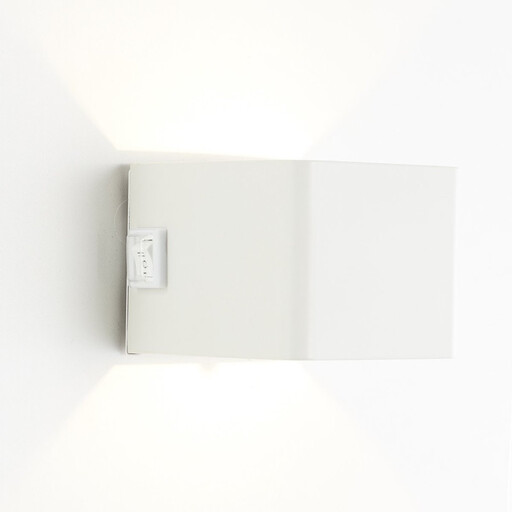
Why This Fits Their Persona: This compact outdoor light with motion sensor is ideal for renters, balconies and locations without a fixed power connection. It runs on a rechargeable battery and can be attached magnetically to a suitable metal surface.
The product information clearly lists 300 lumens, 3000 K, IP44 and a rechargeable battery. This makes it clear that the model is designed for splashing water, not immersion.
Cordless design, motion sensor and integrated LED. Charging is via USB; the light source is not replaceable.
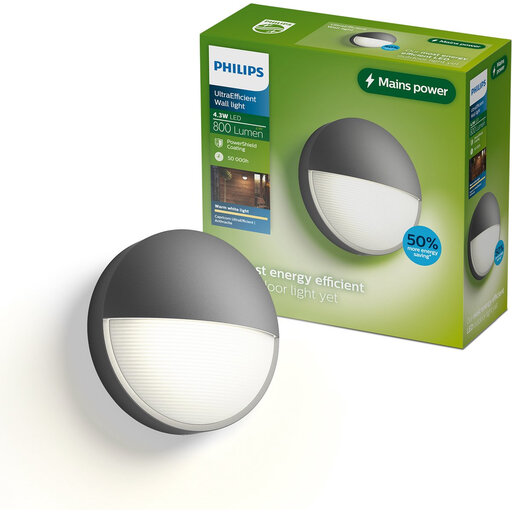
Why This Fits Their Persona: Designed for homeowners looking for a fixed LED outdoor light for a facade, balcony or entrance. This model features an aluminium and plastic housing with an integrated LED light source.
The listed specifications include 800 lumens, 2700 K and IP44. The light does not depend on a separate bulb that could be chosen incorrectly, but it does require fixed installation.
Warm 2700 K light and a stated lifespan of up to 50,000 operating hours, according to Philips product information. The LED is not replaceable.

Why This Fits Their Persona: Ideal for users who want to illuminate a driveway, garage, garden path or larger property without installing wiring. The three adjustable light heads are designed to provide broad light coverage.
The product information specifies IP65, a motion sensor and wall mounting. Before installation, make sure the solar panel receives direct sunlight.
302 LEDs, three lighting modes and, according to the product information, 3,000 lumens. The light runs on solar power with an integrated lithium-ion battery.
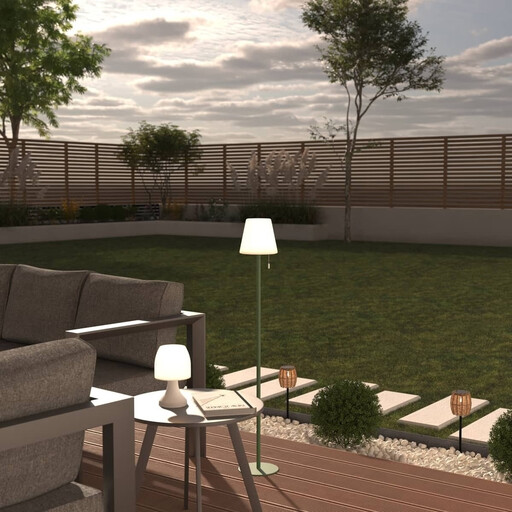
Why This Fits Their Persona: For anyone looking for a portable light for a balcony, patio or garden. This olive-green floor lamp has a steel base, plastic shade and battery power.
There is no need to arrange a fixed power connection. The stated IP44 rating makes it clear that the lamp is splash-resistant, but not suitable for powerful water jets.
According to the product information, approximately ten hours of runtime and three lighting modes: multicolour, flame effect and white light.
Explore a current selection of outdoor lighting in a range of designs, light sources, IP ratings and installation types.
Yes, an IP44 outdoor light is suitable for many sheltered applications, including balconies, covered patios, entrances and facades. IP44 means protection against splashing water. For a fully exposed location subject to heavy rain or dirt, a higher IP rating such as IP65 may be more appropriate.
That depends on the amount of direct sunlight, the positioning, the battery capacity and the selected lighting mode. In winter, the days are shorter and the sun is lower in the sky. Position the panel as openly as possible and clean it regularly. A mains-powered light or USB-rechargeable battery light offers a different usage pattern when consistent availability is important.
An LED outdoor light generally uses little electricity, but the cost depends on its wattage and the number of operating hours. A solar outdoor light does not require mains electricity, although its performance remains dependent on sunlight and battery capacity. Check the stated wattage, runtime and operating mode before comparing models.
