
Vandaag of morgen in huis

Kwaliteit gegarandeerd

Welkomstaanbiedingen ontgrendelen: GRATIS bezorging | Tot 80% korting | Gratis 30 dagen JoyPlus-proefperiode
Download de app
Good outdoor lighting should do more than just look attractive. A lamp by the front door needs to withstand rain, a solar garden light requires enough sunlight, and an outdoor light string must be used safely in the right location. Yet product pages often focus mainly on lumens, design or terms like “waterproof”, without giving the full context.
Three common pitfalls keep cropping up:
The IP code tells you how well a fitting is protected against dust and moisture.
None of these ratings mean the light can be placed underwater. Always check the installation manual and the position of the connections too.
Lumens (lm) tell you how much light a lamp produces. For ambient garden lighting, a lower light output is often enough. For a driveway or entrance, a higher value can be more practical.
Watts (W) indicate the electrical consumption. With LED outdoor lighting, you can usually get usable light with a lower wattage, but always compare products on both lumens and watts.
Colour temperature is expressed in kelvin:
Bear in mind that an integrated LED usually can’t be replaced with a separate bulb. A fitting with a GU10 or E27 holder gives you more choice in light colour and brightness.
Choose between mains power, a built-in battery or solar energy:
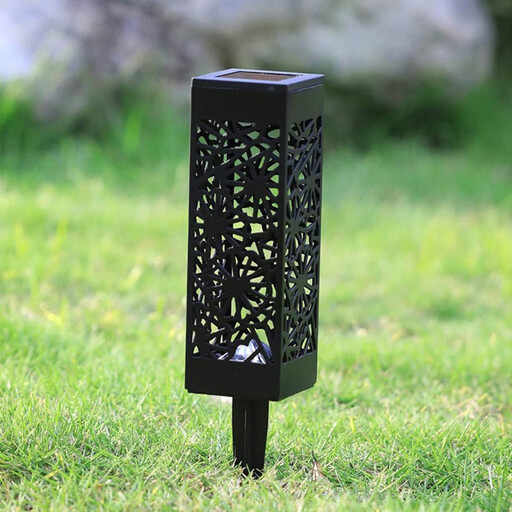
Why this fits the profile: This set is ideal if you want to light up several spots along a garden path, border or patio without any wiring.
The product information states IP65, a built-in rechargeable battery and a recommended charging time of 4 to 6 hours in sunlight. Placement in shade remains something to watch out for.
Six lights, warm white LEDs, automatic on/off switching and tool-free installation.

Why this fits the profile: A practical choice for an entrance, shed or wall where you don’t want to have a power cable installed.
The specifications mention IP44 and a motion sensor. This makes it clear the light is splash-proof but not designed for submersion.
1000 lumens per light point, 3000 K, two light modes and solar-powered operation.
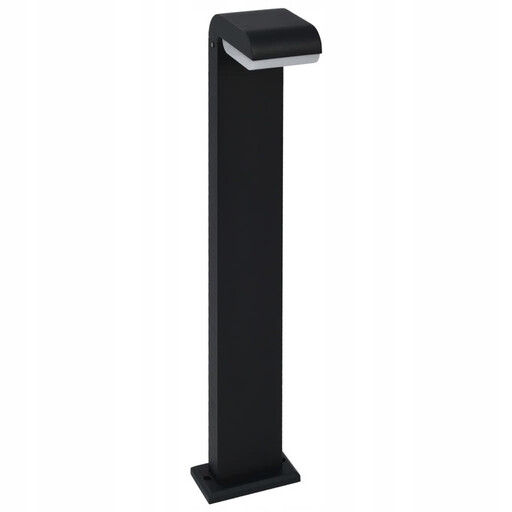
Why this fits the profile: This fixed garden path light suits anyone who wants a clear line of light along a driveway, path or border.
The product details state 550 lumens, 9 W and IP54. This lets you assess light output, consumption and protection separately.
Integrated LED, die-cast aluminium, 800 mm height and a diffuser that directs the light downwards.
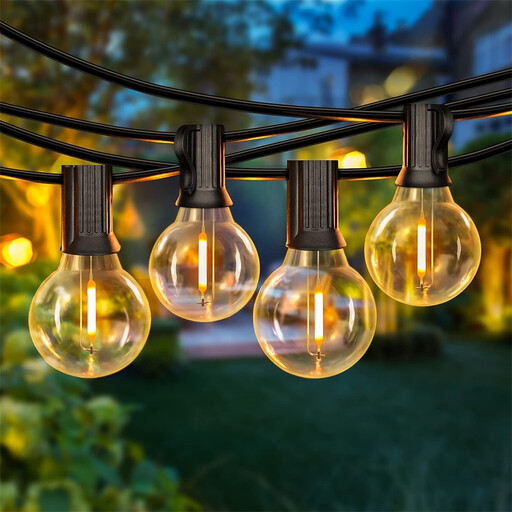
Why this fits the profile: For a patio, balcony or pergola where a continuous warm string of lights matters more than directional lighting.
The description states that the lights are not designed for submersion. Keep connections away from standing water and check the suitability of the installation spot.
30 metres length, 50+2 LEDs, dimming function, timer and replaceable bulbs. The mains connection provides continuous power.
We’ve put together a full, up-to-date list of products that fully meet these strict selection criteria and comply with current European safety regulations.
For ambient garden lighting, a modest light output is often enough. For an entrance, driveway or security-focused application, more light is usually more practical. Don’t just compare lumens – also consider the beam direction and the distance to the surface you want to light up.
IP44 outdoor lighting is suitable for splashing water and most sheltered outdoor locations, such as a covered patio or a wall. The light is not designed for submersion or direct water jets. For a fully exposed spot, IP54 or IP65 may be more suitable, depending on the conditions.
Solar outdoor lighting doesn’t use any mains electricity while it’s on. However, performance depends on sunlight, battery capacity and maintenance. Keep the panel clean and choose a spot where it gets enough light during the day.
