
Vandaag of morgen in huis

Kwaliteit gegarandeerd

Welkomstaanbiedingen ontgrendelen: GRATIS bezorging | Tot 80% korting | Gratis 30 dagen JoyPlus-proefperiode
Download de app
Good outdoor lighting needs to suit the location, how you’ll use it and the British weather. A light for a covered balcony has different requirements from a wall light by the front door or a string of lights for a garden party. Yet many products are promoted with terms such as “waterproof”, “energy-efficient” or “extra bright”, without making it clear what that means in practice.
These buying tips will help you avoid common purchasing mistakes and compare solar outdoor lighting, LED outdoor lighting, a wireless outdoor light or a string of lights using specifications you can check.
An IP44 light is protected against splashing water, but not immersion or powerful jets of water. This makes it suitable for a sheltered patio, balcony or garden, but not necessarily for a spot where rainwater collects.
A weather-resistant outdoor light with IP65 offers greater protection against dust and jets of water. Even then, follow the installation instructions and make sure connections are not left underwater for long periods.
A solar wall light or lantern only works well if its panel receives enough direct sunlight. On a north-facing wall, beneath dense foliage or under a canopy, charging can take longer and the light may not stay on for as long.
So, check where the solar panel will be positioned. A light with USB-C as a second charging option gives you more flexibility when cloudy weather or shade limits the solar output.
More LEDs don’t automatically mean better light. For ambience, colour temperature, light distribution and dimmability are often more important than the number of light points. 3000K gives a warm white light that works well on a patio, while 5000K or 6500K looks cooler and more functional.
Also check whether batteries are included. Battery-powered lights may need three AA batteries, for example, which might have to be bought separately. For a rechargeable light, battery capacity and the stated run time are more relevant.
The IP code consists of two digits. The first indicates protection against solid particles; the second relates to water.
A lower brightness is often enough for mood lighting on a table or beside a planter. You may need more light for an entrance or path. The amount of light is usually measured in lumens.
Colour temperature is measured in kelvin:
A dimmable light means you don’t need a different one for every situation. With RGB lighting, you can also choose a colour, but check whether warm white is available as a separate setting.
Choose battery-powered lighting if you don’t want to run a cable or need to move the light from time to time. An outdoor LED string light powered by AA batteries, for example, is handy for a party or seasonal decorations. Check the timer, battery type and distance between the LEDs.
A rechargeable light is better suited to regular use. Check the:
The stated run time depends on the brightness setting you choose. For example, according to the product description, the solar table lamp runs for between 10 and 60 hours, depending on the setting.
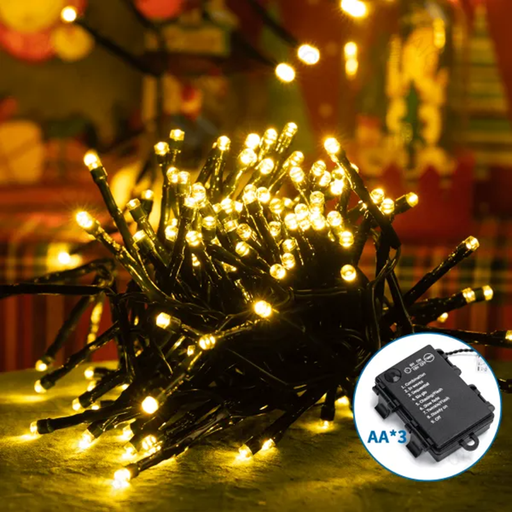
Why it suits this need: This string of lights is easy to put up around a balcony railing, pergola or garden furniture, and runs on three AA batteries.
The product description states that it has an IP44 rating, eight lighting modes, a timer and a memory function. This makes its usage limitations clearer than those of a string with no IP rating.
5 metres long, 200 LEDs, warm white light, eight modes, timer and memory function.
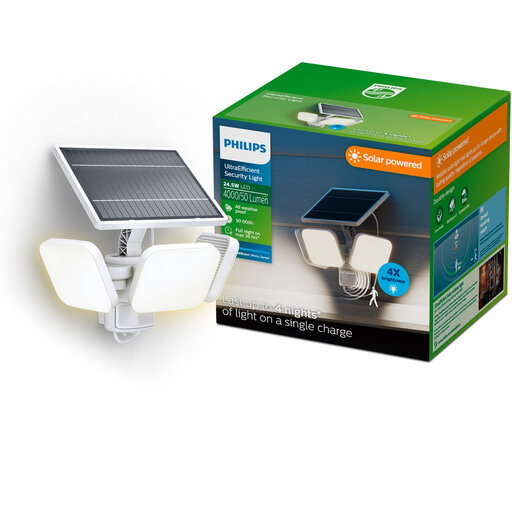
Why it suits this need: For anyone looking for a fixed solar wall light by an entrance, garage or larger patio, with sensor operation and a higher IP rating.
The listing states that it has IP65 protection, a dusk sensor and motion detection up to 8 metres when approached from the front and 16 metres from the side. It still needs to be placed in direct sunlight.
According to the product description: 4000 lumens, 5000K, IP65 and two lighting modes.

Why it suits this need: This wireless outdoor light is a practical choice for a balcony, shed or passageway where you don’t want to install permanent wiring.
The product information lists a rechargeable battery, USB-C charging, a motion sensor and IP44 protection. The light is splash-resistant, but is not suitable for immersion or direct jets of water.
300 lumens, warm white 3000K, magnetic mounting, motion sensor and integrated battery.
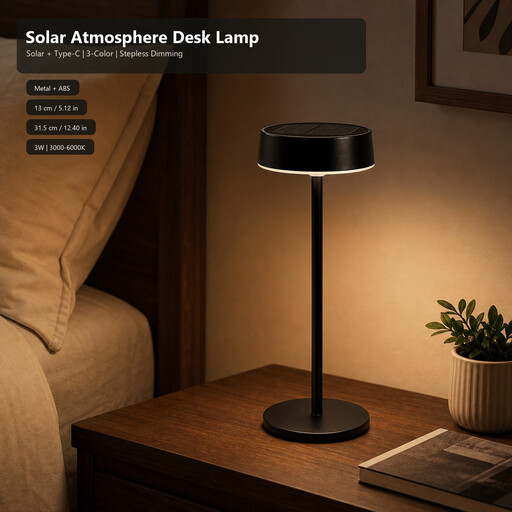
Why it suits this need: A versatile outdoor table lamp for a garden table, balcony or campsite, with no cable to a mains socket.
As well as solar charging, USB-C is available. The light is also dimmable from 10% to 100%, so you don’t have to rely on maximum brightness.
1800mAh battery, three colour temperatures, stepless dimming and a stated run time of 10 to 60 hours.
We’ve put together a comprehensive, up-to-date list of products that meet these strict selection criteria and the applicable European safety regulations.
It depends on the power source and wattage. An LED light typically uses very little electricity, while battery-powered lighting mainly costs money when you need to replace the batteries. Solar outdoor lighting doesn’t use mains electricity while in operation, but its output depends on sunlight, the season and where it’s placed.
Sometimes, if they’re in a sheltered spot, but IP44 only means protection against splashing water. It’s best to bring loose decorative lights indoors during prolonged heavy rain, frost or storms. Always follow the safety information for the specific product.
The run time per charge varies according to battery capacity and brightness setting. A light used on a low setting will generally stay on longer than the same light at maximum brightness. So check both the charging time and the stated run time in the product information.
